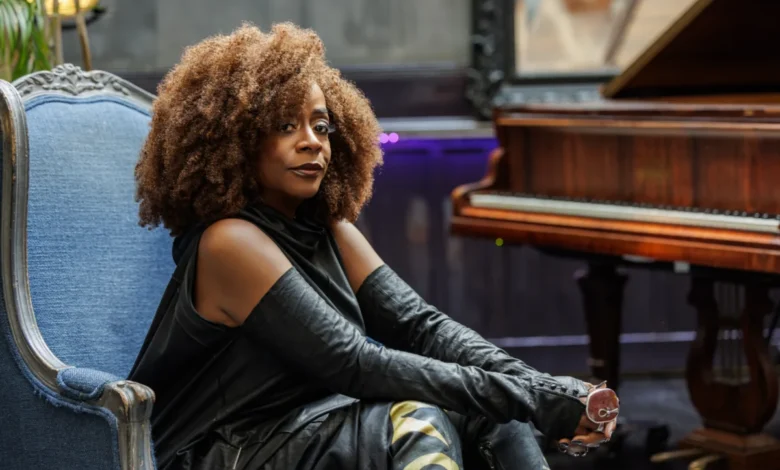
The return of Sandra St. Victor to the recording studio is more than just a comeback; it is a significant marker in the career of one of soul and funk’s most reliable, yet often understated, architects. After an eleven-year hiatus from solo studio projects, the founding member of The Family Stand has released Eleven, an album that bridges the gap between her storied past and a contemporary, genre-defying future. The title, while literal in its representation of the years passed since her last solo outing, also signifies her eleventh solo recording, a milestone that serves as both a retrospective and a forward-looking statement of intent.
A Legacy Defined by Collaboration
To understand the significance of St. Victor’s return, one must first appreciate the breadth of her influence behind the scenes. Her discography and session credits read like a definitive syllabus of late 20th-century rhythm and blues. Her professional journey has placed her in the orbit of icons who defined the sonic landscape of their eras. From the soulful, socially conscious compositions of Curtis Mayfield to the explosive energy of Chaka Khan and the singular, enigmatic genius of Prince, St. Victor has consistently been a preferred collaborator for artists who demand both precision and soul.
Her work with Roy Ayers and Bernie Worrell further solidified her reputation as a musician’s musician, capable of traversing the complex boundaries between funk, jazz, and soul. As a founding member of The Family Stand, she helped pioneer a sound that moved beyond the constraints of commercial R&B, incorporating experimental textures and introspective lyricism. This history of high-level collaboration provides the necessary context for Eleven; it is not the work of a novice, but the refined product of an artist who has spent decades learning from the masters of the craft.
Chronology of a Musical Journey
St. Victor’s artistic trajectory has been defined by geographic and sonic migration. Born in Dallas, Texas, she eventually made her way to the epicenter of the music industry in New York City, where her career flourished. However, the release of Eleven marks a new chapter in her life, one centered in Arnhem, the Netherlands. This move, while physically distant from the American music industry, has not severed her ties to her roots. Instead, it has allowed for a globalized approach to production.
The timeline of her career shows a consistent commitment to evolution. From her early days in the industry, through her tenure with The Family Stand, to her diverse solo projects, she has resisted the pressure to remain static. The 11-year gap between this current project and its predecessor was not a period of inactivity, but rather one of redirection. During this time, St. Victor engaged in various pedagogical and performance-based projects, including her deep dive into the historical significance of jazz legends through the audio-visual program Ella & the Duke. This project, which debuted at Lincoln Center, explored the professional and personal intersection of Ella Fitzgerald and Duke Ellington, demonstrating St. Victor’s ongoing dedication to the preservation and reinterpretation of the jazz canon.

The Sonic Landscape of Eleven
The album opens with the track "Enter 11," which acts as a manifesto for this current era. Lyrically, it is a concise summary of her life’s journey: "I’m a master at this plan/Y’all don’t even understand/Dallas, Texas, to New York/Now the Netherlands." Musically, the track relies on a minimalist yet deeply textured arrangement featuring the warm, analog glow of the Fender Rhodes, a driving bassline, and rhythmic handclaps. This aesthetic choice highlights a departure from over-produced contemporary sounds, favoring instead the raw, organic feel that defined her earlier influences.
The production of the album reflects a collaborative spirit that spans continents. By recruiting Italian producer Edoardo Della Bitta (EDB) to helm the opening track, St. Victor signals an openness to European perspectives in soul music. Furthermore, the inclusion of long-time associates such as V. Jeffrey Smith and the esteemed Lalah Hathaway reinforces the continuity of her professional relationships. Adam Dorn, known for his work as Mocean Worker, and Mark de Clive-Lowe also contribute their distinct sonic signatures, creating a tapestry that feels both cohesive and experimental.
Jazz and the Modern Soul Aesthetic
A recurring theme throughout Eleven is the profound influence of jazz on St. Victor’s creative output. This is most explicitly articulated in the track "What Would Miles Do," a title that serves as a rhetorical question regarding artistic integrity and the courage to pivot in the face of changing trends. By invoking the spirit of Miles Davis, St. Victor aligns her creative process with the idea of constant innovation—a hallmark of the jazz tradition.
This commitment to jazz is not merely stylistic; it is foundational. Her work on Ella & the Duke likely influenced the arrangements found on Eleven, where the space between the notes is treated with as much importance as the notes themselves. In an industry that often demands high-density arrangements, St. Victor’s choice to lean into the nuances of jazz improvisation and phrasing is a deliberate act of resistance against the homogenization of modern soul.
Implications and Industry Standing
The release of Eleven carries several implications for the current landscape of soul music. First, it demonstrates the enduring power of legacy artists to command attention in the streaming era. While the industry is often fixated on the "next big thing," St. Victor’s return proves that there is a significant, discerning audience for artists who prioritize musical depth and long-term craft over fleeting trends.
Secondly, the album serves as a case study in global music production. By operating from the Netherlands while maintaining a strong presence in the U.S. touring and recording market, St. Victor exemplifies the modern independent artist who leverages technology and global connections to bypass traditional gatekeepers. The reliance on international production talent, such as Della Bitta, suggests that the "American" sound of soul is increasingly becoming a global conversation, influenced by European sensibilities and cross-cultural exchange.
Analysis of the Contemporary Reception
While the commercial reception of Eleven remains in its early stages, the critical conversation surrounding the album has focused on its authenticity. In an age where digital manipulation is the norm, St. Victor’s reliance on "laid-back grooves" and human-centric instrumentation acts as a corrective measure. The album does not attempt to compete with the high-gloss production of current chart-topping R&B; rather, it occupies a space of its own, catering to listeners who value the tactile, warm qualities of soul music.
The involvement of Lalah Hathaway, a powerhouse in the contemporary R&B and jazz-fusion circles, adds a layer of credibility that resonates with younger listeners while satisfying the expectations of long-term fans. By bridging these demographics, St. Victor is effectively re-introducing her genre-defying sound to a generation that may have only known her name through the extensive list of credits on their favorite classic albums.
Looking Ahead
As Sandra St. Victor continues to support the release of Eleven, the focus will likely shift to her live performances and the potential for further collaborative projects. Her ability to navigate the worlds of jazz, funk, and soul while maintaining a singular, recognizable voice remains her greatest asset. Whether she is performing at intimate jazz clubs or large-scale festivals, her presence serves as a reminder of the foundational role that artists of her caliber played in shaping the modern musical landscape.
The trajectory of her career—from the vibrant, competitive scenes of Dallas and New York to the reflective, artistic environment of Arnhem—mirrors the arc of her music: a constant, deliberate movement toward greater clarity and self-expression. With Eleven, St. Victor has not only secured her legacy but has also set a benchmark for how established artists can continue to evolve, engage, and remain relevant in an ever-shifting musical ecosystem. The "plan," as she describes in her opening track, is clearly still in motion, and the industry would do well to listen to what she has to say.