Mathieu David Gagnon Concludes Orchestral Trilogy with Volume III and Announces U.S. Tour Dates

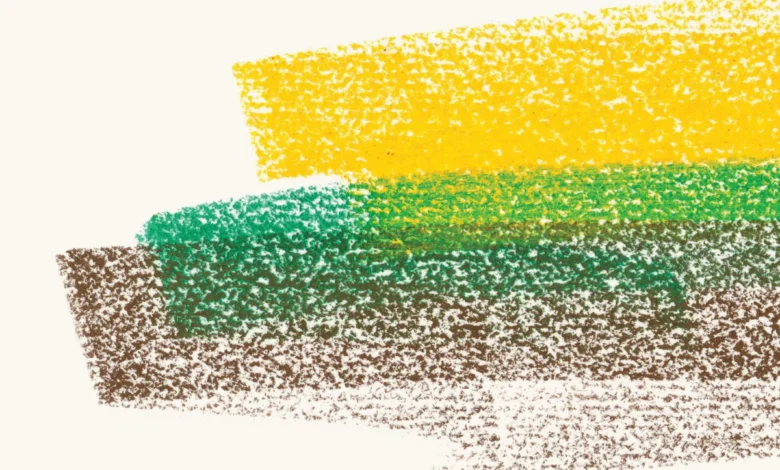
The Canadian composer and multi-instrumentalist Mathieu David Gagnon has officially released Volume III, the final installment in a critically acclaimed trilogy under his moniker, Flore Laurentienne. This concluding chapter marks the culmination of a multi-year creative odyssey that seeks to bridge the gap between the rigid structures of European classical music and the expansive, experimental textures of 1970s electronic minimalism. Inspired by the rugged geography and shifting light of the St. Lawrence River in Quebec, Gagnon’s latest work serves as both a sonic map of the Canadian landscape and a philosophical meditation on the cyclical nature of life. To support the release, Gagnon has confirmed a series of rare U.S. performances scheduled for August and September, bringing his unique ensemble of strings and synthesizers to major cultural hubs including New York City, San Francisco, and Chicago.
The Genesis of Flore Laurentienne and the Laurentian Trilogy
The Flore Laurentienne project began as an exploration of Gagnon’s roots, named after Brother Marie-Victorin’s seminal botanical record of the St. Lawrence Valley, the Flore laurentienne. Just as the book cataloged the botanical diversity of the region, Gagnon’s musical trilogy attempts to catalog the emotional and atmospheric diversity of the same terrain. Volume I, released in 2019, introduced listeners to Gagnon’s signature blend of a string quartet—consisting of violin, viola, cello, and double bass—interwoven with the warm, oscillating tones of vintage synthesizers.
The progression from Volume I to Volume III represents a refinement of Gagnon’s "organic-electronic" hybrid. While the first two volumes established the foundational themes of water and movement, Volume III shifts its focus toward the microscopic and the spiritual. The music is designed to evoke the "open vistas" of the St. Lawrence, a waterway that serves as a vital artery for Quebecois identity. By utilizing a string quartet alongside two keyboardists and a percussionist, Gagnon creates a wall of sound that feels both ancient and futuristic.
A Deep Dive into Volume III and the Single Fleurs
At the heart of the new album is the opening track, "Fleurs," a piece that encapsulates the thematic essence of the entire trilogy. The composition utilizes pizzicato string arrangements that mimic the delicate, rhythmic patterns found in nature, such as the falling of rain or the budding of a sprout. These "impressionistic renderings," as critics have noted, are complemented by a sweeping orchestration that suggests the movement of wind across a field.
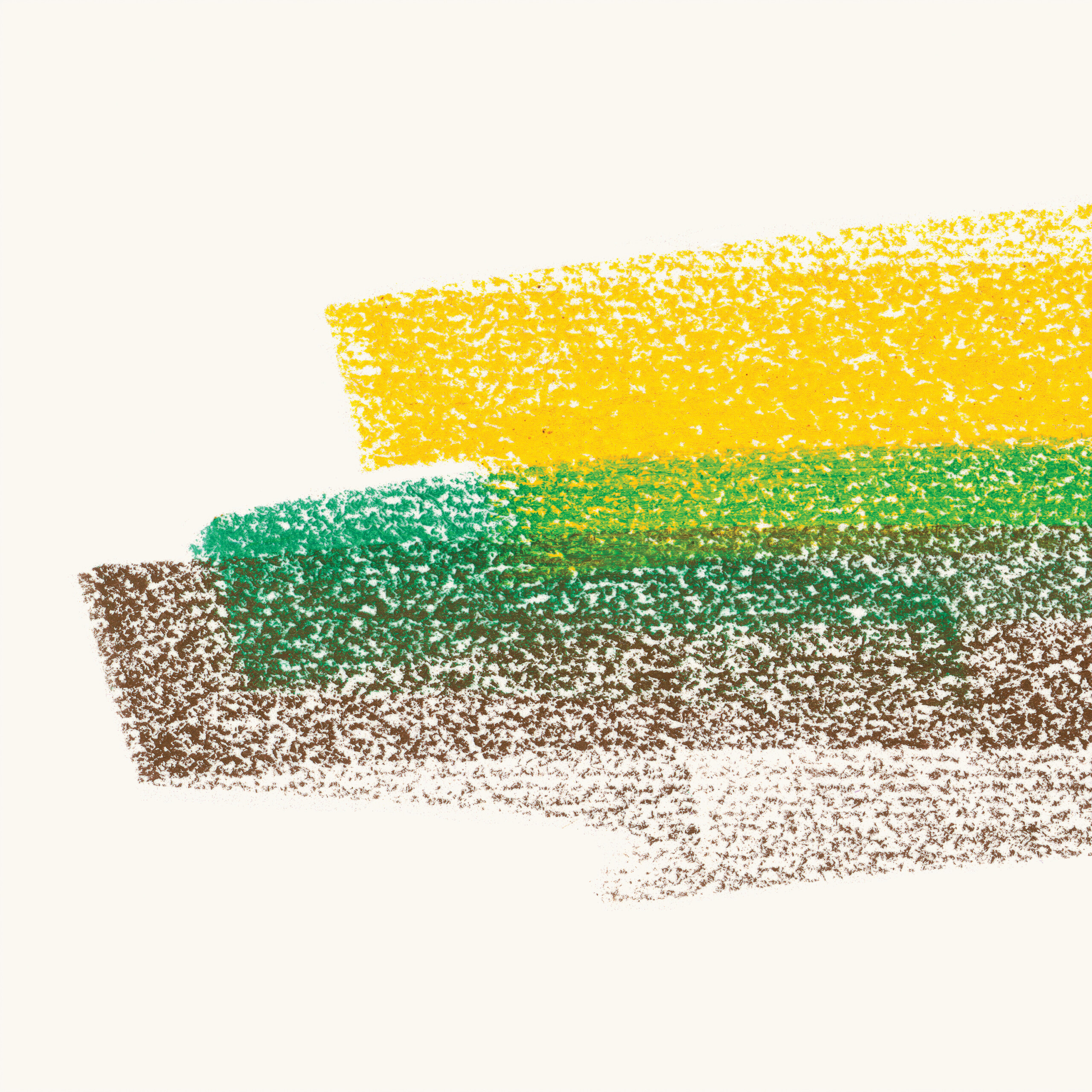
Gagnon has described "Fleurs" and the surrounding album as an exploration of "light." In his own words, the music represents the seed in the ground that matures into a plant and eventually a flower. This biological progression serves as a metaphor for the human experience: a peak of beauty followed by an inevitable wilting, allowing the cycle to begin anew. This quest for "beauty in chaos" is a recurring motif in Gagnon’s work, where complex, sometimes dissonant orchestral layers eventually resolve into harmonious, transcendent melodies.
The inclusion of the synthesizer in this organic context is not merely a stylistic choice but a spiritual one. Gagnon views the electronic components as a way to extend the sustain and frequency range of the acoustic instruments, providing a "spiritual dimension" that bridges the gap between the physical world (represented by the wood and gut of the strings) and the ethereal world (represented by the voltage-controlled oscillators of the synth).
Musical Influences: From Baroque to Krautrock
Mathieu David Gagnon’s artistic palette is notably diverse, drawing from several centuries of musical history. His formal training in classical composition is evident in his use of counterpoint and fugue-like structures, bearing the unmistakable influence of Johann Sebastian Bach. However, Gagnon’s work is equally indebted to the progressive rock and experimental movements of the 20th century.
- Johann Sebastian Bach: The rigorous mathematical beauty of Bach’s compositions provides the structural skeleton for Flore Laurentienne. Gagnon utilizes baroque techniques to ensure that even the most ambient passages have a sense of direction and purpose.
- King Crimson: The complexity and "heavy" symphonic textures of 1970s progressive rock, particularly the Mellotron-heavy era of King Crimson, inform Gagnon’s use of keyboards to create dramatic, expansive soundscapes.
- Hans-Joachim Roedelius: A pioneer of German electronic music (Krautrock) and a member of the influential groups Cluster and Harmonia, Roedelius’s "pastoral" approach to synthesizers is a direct precursor to Gagnon’s style. The emphasis on atmosphere over traditional pop structure allows the music to breathe and evolve slowly.
By synthesizing these influences, Gagnon has carved out a niche within the "modern classical" or "ambient orchestral" genres, appealing to fans of artists like Max Richter, Jóhann Jóhannsson, and Nils Frahm, while maintaining a distinctly Canadian perspective.
The U.S. Tour: Bridging Borders Through Sound
The announcement of U.S. tour dates in August and September marks a significant milestone for Flore Laurentienne. While Gagnon has built a substantial following in Canada and Europe, these performances in New York City, San Francisco, and Chicago represent a concerted effort to introduce his "Laurentian" sound to the American market.
The logistics of touring an ensemble that includes a string quartet, multiple keyboardists, and percussion are complex. However, the live experience is central to Gagnon’s mission. In a concert setting, the interplay between the acoustic and electronic elements becomes a visual and auditory spectacle, emphasizing the human element behind the technical precision of the recordings.
The choice of cities—NYC, San Francisco, and Chicago—reflects the project’s appeal to urban centers with a high demand for avant-garde and experimental classical music. These performances are expected to draw a diverse audience, ranging from classical aficionados to fans of ambient electronic music and post-rock.
Technical Specifications and Production
The production of Volume III involved a meticulous recording process designed to capture the "breath" of the instruments. Unlike many modern recordings that rely heavily on digital manipulation, Gagnon’s approach emphasizes the natural acoustics of the performance space. The string quartet was recorded with minimal processing to preserve the "organic beauty" of the harp, violin, viola, cello, and double bass.
The synthesizers used on the album are primarily analog, chosen for their warmth and slight instabilities, which Gagnon believes more closely mimic the behavior of natural phenomena. By blending these with the strings, the production achieves a depth of field that makes the listener feel as though they are standing in the middle of the landscapes Gagnon is describing.
Broader Implications and the Future of Modern Orchestral Music
The completion of the Flore Laurentienne trilogy arrives at a time when the boundaries between musical genres are increasingly fluid. Gagnon’s success suggests a growing appetite for music that is contemplative, complex, and rooted in the natural world. In an era dominated by rapid-fire digital consumption, the slow, unfolding beauty of Volume III offers a form of "sonic escapism" that encourages deep listening.
Furthermore, the project highlights the cultural importance of regional identity in art. By grounding his music in the specific geography of Quebec and the St. Lawrence River, Gagnon has created something that is both hyper-local and universally accessible. The themes of growth, decay, and rebirth explored in Volume III are universal, but the "colors and textures" used to express them are uniquely Laurentian.
As Gagnon prepares for his U.S. tour, the music industry will be watching closely. The success of Flore Laurentienne could pave the way for other Canadian composers who seek to blend traditional orchestration with modern technology. For now, Volume III stands as a definitive statement from a composer at the height of his powers, a final chapter that successfully closes a major artistic circle while leaving the door open for future explorations into the intersection of sound and nature.
The upcoming concerts in New York, San Francisco, and Chicago will likely be the only opportunity for American audiences to witness the trilogy performed in its entirety for the foreseeable future. As the "seed" of this project finally reaches its full "bloom" on the international stage, Mathieu David Gagnon has proven that the quiet beauty of the Canadian landscape can resonate far beyond the banks of the St. Lawrence.