Sofia Celebrates 15 Years of A to JazZ Festival with Eclectic Global Lineup and Industry Insights

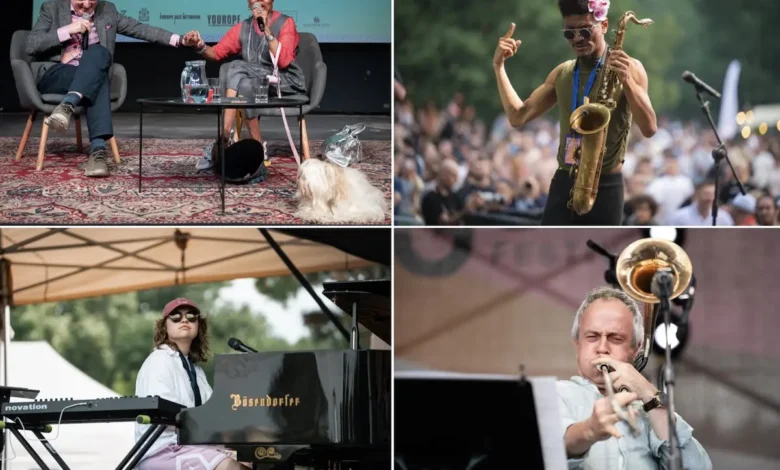
The A to JazZ Festival recently concluded its landmark 15th-anniversary edition in Sofia, Bulgaria, transforming the city’s South Park 2 into a vibrant hub of international culture from July 2 to July 5, 2026. Set against the backdrop of the Vitosha mountain range, which provides a dramatic natural skyline for the Bulgarian capital, the festival once again solidified its reputation as one of the most accessible and diverse musical gatherings in Europe. By adhering to its founding mission of presenting jazz "from A to Z," the event curated a program that bridged traditional jazz, world music, and experimental fusion, drawing tens of thousands of spectators to its open-air main stage.
Since its inception, the A to JazZ Festival has utilized a free-admission model, a strategic choice by organizers to democratize high-art music and foster a new generation of listeners. This year, the policy resulted in a massive turnout, with the park’s expansive lawns covered in a dense "ocean" of picnic blankets. The festival’s ability to maintain high production values while remaining free to the public is often cited by regional cultural analysts as a benchmark for successful public-private partnerships in the Balkan arts sector.
A Decade and a Half of Musical Evolution in Sofia
The 15th anniversary served as a reflection on the festival’s growth from a local initiative into a major fixture on the European summer circuit. Founded and directed by Peter Dimitrov, A to JazZ has evolved into more than just a series of concerts; it is now a multi-platform event featuring professional conferences, late-night jam sessions, and educational workshops. The 2026 edition highlighted this maturity by balancing legendary headliners with emerging avant-garde artists and local Bulgarian talent.
The festival’s location in South Park 2 is central to its identity. Sofia is unique among European capitals for having a high-altitude mountain range within a 15-minute drive of the city center, and the festival leverages this "urban nature" aesthetic. The atmosphere of the 2026 event was bolstered by consistently clear summer weather, allowing the diverse programming—which began at 6 p.m. each evening—to transition from sunset melodies into high-energy night sets.
Global Sounds and World Music Showcases
While the festival is rooted in jazz, the opening day on Thursday, July 2, was traditionally dedicated to world-music showcases. This segment of the program serves as a bridge between various improvisational traditions. One of the standout performances of the opening night was delivered by Uma Ranganathan, an Indian vocalist currently based in Norway. Ranganathan presented a "Carnatic trialogue," a sophisticated blend of South Indian classical music and contemporary improvisation. Musicologists at the event noted that the emphasis on complex rhythmic cycles and melodic spontaneity in Carnatic music shares a deep "natural affinity" with the core tenets of jazz.
Following the Indian-influenced sets, the Nubras Ensemble took the stage to demonstrate the results of cross-border collaboration. Their performance functioned as a musical bridge between southern Italy and Bulgaria. A highlight of this set was the appearance of Diyana Vasileva, a member of the world-renowned "Mystery of the Bulgarian Voices" choir. By integrating the distinctive, piercing vocal harmonies of Bulgarian folklore with Mediterranean instrumentation, the ensemble showcased the festival’s commitment to "A to Z" inclusivity, proving that jazz’s improvisational spirit can comfortably inhabit any cultural framework.
The Industry Forum: Bridging Borders and Historical Precedents
Running parallel to the live performances, the A to JazZ music conference—established in 2018—provided a platform for industry professionals to discuss the shifting landscape of the global music market. The 2026 conference brought together a panel of festival directors, venue programmers, and promoters to address the increasing difficulties of international touring.
A key speaker at the forum was Paul Pace, a prominent figure in the British jazz scene. Pace addressed the rising tide of "musical nationalism" and the logistical hurdles posed by modern border policies and inflation. He drew a historical parallel to the mid-20th century, reminding the audience of how Pete King, co-founder of Ronnie Scott’s Jazz Club, negotiated a landmark agreement with the American Federation of Musicians. This agreement was instrumental in allowing U.S. jazz legends to perform in the United Kingdom, effectively internationalizing the European jazz scene. Pace argued that similar creative diplomacy is required today to ensure that jazz remains a global, rather than a regional, art form.
Dee Dee Bridgewater: A Masterclass in Artistry and Activism
The conference took an emotional turn when legendary American vocalist Dee Dee Bridgewater joined Paul Pace for an unscheduled discussion. Accompanied by her dog, Daisy, Bridgewater spoke candidly about her personal struggles with medical depression and the therapeutic role of her companion. She also reflected on the evolution of the jazz club environment, recalling her early days at Ronnie Scott’s when the atmosphere was thick with cigarette smoke—a detail she noted significantly impacted her vocal health at the time.
Bridgewater used her platform to address systemic issues within the industry, specifically the sexism she has faced over a career spanning more than five and a half decades. This experience led to the formation of her all-female "We Exist!" project, which she described as a direct challenge to the patriarchal structures that have historically dominated the jazz world.
This spirit of defiance and excellence carried over to her Saturday night performance on the main stage. Bridgewater delivered a commanding set that was as much a political statement as it was a musical triumph. Before performing Nina Simone’s civil rights anthem "Mississippi Goddam," she provided the audience with the historical context of the 1963 Birmingham church bombing and the assassination of Medgar Evers, explaining that the song’s message remains pertinent in contemporary American politics. Her rendition of Bob Dylan’s "Gotta Serve Somebody" was pointedly dedicated to what she termed the "orange king," a reference to former President Donald Trump. Despite a scheduled early departure the following morning, Bridgewater performed an encore of "Amazing Grace," an unaccompanied performance that resonated deeply with the crowd on the Fourth of July.
Legacy and Innovation: The Next Generation of Jazz
The 2026 festival also served as a proving ground for younger artists. Polish pianist Hania Derej emerged as one of the weekend’s most talked-about performers. Adopting a modern, streetwear-influenced aesthetic, Derej initially presented her compositions in a classic trio format. However, she quickly expanded the set’s scope, utilizing wordless vocalizations over a Bösendorfer grand piano before incorporating electronic keyboards to create atmospheric, cinematic textures. The addition of an alto saxophonist later in the set transformed the trio into a quartet, significantly increasing the harmonic density and volume, signaling a shift toward a more aggressive, contemporary European jazz sound.
The festival also explored the weight of musical heritage through the performance of saxophonist Tomoki Sanders, the son of the late free-jazz icon Pharoah Sanders. While his set began with considerable energy, critics noted that the performance struggled to maintain its initial momentum, illustrating the unique pressure faced by the descendants of jazz royalty to innovate while remaining tethered to a legendary lineage.
The Electric Legacy of Miles Davis
Friday evening’s highlight was a celebration of the Miles Davis centennial, led by Davis’s nephew, drummer Vince Wilburn Jr. His ensemble, the Miles Electric Band (M.E.B.), has been active since 2010, focusing on the "electric period" of Davis’s career that began in the late 1960s. The 10-piece group delivered a high-octane set that spanned from the psychedelic jazz-rock of Bitches Brew (1969) to Davis’s 1980s pop-inflected work, including his cover of Michael Jackson’s "Human Nature." The performance served as a reminder of Davis’s enduring influence on the fusion of jazz with funk, rock, and electronic elements.
Scientific Harmony and the Bulgarian Jazz Renaissance
The festival prominently featured local talent, highlighting the strength of the contemporary Bulgarian jazz scene. Trombonist Gueorgui Kornazov, who has established a significant career in France, presented his "Autumn Impressions" project. The ensemble’s unusual instrumentation—including accordion, tuba, and trumpet—created a rich, chamber-jazz sound that stood out for its textural originality.
Another standout was double bassist Victoria Kirilova, whose quartet delivered a performance based on her album Roots & Skies. Accompanied by clarinetist Oscar Antoli, pianist Dimitar Gorchakov, and drummer Borislav Petrov, Kirilova’s set was praised for its expressive depth and technical precision, further establishing her as a rising star in the European bass tradition.
Perhaps the most intellectually provocative set came from drummer and physicist Emil Tassev. His quartet performed pieces from his debut album Tesseract, which utilizes four-dimensional geometric concepts as a framework for musical composition. Tassev explained that the music is intended to act as a metaphor for realities beyond standard human perception. Observers noted that the complex, shifting structures of his music evoked a sense of "geometric visions," providing a cerebral contrast to the more traditional blues and swing-based sets of the weekend.
The Socio-Economic Impact of Accessible Culture
As the main stage performances concluded each night at 11 p.m. due to local noise ordinances, the energy of the festival shifted to Toplocentrala, a nearby contemporary arts center. These late-night sessions, which featured both local performers and international headliners, underscored the community-building aspect of A to JazZ. Even members of the festival’s administrative team, such as vocalist Veleka Tsankova, participated in these sessions, blurring the lines between organizers and artists.
The success of the 15th A to JazZ Festival provides a clear indication of the health of the jazz genre in Eastern Europe. By offering high-quality performances free of charge, Peter Dimitrov and his team have effectively lowered the barrier to entry for a genre often perceived as elitist. The massive crowds in South Park 2 suggest that there is a significant public appetite for sophisticated, improvisational music when it is presented in an inviting, communal environment.
As the festival looks toward its next decade, the 2026 edition stands as a testament to the power of cultural persistence. In an era of increasing digital isolation and political polarization, A to JazZ has created a physical space where global traditions can intersect. The festival not only brings jazz to the people of Sofia but also places Sofia firmly on the map of the global jazz community, proving that the genre is not only alive but thriving in the heart of the Balkans.