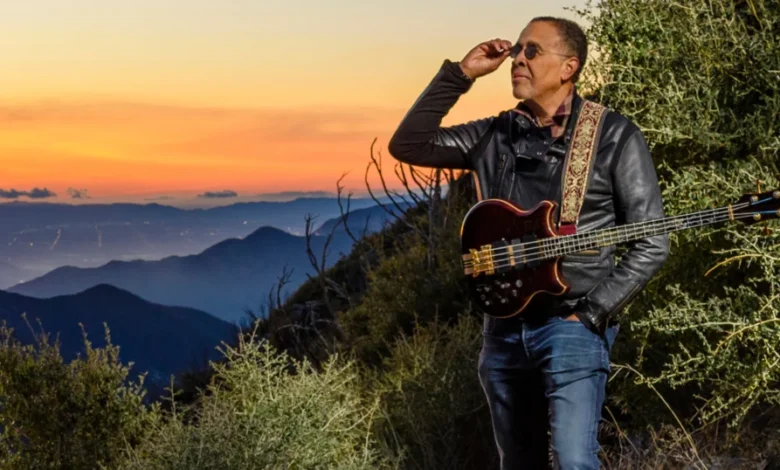
The Foundation of a Virtuoso: From Philadelphia to New York
The journey of Stanley Clarke began in Philadelphia, a city with a rich musical heritage that provided the perfect crucible for his developing talent. Born in 1951, Clarke was initially drawn to the double bass, influenced by the classical tradition and the rigorous discipline of the Philadelphia Academy of Music. However, the burgeoning jazz scene of the late 1960s and early 1970s soon redirected his focus. His arrival in New York City marked a pivotal moment in jazz history, as the genre was beginning to experiment with electronic elements and rock-influenced structures.
By the age of 20, Clarke was already performing with giants such as Horace Silver, Stan Getz, and Dexter Gordon. These early collaborations provided him with a foundational understanding of swing and bebop, but it was his meeting with keyboardist Chick Corea that would alter the course of his career and the history of jazz itself. Together, they formed Return to Forever, a group that would become one of the "big four" of the jazz-fusion movement, alongside Weather Report, the Mahavishnu Orchestra, and Herbie Hancock’s Headhunters.
The Return to Forever Era and the Fusion Revolution
In the early 1970s, Return to Forever became a laboratory for Clarke’s evolving style. Initially an acoustic-leaning group, the band transitioned into a high-voltage electric ensemble with the addition of drummer Lenny White and guitarist Al Di Meola. During this period, Clarke’s use of the electric bass became revolutionary. He was one of the first musicians to treat the electric bass with the same technical reverence as a concert violin or a lead guitar.
His work on albums like Hymn of the Seventh Galaxy (1973) and Romantic Warrior (1976) showcased a percussive, rapid-fire technique that utilized "slapping" and "popping"—methods he helped pioneer and refine. These techniques allowed the bass to punch through the dense textures of synthesizers and distorted guitars, establishing Clarke as a household name among music enthusiasts. The success of Return to Forever was not merely commercial; it represented a paradigm shift in how jazz was perceived by younger audiences, bridging the gap between the complexity of jazz improvisation and the energy of rock and roll.
Redefining the Soloist: School Days and Beyond
While his work with Return to Forever solidified his status in a group setting, Stanley Clarke’s solo career proved that the bass could sustain the interest of a mainstream audience as a solo instrument. His 1976 album, School Days, remains a cornerstone of the fusion genre. The title track, with its iconic opening bass riff, demonstrated a level of melodic clarity and rhythmic drive that had rarely been heard from an electric bass player.
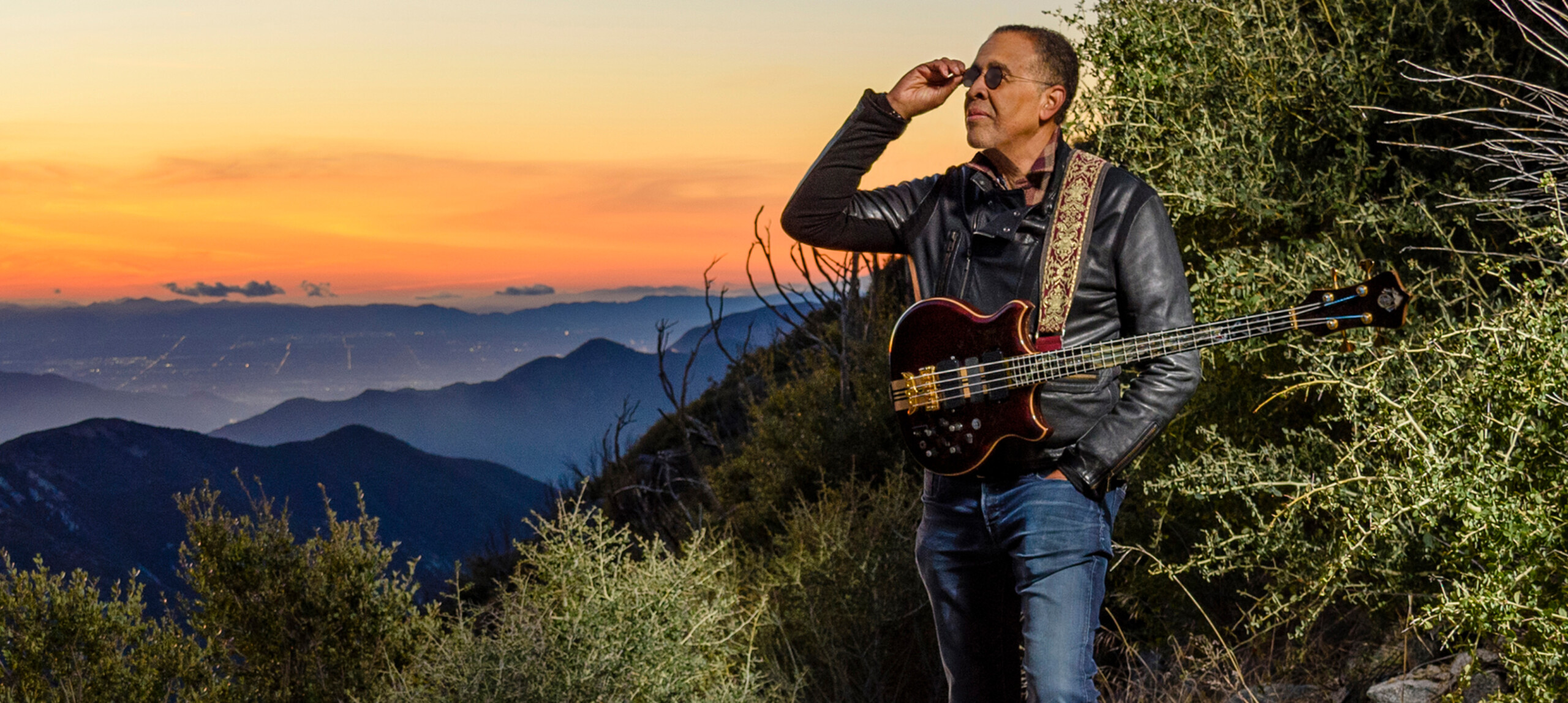
School Days reached number 34 on the Billboard 200 and number 2 on the Jazz Albums chart, a rare feat for an instrumental bass record. This era saw Clarke collaborating with a diverse array of artists, from rock legend Jeff Beck to keyboardist George Duke. The Clarke/Duke Project, formed in the early 1980s, yielded the hit "Sweet Baby," proving that Clarke could also navigate the worlds of R&B and pop without sacrificing his musical integrity.
The Cinematic Shift: Scoring for Film and Television
As the 1980s progressed, Clarke sought new ways to apply his musicality beyond the concert stage. He turned his attention to film and television scoring, a move that required him to subordinate his individual virtuosity to the needs of a visual narrative. This transition was marked by his work on the hit television series Pee-wee’s Playhouse, for which he received an Emmy nomination.
His foray into cinema was even more impactful. Clarke composed the scores for seminal films such as John Singleton’s Boyz n the Hood (1991), What’s Love Got to Do with It (1993), and The Transporter (2002). To date, he has over 60 film and television credits to his name. This period of his career was essential to his personal growth as a composer, forcing him to think in terms of orchestration, mood, and thematic development rather than just rhythmic patterns and soloing. He often noted that film scoring taught him the "power of the note"—the idea that a single, well-placed tone could be more effective than a thousand fast ones.
The Stanley Clarke Band: Mentoring the New Generation
In the 21st century, Stanley Clarke has increasingly focused on his role as a mentor. Through the Stanley Clarke Band, he has provided a platform for young, prodigious talents to develop their voices. Musicians such as keyboardists Ruslan Sirota, Beka Gochiashvili, and Cameron Graves, and drummers like Ronald Bruner Jr. and Mike Mitchell, have all passed through his "school of bass."
This commitment to the next generation is a core component of his "power of intention." Clarke believes that jazz is a living, breathing entity that requires constant infusion from younger perspectives to remain relevant. His 2010 self-titled album with the Stanley Clarke Band won the Grammy Award for Best Contemporary Jazz Album, proving that his ability to lead and innovate remained sharp even four decades into his career. His recent tours have focused on "4-EVER," a project that revisits the repertoire of Return to Forever but through the lens of modern, younger arrangements.
Technical Innovation and the Alembic Bass
Clarke’s influence extends into the realm of instrument design. He was an early adopter and long-time collaborator with Alembic, a company that pioneered the boutique high-end bass market. The "Stanley Clarke Signature" bass, with its short scale and active electronics, became an industry standard for players seeking the "hi-fi" clarity that Clarke made famous. His insistence on high-quality craftsmanship and tonal precision helped push the entire industry toward better manufacturing standards for the electric bass.

Despite his mastery of the electric instrument, Clarke has never abandoned the upright bass. He remains one of the few players who can switch between the two with total fluency, maintaining the earthy, resonant traditions of the acoustic bass while pushing the technical boundaries of the electric. This duality is central to his identity; he is simultaneously a guardian of jazz tradition and a pioneer of its future.
Honors, Legacy, and Broader Implications
The accolades bestowed upon Stanley Clarke reflect a career of immense impact. He is a four-time Grammy Award winner and was named an NEA Jazz Master in 2022, the highest honor the United States bestows on jazz musicians. Furthermore, he was the recipient of the Miles Davis Award at the Montreal Jazz Festival and has been inducted into the DownBeat Hall of Fame.
However, Clarke’s legacy is not just found in awards but in the thousands of bassists who have followed in his footsteps. Before Clarke, the bass was often relegated to the background. He, alongside contemporaries like Jaco Pastorius, liberated the instrument, allowing it to sing, scream, and lead.
The "power of intention" that Clarke speaks of today is a call to action for all artists. It suggests that technical skill is merely a tool, and that the true value of music lies in its ability to communicate a higher purpose—be it social change, spiritual connection, or the simple joy of discovery. In an era where digital perfection is easily attainable, Clarke’s emphasis on human intention and soulful virtuosity serves as a necessary reminder of what makes music meaningful.
As he continues to tour and record, Stanley Clarke remains a vital force in the music world. Whether he is performing a complex fusion suite or a delicate acoustic ballad, his playing is characterized by a sense of urgency and a deep respect for the listener. He remains, as he has always been, a musical explorer, forever searching for the next frontier while grounded in the wisdom of a storied past. His journey is a testament to the fact that when virtuosity is guided by intention, the possibilities are limitless.