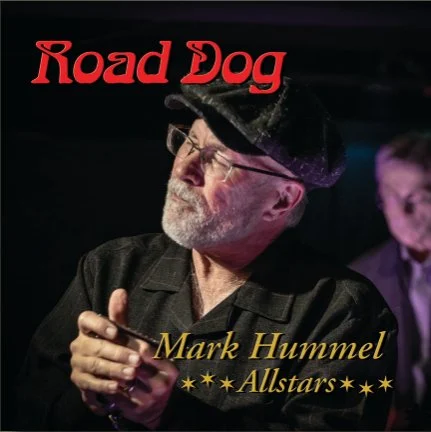
Blues harmonica virtuoso and veteran bandleader Mark Hummel has returned with a comprehensive and dynamic new release, Road Dog, issued via Rockinitus Records. Spanning 14 tracks and clocking in at precisely 60 minutes of meticulously curated music, the album showcases Hummel’s enduring dedication to traditional blues forms while bridging the stylistic gaps of a career that now spans nearly five decades. Featuring a rotating cast of elite blues instrumentalists, the record compiles recording sessions from multiple eras—primarily 2025, alongside vaulted material from 2024, 2015, and 2008—to construct a cohesive narrative about the grueling, yet deeply rewarding, lifestyle of a touring musician.
Main Facts and Production Overview
Road Dog acts as both a showcase of contemporary studio prowess and a historical retrospective of Hummel’s musical alliances. The 14-track record is anchored by Hummel’s expressive lead vocals and his signature chromatic and diatonic harmonica playing, which remains the central driving force of the production.
The album’s creation is a masterclass in assembling modern blues royalty. The primary 2025 sessions feature an elite backing ensemble consisting of guitarists Anson Funderburgh and Junior Watson, drummer Wes Starr, pianist Bob Welsh, and bassist Kedar Roy, with saxophonist Eric Spaulding augmenting select arrangements. The 2024 tracking sessions retained Watson, Starr, and Roy, while incorporating pianist Brett Brandstatt. Delving into the archives, Hummel integrated unreleased material from a 2015 session featuring Funderburgh, the late guitar maestro "Little Charlie" Baty, bassist R.W. Grigsby, and Starr. Further stretching the timeline, tracks from 2008 feature guitarist Rusty Zinn, pianist Chris Burns, and drummer Willie Panker, as well as an intimate acoustic-leaning cut featuring only Hummel and guitarist Randy Rattray.
Rather than sounding disjointed, the multi-era compilation mirrors the transient, road-worn philosophy of the title track. It weaves classic covers with autobiographical originals, establishing a direct link between pre-war blues traditions and West Coast jump blues sensibilities.
Chronology and Career Background
Mark Hummel’s journey to becoming a pillar of modern traditional blues is deeply rooted in the foundational eras of the genre. Born on the East Coast and raised in Southern California, Hummel caught the blues bug during his high school years. His early education came from absorbing the foundational recordings of Chicago blues architects Muddy Waters, Sonny Boy Williamson, and Little Walter. His commitment was galvanized after witnessing live performances by blues icons Charlie Musselwhite, Brownie McGhee, and James Cotton—artists with whom Hummel would later share stages and forge lasting professional relationships.
In 1976, Hummel relocated to Berkeley, California, where he co-founded The Blues Survivors alongside Mississippi Johnny Waters. By 1985, The Blues Survivors had transitioned into a full-time, relentlessly touring operation. Over the subsequent decades, the band functioned as an academy for premier roots musicians, cycling through stellar sidemen including Sue Foley, Rusty Zinn, and Anthony Paule.
Hummel’s discography is extensive, encompassing more than thirty recordings since 1985. His career reached critical and commercial peaks with his 2014 release, Remembering Little Walter, a monumental tribute project that earned him two Blues Music Awards—for Best Traditional Blues Album and Best Blues Album—alongside a prestigious Grammy Award nomination for Best Blues Album. In 2019, his prowess on the instrument was further recognized with a Blues Music Award nomination for Best Instrumental – Harmonica.
Musical Analysis and Thematic Scope
The sonic architecture of Road Dog explores the intersections of heartbreak, personal reflections, and the unglamorous realities of life on the American highway.
The album opens with a faithful yet energetic interpretation of "Black Nights," penned by pianist Fats Washington and originally popularized by Lowell Fulson in 1965. The track establishes a recurring thematic motif of alienation and failing relationships, featuring lyrics that lament betrayal: "It used to be I recall you were mine alone. But now I see you wanna be left on your own."
Hummel transitions to autobiographical storytelling on "Jugglin’," a track that examines the duality of being a mid-tier roots musician who must simultaneously act as an artist and an administrative manager. Hummel sings, "I love the music that I make, the guys I play with rock. Makes no difference whether it is empty or lined around the block, that is why I’m jugglin’… my blues away." This sentiment of resilience is mirrored in the title track, "Road Dog," which serves as a frank meditation on the exhaustion and psychological toll of perpetual touring.
The tracklist deftly bridges historical tributes with personal milestones. "I Got to Find My Baby," originally composed by Peter Clayton in 1941, is filtered through the lens of Little Walter’s 1954 arrangement. On Willie Mabon’s 1960 tune "Why Did It Happen," Hummel blends his fluid chromatic harmonica lines with Eric Spaulding’s saxophone, creating a dense, melancholic texture.
Domestic stability provides a counterweight to the instability of the road. Hummel dedicates multiple tracks to his wife, Alexis. "Real Good Woman" features an intricate, swinging piano solo by Bob Welsh, while "You Are Right" offers a humorous and affectionate nod to marital compromise, with Hummel acknowledging the ultimate rule of domestic harmony: "You are right and, baby, I am wrong." These moments of warmth find a companion in Rice "Sonny Boy Williamson II" Miller’s 1965 cut "She’s My Baby," where Hummel declares his partner to be "my heater when the world is cold."
The album also touches upon interpersonal betrayal. Hummel revives Jimmy Reed’s 1964 single "When You’re Doin’ Alright," noting in promotional materials that the song was inspired by the painful realization of being backstabbed by a trusted confidant. The album concludes with "Gadjo’s Swing," a jazzy, gypsy-infused instrumental that highlights Hummel’s technical agility on the chromatic harmonica, serving as a sophisticated bookend to a roots-heavy collection.
Broader Impact and Industry Implications
In an era where the contemporary music industry increasingly prioritizes algorithmic streaming metrics and short-form digital content, Road Dog stands as an artifact of long-form craftsmanship and archival dedication. By synthesizing studio sessions spanning nearly two decades, Mark Hummel has delivered a project that transcends the traditional "album-cycle" release model.
For the blues genre, releases of this caliber underscore the vital importance of generational collaboration. By integrating veteran guitarists like Anson Funderburgh and Junior Watson with seasoned sidemen and archival recordings of the late Little Charlie Baty, Hummel actively preserves the lineage of West Coast and post-war electric blues. The album demonstrates that traditional blues remains a living, evolving idiom capable of absorbing personal autobiography without losing its historical reverence.
Ultimately, Road Dog reinforces Mark Hummel’s standing not merely as a master technician of the blues harmonica, but as an essential historian and storyteller of the American road. Through expert arrangements, top-tier ensemble performances, and unyielding emotional honesty, Hummel has delivered a career-defining statement that will resonate deeply with purists and casual listeners alike.