The Jazz Renaissance on YouTube is Redefining Genre Boundaries Through Creative Crossover and Global Performance

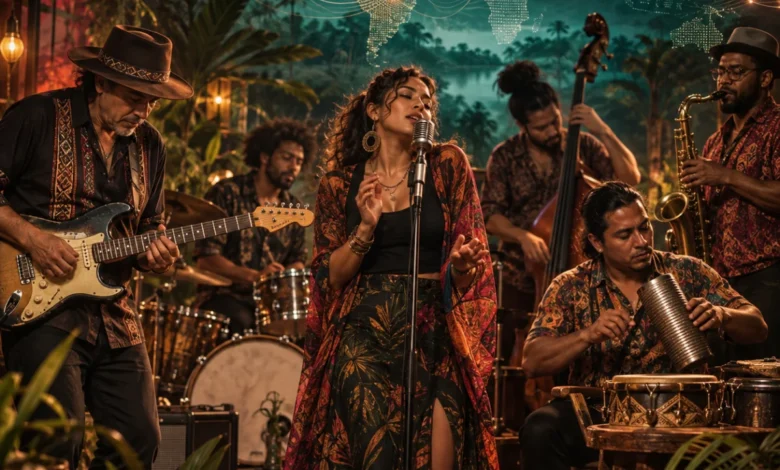
The traditional boundaries of jazz are undergoing a radical, digital-led transformation as artists from across the musical spectrum leverage the platform to reach massive, diverse new audiences. By embedding the sophisticated language of jazz—its improvisational spirit, complex harmonic structures, and ensemble-based responsiveness—into cumbia, Latin alternative, pop, and internet-centric subcultures, performers like Los Mirlos, Mon Laferte, and Ezra Collective are dismantling the barriers that have historically siloed the genre. This shift, clearly evidenced in the week ending September 18, 2026, suggests that the modern listener is far less concerned with rigid categorization than with the emotional and technical caliber of live performance.
The surge in engagement on YouTube during this period highlights a growing appetite for performances that feel immediate, intimate, and culturally authentic. While celebrity-driven content remains a pillar of the platform, the data indicates a significant shift toward high-quality, genre-fluid musical arrangements. These artists are not merely performing; they are utilizing jazz as a bridge, connecting disparate fanbases that might otherwise never intersect.
The Amazonian Psychedelia of Los Mirlos
Perhaps the most striking case study of this phenomenon is the legendary Peruvian ensemble Los Mirlos. With a career spanning over five decades, the group is widely credited with pioneering cumbia amazónica. Their performance at NPR’s Tiny Desk, uploaded on September 17, serves as a masterclass in how legacy acts can find fresh relevance in a digital-first world.
The video garnered 735,372 views and 59,377 likes within the first 24 hours, yielding an exceptional 8.1% like-to-view ratio. This metric is significantly higher than the industry average for legacy acts, suggesting that the audience is not just viewing the content out of historical curiosity but is actively engaging with the music’s vibrant, psychedelic energy. By refusing to soften their signature reverb-heavy guitar tones or rhythmic intensity for an international audience, Los Mirlos successfully demonstrated the universal appeal of their sound. This growth signifies a broader North American awakening to regional South American sounds, as listeners increasingly seek out the "groove-first" approach that has defined Amazonian cumbia for generations.
Mon Laferte and the Theatricality of Jazz
While Los Mirlos leaned into regional authenticity, Chilean-Mexican artist Mon Laferte utilized the platform to present a highly stylized, jazz-adjacent performance that challenged the very setting of her Tiny Desk appearance. Uploaded on September 15, her set reached over two million views within three days, underscoring her status as a powerhouse in the global Latin alternative market.
Laferte’s performance was notable for its conceptual depth. By dressing her backing ensemble in corporate attire and opening with the jazz-inflected "For Your Consideration," she turned the familiar NPR office environment into a meta-commentary on the intersections of art, commerce, and identity. Her ability to pivot between cabaret drama and jazz harmony highlights a sophisticated understanding of musical storytelling. The technical precision of her band, which seamlessly navigated shifts in mood and tempo, serves as a poignant reminder that jazz influence is often found in the subtle nuances of phrasing and ensemble communication rather than in standard, extended solos.
Bridging the Gap: Matt Dusk and the Digital Generation
The success of Canadian crooner Matt Dusk’s 1960s-style jazz arrangement of "My Ordinary Life"—originally by electronic act The Living Tombstone—provides a roadmap for how jazz musicians can engage with internet-native audiences. By replacing the electronic production of the source material with a classic big-band instrumentation of drums, brass, and bass, Dusk did not simply cover a song; he recontextualized it.
The 425,000 views and 23,000 likes accrued in four days suggest that the "jazz-ification" of pop culture phenomena is a highly effective strategy. Dusk’s arrangement respects the melodic familiarity that gaming and animation fans already associate with the track, while introducing them to the sophistication of traditional jazz arranging. This approach demonstrates that younger demographics are not resistant to jazz musicianship, provided the context of the performance is relevant to their existing cultural touchstones.
Improvisation as a Common Language
London’s Ezra Collective continues to exemplify the role of jazz as a social and communal medium. Their recent BBC Radio 1 Live Lounge performance, featuring a reimagining of Bad Bunny’s "NUEVAYoL," serves as a testament to the genre’s flexibility. By treating Bad Bunny’s reggaeton-infused hit through the lens of jazz-funk and Afrobeat, Ezra Collective emphasized the shared DNA between Caribbean rhythms and the improvisational momentum of the London jazz scene.
This cross-pollination is not a marketing gimmick; it is an organic extension of the group’s musical vocabulary. The performance, alongside their original composition "El Corazón," shows that jazz functions best when it acts as an active participant in global musical conversations. By moving past the traditional opposition between "popular" music and "jazz," these artists are creating a new, inclusive paradigm that prioritizes rhythm as identity.
The Role of Long-Form Content and Curation
Beyond individual artist performances, the landscape of jazz discovery is being reshaped by curators and long-form video formats. Cory Wong’s 41-minute performance at Rock Werchter, which amassed over 54,000 views in two days, proves that there is a significant audience for full-set documentation. Unlike short-form clips, which often serve as fleeting entertainment, long-form content allows viewers to witness the development of themes, the chemistry of a large ensemble, and the intricacies of horn arranging.
Furthermore, entities like Soulection and the label "Jazz Is Dead" are filling the role once held by record-store clerks and terrestrial radio DJs. Joe Kay’s 15th Anniversary Set and the "Best of Acid Jazz" compilation demonstrate that today’s listeners are increasingly following "curators of taste" rather than being bound by traditional genre labels. By blending R&B, amapiano, house, and jazz-funk, these curators are building platforms where the discovery of a new jazz artist feels like a natural step in a broader musical journey.
Sustaining Momentum: The Case of Tori Kelly
The sustained growth of Tori Kelly’s Tiny Desk session provides a definitive data point regarding audience retention. After a strong initial launch, the video continued to climb, adding 1.7 million views over seven days—a 328% increase. This trajectory confirms that the audience is returning to the content, likely drawn by the technical proficiency of the all-woman band and the complexity of the arrangements. The success of this performance indicates that high-quality, live-instrumentation music possesses a "long tail" of popularity that celebrity-centric, short-form content often lacks.
Implications for the Future
The aggregate data from the week of September 18, 2026, reveals a fundamental shift in how the industry views the jazz audience. The genre is no longer a restricted category; it is a musical language capable of being spoken in any dialect. Artists who meet listeners where they are—whether that is in the Amazonian rainforest, a corporate-styled office, a Toronto park, or a gaming community—are the ones currently driving the growth of the medium.
As these artists continue to bypass traditional gatekeepers, the definition of what constitutes "jazz" on platforms like YouTube will likely continue to expand. The success of this week’s performances proves that the audience for jazz-inflected music is substantially larger than the population of those actively searching for the term "jazz." For the industry, the takeaway is clear: the future of the genre lies in its ability to serve as a bridge between the familiar and the unexpected, inviting listeners to move from the music they know to the sound of something entirely new.