Khyam Allami Unveils Groundbreaking Archive and Software for Arabic Tuning Systems

Beirut, Lebanon – A significant advancement in the preservation and accessibility of traditional musical tuning systems, particularly within the rich landscape of Arabic music, was unveiled yesterday in Beirut. Dr. Khyam Allami, a researcher at the Music Intelligence Lab at the American University of Beirut (AUB), presented a monumental long-term research project that comprises a free, open archive of hundreds of tuning systems, ajnās (modes), and maqāmāt (melodic modes), alongside a novel, free MIDI plug-in designed to apply and dynamically adjust these tunings across a wide array of digital music production software. This initiative represents a critical step towards democratizing access to complex microtonal systems and fostering a deeper, more nuanced understanding of global musical traditions.
The dual-component project, meticulously developed over several years, aims to address what Allami and collaborators identify as a significant limitation in current digital music technology: the rigid adherence to standardized Western tuning systems and the lack of intuitive tools for exploring and implementing microtonal variations common in non-Western music. The archive serves as a comprehensive repository, meticulously cataloging a vast spectrum of tuning frameworks, while the accompanying software, named "Tanghām," provides a practical, real-time interface for musicians to engage with these diverse intonational landscapes.
The Tanghām Initiative: Bridging Tradition and Technology
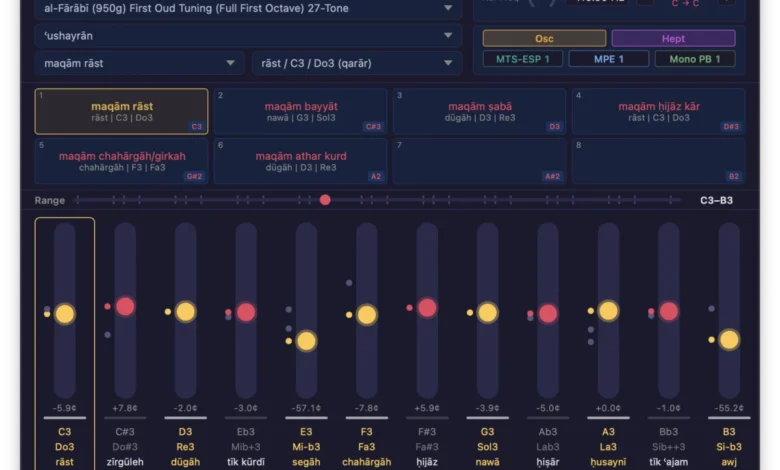
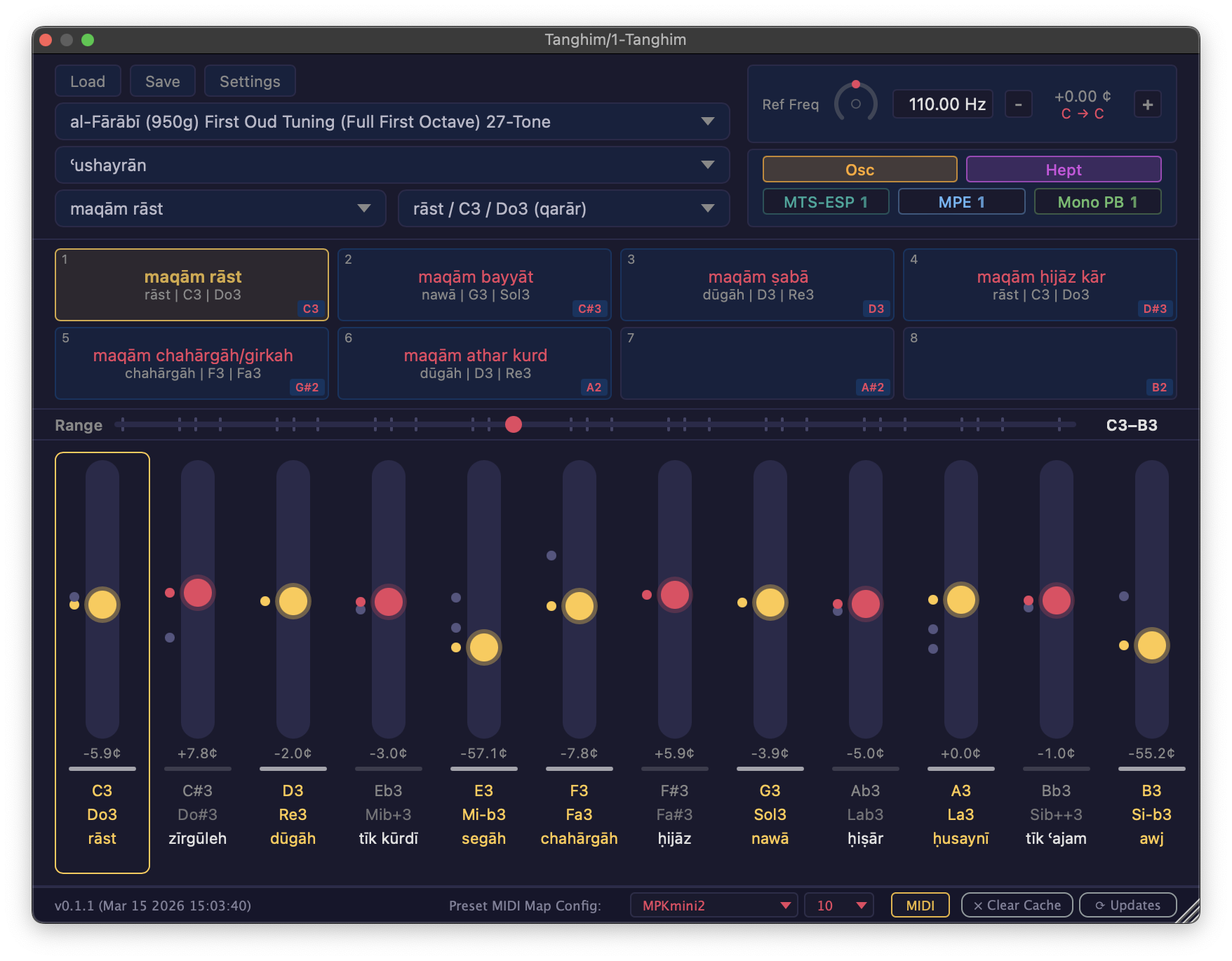
The Tanghām software is engineered for maximum compatibility within the digital audio workstation (DAW) environment. It operates seamlessly with Oddsound’s MTS-ESP (MIDI Tuning Standard Extended Support), a protocol enabling advanced microtonal capabilities. Furthermore, it supports MIDI Polyphonic Expression (MPE), a burgeoning standard for expressive MIDI controllers that allows for polyphonic pitch manipulation, and even monophonic pitch bend, ensuring compatibility with virtually any MIDI hardware or software dating back to the inception of the MIDI specification.
For DAWs that still lag in direct support for advanced tuning features, such as Ableton Live, Tanghām offers bundled solutions. It includes a dedicated PE Receiver and a Mono Pitch Bend Receiver, both implemented as Max for Live devices. This thoughtful integration ensures that a broad spectrum of producers and composers can leverage the power of Tanghām, regardless of their preferred software ecosystem.
A core philosophical underpinning of Tanghām is its critique of the current limitations in digital tuning interfaces. Allami points out that existing tools, including those supporting MTS-ESP, MPE, and even established formats like Scala, often lack a crucial element: a live, interactive interface for tuning. This stands in stark contrast to the practice of acoustic musicians and vocalists, who naturally adjust their intonation to suit different musical contexts. In complex melodic systems like the Arabic maqām, a fixed, static tuning can fundamentally misrepresent the fluid and nuanced nature of performance. The system is not merely a collection of notes but a framework for expressive melodic movement and emotional conveyance, where subtle shifts in pitch are paramount.
Deconstructing "Tanghām": A Name Rooted in Intonation
The very name of the software, "Tanghām," is deeply significant, directly referencing the concept of intonation. As explained by the project’s documentation, "Tanghām" is an Arabic maṣdar (verbal noun) that denotes the act of intoning or setting pitch. Linguistically, it is the direct equivalent of "intonation," referring to the melodic contour of speech. This choice of name deliberately distinguishes it from dāzān (Arabic: دَازَن), which refers to the mechanical tuning of an instrument’s strings. Dāzān itself is a loanword from Ottoman Turkish dūzen, meaning "order, arrangement, tuning," derived from the verb dūzmek, meaning "to arrange, put in order."
By selecting "Tanghām," Allami emphasizes the project’s focus on intonational tuning—the pitch relationships that constitute a musical system—as opposed to a purely mechanical adjustment. This linguistic distinction highlights a crucial philosophical departure from what is sometimes perceived as a more Western, standardized approach to tuning, often rooted in the colonial-era drive for uniformity in the 20th century. The project seeks to restore intonation as a living, dynamic musical practice, rather than a static, pre-defined set of parameters.
The Archive: A Vision Realized
The archive itself is described as something that has been long-imagined but rarely realized with such breadth and depth. While the field of microtonal music and diverse tuning systems is vast and arguably inexhaustible, the archive’s value lies in its accessibility and the multifaceted ways it allows users to visualize and engage with the subject matter. It presents hundreds of tuning systems through a variety of lenses, encompassing both Western and Arabic models, spanning historical and contemporary practices.
Users can explore tunings represented through different parameters such as string length, fret length, pitch class, staff notation, cents, and even across different linguistic frameworks. The ability to compare these diverse models side-by-side is presented as a particularly powerful feature, underscoring the idea that ultimately, true mastery of a tuning system requires internalization—the ability to sing and play it instinctively. However, the archive also serves as an invaluable guide, illustrating the principles and structures that underpin these systems.
Genesis and Development: A Collaborative Endeavor
The unveiling of this project is the culmination of significant research and development, primarily undertaken by Dr. Khyam Allami and Ibrahim El Khansa within the Music Intelligence Lab at the American University of Beirut. The AUB, with its long and distinguished history, has been a vital hub for Lebanese and Arabic academic and cultural innovation. The "American" aspect of its name is largely historical, reflecting its origins, but it continues to be a leading institution within the region’s intellectual landscape.
The development of Tanghām directly addresses critiques articulated by Allami and other scholars, such as Palestinian-American scholar and musician Sami Shumays, regarding the inherent limitations of existing music software. These limitations, they argue, have often failed to adequately model the sophisticated practices of musicians, particularly those working outside of Western tonal conventions. The software’s ability to handle modulations, facilitate sonic exploration, and allow for the proper naming and understanding of notes, using culturally relevant terminology rather than purely numerical designations, is a direct response to these concerns.
Implications for Musical Decolonization and Innovation
Beyond the technical specifications, the Tanghām project carries profound implications for the ongoing effort to "decolonize our hearing" and achieve a deeper understanding of global musical traditions. For many individuals, particularly those in diaspora communities or who have been educated within standardized Western music theory, adapting to reductive 20th-century theoretical and technological frameworks has been a significant undertaking.
The Tanghām initiative offers a powerful counter-narrative, suggesting that digital tools can and should be developed to better reflect the complexity and richness of diverse musical heritages. It posits that the computer, far from being a tool of homogenization, can become an instrument for liberation and deeper cultural engagement. This work is not merely academic; it directly impacts how musicians can learn, create, and preserve their sonic legacies.
The sheer volume of work involved in creating both the archive and the software is substantial, highlighting the dedication of the researchers. The hope is that this project will inspire similar endeavors across a multitude of musical traditions worldwide, fostering a more inclusive and representative digital soundscape.
Historical Context and Future Trajectories
The presentation in Beirut follows years of dedicated research and development. While specific timelines for the initial conceptualization and research phases are not detailed in the initial announcement, the project’s roots can be traced to a growing recognition within academic and artistic circles of the need to preserve and make accessible the vast and complex world of microtonal music. The proliferation of DAWs and MIDI technology in recent decades has created an unprecedented opportunity to digitize and disseminate musical knowledge, but this potential has been hampered by a lack of tools designed for non-standard tunings.
Previous conversations and research by individuals like Sami Shumays have laid important groundwork, highlighting the political and cultural dimensions of tuning systems and the limitations of current technologies. The Tanghām project builds directly upon these foundations, offering a concrete, implementable solution.
The Music Intelligence Lab at AUB has been a focal point for such interdisciplinary research, blending computational approaches with deep engagement in musical traditions. The collaboration with Ibrahim El Khansa underscores the importance of teamwork in tackling such ambitious projects.
The broader implications of this work extend to music education, ethnomusicology, and the future of music technology. By providing free and open access to a vast archive of tuning systems and a powerful, intuitive software tool, Allami and El Khansa are democratizing knowledge and empowering musicians worldwide. This could lead to a resurgence of interest in microtonal music, a greater appreciation for the nuances of different cultural traditions, and the development of new musical forms and expressions that transcend the limitations of standardized tuning.
The project’s potential impact on fields like AI and machine learning in music is also noteworthy. As researchers increasingly explore AI’s role in music generation and analysis, understanding and modeling diverse tuning systems becomes paramount. The Tanghām archive could serve as a valuable dataset for training AI models to recognize, generate, and even improvise within various microtonal frameworks, pushing the boundaries of what is possible in algorithmic composition and music intelligence.
In essence, the Tanghām project represents a significant leap forward in making the world’s musical diversity accessible and actionable for contemporary musicians and researchers. It is a testament to the power of interdisciplinary collaboration and a hopeful vision for a future where technology serves to enrich, rather than homogenize, global musical heritage.