A Masterclass in Modern Jazz: Jeff Rupert and Richard Drexler Deliver Radiant Creativity on Their Acclaimed Duet Album Imagination

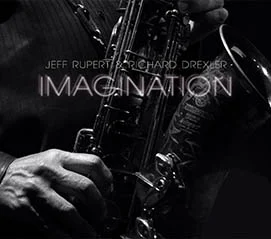
The contemporary jazz landscape has long celebrated the dynamic power of large ensembles, soaring horn sections, and high-energy rhythm groups. Yet, some of the most profound statements in the genre are made in the intimate, unyielding space of a stripped-down duet. In their critically acclaimed release, Imagination, saxophonist Jeff Rupert and pianist Richard Drexler step into this exacting format, proving that an economy of instruments can yield a maximum of expressive depth. Recorded live to capture the raw, unfiltered essence of spontaneous musical dialogue, the album has drawn widespread praise from critics and jazz aficionados alike for its telepathic interplay, sophisticated repertoire, and a shared mastery that redefines the contours of chamber jazz.
The Genesis of a Creative Partnership
The artistic alliance between Jeff Rupert and Richard Drexler is not a hasty studio pairing, but rather the culmination of years of professional collaboration and shared musical sensibilities. Both rooted in the rich soil of American jazz traditions, Rupert and Drexler bring decades of individual performance, recording, and educational experience to the bandstand.
Jeff Rupert, widely recognized for his tenure with the Jazz Orchestra at Lowry Park and his work alongside legendary figures such as Sam Rivers, Maynard Ferguson, and Mel Tormé, possesses a tonal vocabulary that looks backward to the golden age of the tenor saxophone while remaining entirely contemporary in execution. Critics frequently compare his hushed tones, rounded edges, and lyrical phrasing to the lineage of Lester Young and Stan Getz. His ability to make the saxophone mimic the breath and cadence of the human voice is a defining characteristic of his playing on Imagination.
Complementing Rupert’s horn is the virtuosic and sensitive pianism of Richard Drexler. Known for his versatility across acoustic piano and acoustic bass, Drexler brings an encyclopedic knowledge of harmonic structures and a spontaneous impulse for melodic ornamentation. Rather than acting merely as an accompanist, Drexler functions as an equal architectural partner in this musical exposition. His touch on the keys provides both a robust harmonic foundation and intricate counter-melodies that dance around Rupert’s saxophone lines.
Chronology of the Performance and Live Recording Dynamics
The journey toward Imagination began long before the microphones were positioned in the studio. For months, Rupert and Drexler meticulously curated a repertoire that would challenge their technical capabilities while highlighting their shared affinity for classic compositions and original works.
The decision to record the album live—with minimal post-production manipulation—was a deliberate choice designed to preserve the immediacy of the performance. In a live setting, there is no safety net of overdubbing or digital correction. Every breath, every dynamic shift, and every harmonic pivot exists in real-time. This high-wire act elevates the stakes for both musicians, resulting in a recorded document that pulses with nervous energy and absolute concentration.
From the opening notes of the album, the interplay between the two artists is immediate. The chronology of the tracklist takes the listener on a carefully paced emotional arc, moving from swinging up-tempo numbers to breathtakingly delicate ballads. The performance unfolds in a series of dynamic exchanges where the traditional roles of soloist and accompanist are constantly dissolved and renegotiated.
Repertoire Analysis: Breathing New Life into Standards and Originals
The artistic success of Imagination rests heavily on the strength of its material. The duo selected a slate of eight compositions that span multiple eras of jazz and Latin music history, blending timeless American Songbook standards with sophisticated contemporary originals.
The tracklist features:
- Without a Song
- I Can’t Help It
- Snowfall
- Strange Meadowlark
- Imagination
- A Felicidade
- My Mistress’ Eyes
- Soul Eyes
One of the standout moments of the recording occurs during the interpretation of Claude Thornhill’s classic composition, “Snowfall.” Rupert navigates the flowing tempo with an exquisite touch, sending up phrase after phrase of delicate notes. This phrasing gently nudges Drexler into a rarefied harmonic realm, where the pianist responds with cascading arpeggios that reflect the falling snow imagery of the title.
Another masterclass in balance is found in their reading of Antonio Carlos Jobim’s “A Felicidade.” Here, the duo captures the inherent melancholy and joyous bounce of the Brazilian standard without the aid of a traditional percussion section. Drexler’s rhythmic pulse provides all the necessary propulsion, allowing Rupert to float above the keys with lyrical grace.
The album also features original and thematic compositions that showcase the composers’ literary and historical influences. Rupert’s Shakespearean sonnet-inspired piece, “My Mistress’ Eyes,” stands as a brilliant example of programmatic jazz writing. Translated into musical form, the composition demands a high degree of interpretive nuance, which the duo delivers effortlessly. Similarly, their treatment of Mal Waldron’s haunting classic, “Soul Eyes,” showcases the profound depth of their collective blues feeling, emphasizing the importance of space, silence, and emotional restraint in jazz improvisation.
Technical Mastery and Aesthetic Approach
A detailed analysis of the sonic architecture of Imagination reveals several defining characteristics of Rupert and Drexler’s collaborative style. Chief among these is the concept of "curved edges." In many contemporary jazz recordings, artists prioritize razor-sharp attacks and hyper-aggressive rhythmic displacement. Rupert and Drexler, by contrast, favor a harmonically pleasing presentation where notes meld smoothly into one another, supported by just the right amount of rhythmic drive.
The dynamic balance achieved between the tenor saxophone and the acoustic piano is nothing short of clinical. In a duo setting, the frequency spectrum can easily become congested, with the piano stepping on the horn’s register or the saxophone overpowering the piano’s subtle chord voicings. Rupert and Drexler avoid this pitfall entirely through active listening and mutual respect. Their performance resembles a carefully choreographed dance: when the saxophone moves into the spotlight, the piano retreats gracefully into the shadows to provide a supportive harmonic cushion. Moments later, the roles reverse with seamless fluidity.
Furthermore, the album demonstrates that rhythm is not solely the domain of a drum kit and bass. The distinct pulse maintained by Drexler’s left hand, combined with Rupert’s impeccably timed phrasing, creates a fully realized rhythmic framework. Yet, perhaps the most striking achievement of the recording is its utilization of space. In the tradition of the greatest jazz innovators, the musicians understand that the silences between the notes are just as important as the notes themselves. This mastery of tension and release gives the album an air of pure subtlety and breathless excitement.
Broader Impact and Industry Implications
The release of Imagination arrives at a critical juncture for the contemporary jazz recording industry. In an era dominated by streaming algorithms that favor high-volume, genre-blending tracks designed for passive listening, an acoustic live duet album demands active, deliberate engagement from its audience.
Industry analysts and jazz educators view projects like Imagination as vital educational and cultural artifacts. By stripping away the bells and whistles of large production values, the album exposes the raw mechanics of jazz improvisation, making it an invaluable resource for student musicians studying ensemble cohesion, tone production, and harmonic interaction.
For seasoned jazz critics, the album serves as a welcome reminder of the enduring power of the small-group format. It proves that seasoned artists at the peak of their creative powers do not need a massive ensemble to make a monumental artistic statement. The critical acclaim surrounding the release has already generated renewed interest in both performers’ extensive catalogs, promising to introduce their work to a new generation of listeners through international radio airplay, jazz festival bookings, and specialized streaming platforms.
Conclusion
Imagination stands as a definitive milestone in the collaborative careers of Jeff Rupert and Richard Drexler. By merging impeccable technical execution with deep emotional resonance, the duo has crafted a timeless recording that honors the rich traditions of the past while offering a fresh, modern perspective on chamber jazz. As the final notes of Mal Waldron’s “Soul Eyes” fade into silence, the listener is left with the distinct impression of having witnessed a rare artistic synergy—one that captures the true essence of imagination set free on the bandstand.
Related posts: