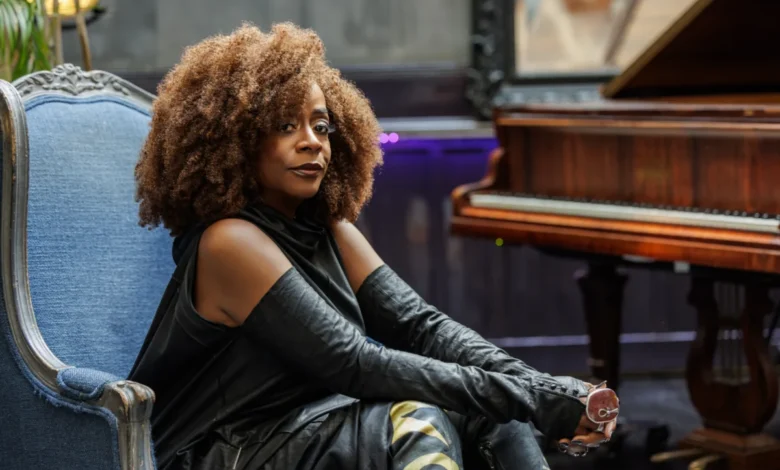
The landscape of contemporary soul and funk music is defined by a select group of artists who possess the rare ability to bridge the gap between historical influence and modern sonic experimentation. Among these figures stands Sandra St. Victor, a vocalist, songwriter, and visionary whose career has intersected with the most significant names in the history of popular music. After a period of relative silence from the recording studio spanning over a decade, St. Victor has officially returned with her new album, Eleven. This release is not merely a collection of songs; it represents a deliberate synthesis of her expansive professional history and her current life as a globally-minded artist.
The title Eleven carries a multifaceted significance. It marks the chronological distance of eleven years since her last solo project, serves as her eleventh solo studio effort, and acts as a thematic anchor for a new chapter in her artistry. By introducing a new generation of listeners to her genre-defying approach—a sound that weaves together the rhythmic foundations of funk, the emotive depth of soul, and the improvisational freedom of jazz—St. Victor has positioned herself as a vital link between the past masters she has supported and the future direction of independent music.
A Career Built on Legendary Foundations
To understand the weight of St. Victor’s return, one must examine her pedigree. Her career has served as a masterclass in collaboration, working alongside architects of modern music including Curtis Mayfield, the legendary Chaka Khan, the indomitable Tina Turner, Roy Ayers, and the influential funk innovator Bernie Worrell. Most notably, her professional relationship with Prince—referred to by peers as "the Purple One"—cemented her reputation as a formidable talent capable of holding her own in the most demanding creative environments.
Beyond her individual contributions, St. Victor is perhaps best known as a founding member of The Family Stand, the influential group that helped redefine the R&B and soul landscape in the late 1980s and early 1990s. The collective’s ability to merge social commentary with high-concept production set a standard that continues to influence contemporary neo-soul artists today. Her return to the scene brings these foundational experiences to the forefront, allowing her to filter decades of industry evolution through a singular, experienced lens.
The Geography of Sound: From Dallas to Arnhem
The opening track of the new album, "Enter 11," serves as both a musical manifesto and a narrative summary of her life’s journey. St. Victor delivers the lyrics, "I’m a master at this plan/Y’all don’t even understand," with the confidence of an artist who has navigated the industry on her own terms. The track, which features a laid-back, infectious groove anchored by Fender Rhodes keys, bass, and rhythmic handclaps, explicitly traces her trajectory: "Dallas, Texas, to New York/Now the Netherlands."

This geographical shift is central to the album’s identity. Currently residing in Arnhem, a historic city in the Netherlands situated approximately an hour by train from Amsterdam, St. Victor has cultivated a European base that allows for a different pace of creative output. Despite the physical distance from her American roots, her professional network remains robust. She continues to maintain active, productive relationships with longtime associates such as Family Stand colleague V. Jeffrey Smith and the renowned vocalist Lalah Hathaway, both of whom make significant contributions to the new project.
Artistic Collaboration and Production Dynamics
Eleven is characterized by its collaborative breadth. St. Victor has strategically recruited talent that mirrors her own eclectic musical sensibilities. By bringing in Adam Dorn, known for his work as Mocean Worker, and the multi-instrumentalist Mark de Clive-Lowe, she has ensured that the album maintains a high level of sonic sophistication. The inclusion of Italian producer and musician Edoardo Della Bitta (EDB) to steer the lead track further emphasizes her commitment to international collaboration, blending diverse production styles into a cohesive, signature sound.
The album also underscores St. Victor’s deep-seated connection to jazz, a genre that has historically provided the bedrock for her improvisation and vocal phrasing. This is perhaps best exemplified by the track "What Would Miles Do," a title that serves as a direct homage to the inquisitive and transformative spirit of jazz icon Miles Davis. This track is not a mere imitation; rather, it represents an inquiry into the creative philosophy of an artist who never allowed his sound to stagnate.
The Convergence of Jazz and Multimedia
St. Victor’s recent activities extend beyond the recording studio into the realm of multimedia storytelling. Earlier this year, she presented an audio-visual program titled Ella & the Duke at Lincoln Center in New York. The project was a comprehensive exploration of the lives and musical partnership of Ella Fitzgerald and Duke Ellington. By detailing the individual trials and the collective brilliance of these two jazz giants, St. Victor demonstrated her capacity for historical curation, further establishing her role as an educator and custodian of the American jazz tradition.
The production of Ella & the Duke provides context for the artistic maturity found on Eleven. It suggests an artist who is no longer solely focused on the commercial pressures of the music industry, but rather on the preservation and advancement of musical legacies.
Implications for the Modern Soul Landscape
The release of Eleven arrives at a pivotal moment in the music industry, where the lines between genre-specific labels are increasingly blurred. St. Victor’s work stands as a testament to the longevity of the soul artist who refuses to be categorized. Her ability to pivot from large-scale theatrical projects like the Lincoln Center presentation to the intimate, rhythm-driven tracks on her new album highlights a versatility that remains rare in today’s landscape.

From an industry perspective, the success of an artist like St. Victor—who operates independently while maintaining high-tier professional connections—offers a roadmap for legacy artists. By leveraging global networks and embracing a "genre-defying" philosophy, she has managed to remain relevant to both her original audience and a new generation of listeners who prioritize authenticity over algorithmic trends.
Analysis of the Current Project
The structural composition of Eleven reflects a deliberate shift toward transparency. The "Enter 11" track, in particular, acts as a bridge between the artist’s history and the listener’s expectations. By addressing her journey through various cultural capitals, St. Victor creates a sense of continuity. The production choices—relying on the organic warmth of the Fender Rhodes and the precision of human-led percussion—contrast sharply with the heavily quantized and digitized production common in much of today’s pop and R&B music.
Furthermore, the involvement of high-caliber collaborators like Lalah Hathaway signifies a mutual respect within the professional community. Such partnerships ensure that the album is not just a personal vanity project, but a contribution to the broader soul and jazz lexicon. The technical execution, marked by EDB’s production on the opening track, indicates that while the project is grounded in tradition, it is produced with the sonic clarity required for modern high-fidelity listening environments.
Looking Ahead
As St. Victor continues to split her time between her home in the Netherlands and her ongoing recording and performance commitments in the United States, the impact of Eleven will likely be measured by its ability to foster a renewed interest in her vast back catalog. For the casual listener, the album provides an accessible entry point into a discography that spans decades of musical innovation. For the dedicated follower, it represents a satisfying progression of an artist who has mastered her craft.
With her return to the spotlight, St. Victor has reaffirmed her status not just as a supporting voice for the legends of the past, but as a central figure in the contemporary evolution of soul music. Whether through her live performances, her multimedia explorations at institutions like Lincoln Center, or her future recording projects, her presence serves as a reminder of the enduring power of the soul tradition when it is held by an artist committed to truth, history, and the endless pursuit of the groove.