Danish Composer Emil Friis Releases Hollow Hands EP on 130701 Marking a New Chapter in Modern Classical Exploration

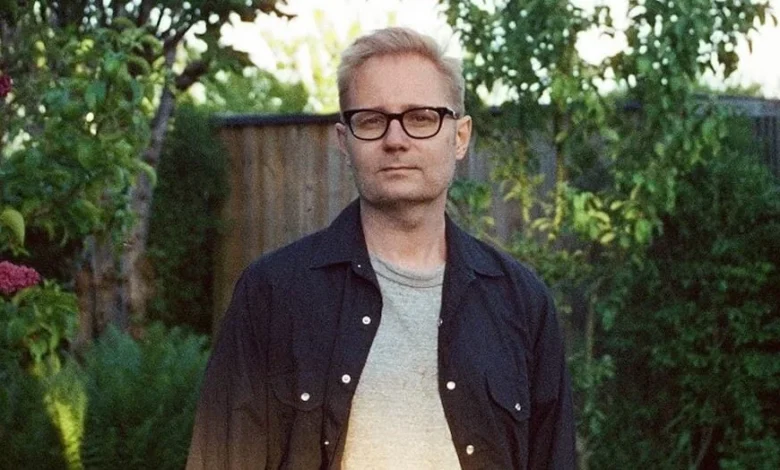
The acclaimed Danish composer and pianist Emil Friis has officially released his latest musical endeavor, a four-track EP titled Hollow Hands, today, July 17, 2026. Published under the 130701 imprint—the prestigious modern classical arm of FatCat Records—the release represents a significant continuation of Friis’s sonic evolution. Recorded primarily within the confines of his private studio in Copenhagen during the autumn of 2025, the EP serves as a thematic and aesthetic successor to his 2025 full-length album, Moving Images. The lead track, Hands, Hollowed, has been launched alongside a dedicated short film directed by Kevin Brooks, signaling a multi-disciplinary approach to the release that bridges the gap between auditory and visual storytelling.
The release of Hollow Hands arrives at a pivotal moment for the modern classical genre, which has seen a resurgence in demand for organic, texture-heavy compositions that provide a counter-narrative to the increasingly digitized landscape of contemporary music. By partnering with 130701, an imprint famous for fostering the early careers of genre-defining artists such as Max Richter, Jóhann Jóhannsson, and Hauschka, Friis solidifies his position within the vanguard of European minimalist and experimental composers.
Historical Context and the Moving Images Legacy
To understand the foundations of Hollow Hands, one must look back at the trajectory of Emil Friis over the past eighteen months. His 2025 album, Moving Images, was widely praised for its cinematic scope and its ability to evoke profound emotional landscapes through minimalist piano arrangements and subtle electronic processing. That project was not merely a collection of songs but a broader visual and auditory experiment that explored the intersection of memory and sound.
During the production of Moving Images, Friis collaborated extensively with director Kevin Brooks. One specific segment of that project, a film created for the track For Goodbyes, delved into themes of spiritual uncertainty, the fragility of human connection, and the nuances of faith and doubt. It was within this collaboration that the seeds for the new EP were sown. A specific line of dialogue from the film—"An empty prayer. A hollow hand."—resonated deeply with Friis, eventually providing both the title for the EP and the emotional framework for its four compositions.
This continuity between projects suggests a composer who views his work as an ongoing dialogue rather than a series of isolated releases. While Moving Images was expansive, Hollow Hands appears to be a more concentrated, introspective study of the same philosophical questions, focusing specifically on the concept of human agency and the physical act of creation.
Technical Production and Sonic Architecture
A defining characteristic of Hollow Hands is the meticulous attention paid to the physical sound of the piano. Rather than opting for the clean, polished production common in commercial "peaceful piano" playlists, Friis has opted for a raw, tactile approach that emphasizes the instrument as a mechanical object.
The recording sessions in Copenhagen utilized a sophisticated array of vintage and high-end audio equipment. To capture the nuance of the piano’s internal mechanics and the resonance of the room, Friis employed Extinct Audio ribbon microphones, known for their warm, vintage-inspired frequency response. These were complemented by a legendary Neumann U47 tube microphone and additional FET (Field Effect Transistor) microphones to provide clarity and depth.
Following the initial recording phase, Friis moved into a period of intensive signal processing. The piano tracks were fed through Moog filters and a Wellspring reverb unit, creating a "haze" that partially obscures the melodic lines. This technique creates a sense of depth and distance, forcing the listener to lean in and engage more actively with the music. According to statements from the composer, this technical choice was a deliberate attempt to create a "polar opposite" to the high-definition, immediate gratification of the modern digital age. Friis has expressed a desire to reclaim a sense of self-determination and focus, contrasting the "loss of self" often associated with excessive screen time and digital saturation.
Track-by-Track Analytical Overview
The EP is structured as a four-part narrative, moving from thematic introduction to deconstruction and finally to a climactic resolution.
- Hands, Hollowed: The opening track serves as the anchor for the project. Built upon a chord progression that Friis developed over the summer of 2025, the piece is characterized by a melody that seems to fight its way through a dense atmospheric fog. The accompanying film by Kevin Brooks enhances this sense of struggle and contemplation, visually mirroring the "hollow hand" metaphor of the title.
- Some Fine Afternoon: This track introduces an element of travel and environmental storytelling. It incorporates field recordings captured by Friis during a visit to southern Italy. These ambient sounds—likely capturing the natural rhythms of the Mediterranean landscape—serve as the foundation for a piano improvisation. The result is a piece that feels grounded in a specific time and place, blending the internal world of the studio with the external world of the physical environment.
- Hands, Remembered: In a move common to avant-garde composition, the third track functions as a deconstruction of the first. Friis strips away the primary melodic structures of Hands, Hollowed, leaving behind only the harmonic skeletons and the atmospheric textures. This approach emphasizes the "memory" of the original piece, inviting the listener to reflect on what has been lost and what remains when a structure is dismantled.
- As Sun I Meet You Now: The EP concludes with its most dynamic offering. The track begins with a pulsating, repetitive piano note—a hallmark of minimalist composition—before shifting gears midway through. Friis introduces textures from a Yamaha DX21 synthesizer, a classic FM synth from the mid-1980s, which is processed through Moog effects to create a bridge between acoustic and electronic worlds. The piece eventually builds toward an expansive, emotive climax on the piano, providing a sense of resolution to the EP’s earlier tensions.
Theoretical Framework: Agency and the Digital Age
Beyond the technical and musical aspects, Hollow Hands is a deeply philosophical work. Friis has been vocal about his interest in "things that are inherently human," specifically the concepts of free will and agency. In an era where algorithms increasingly dictate human choices—from the music we listen to, to the information we consume—Friis uses his music to explore the "urge to do something not because you have to, but because you can’t help yourself."
This exploration of agency is reflected in the improvisational nature of several tracks. By allowing field recordings and spontaneous piano movements to guide the composition, Friis steps away from the rigid structures of programmed music. The "hollow hand" thus becomes a symbol of potential: an empty vessel waiting to be filled by an act of will, or a gesture of reaching out into the unknown without the guarantee of a response.
Label Influence and Market Position
The involvement of 130701 and FatCat Records is a critical component of this release’s significance. Founded in 2001, 130701 was instrumental in defining the "Post-Classical" or "Modern Classical" movement. The label has a history of prioritizing artists who blend traditional instrumentation with experimental electronic techniques.
The release of Hollow Hands on this specific imprint suggests that Friis is being positioned as one of the key voices in the next generation of the label’s roster. Industry analysts note that while the "ambient piano" market has become somewhat saturated with functional, background-oriented music, there remains a strong and loyal audience for "active listening" projects like those produced by Friis. By emphasizing the technical process and the philosophical depth of the work, 130701 distinguishes Friis from the more commercial ends of the genre.
Chronology of Development
The timeline for Hollow Hands illustrates a deliberate and unhurried creative process:
- Early 2025: Release of the album Moving Images and the premiere of the visual project directed by Kevin Brooks.
- Summer 2025: Emil Friis develops the core harmonic ideas for the EP while traveling and recording environmental sounds in Italy.
- Autumn 2025: Principal recording and processing sessions take place at Friis’s Copenhagen studio.
- Early 2026: Post-production and finalization of the visual components in collaboration with Kevin Brooks.
- July 17, 2026: Official global release of the Hollow Hands EP via digital platforms and Bandcamp.
Broader Implications for the Genre
The release of Hollow Hands highlights a growing trend among contemporary composers to return to analog hardware and physical spaces to find "authenticity" in their sound. The use of ribbon microphones and vintage filters is not merely an aesthetic choice but a political one, representing a pushback against the perceived sterility of purely digital production.
As modern classical music continues to evolve, the work of Emil Friis suggests that the future of the genre lies in its ability to integrate diverse influences—from the cinematic to the environmental—while remaining rooted in the fundamental human experience. Hollow Hands stands as a testament to the power of minimalist art to address complex questions of identity, technology, and the enduring necessity of human agency in an automated world.
Related posts: