Female Country Artists Dominate Billboard Charts and Award Nominations Marking a Historic Shift in the Genres Landscape

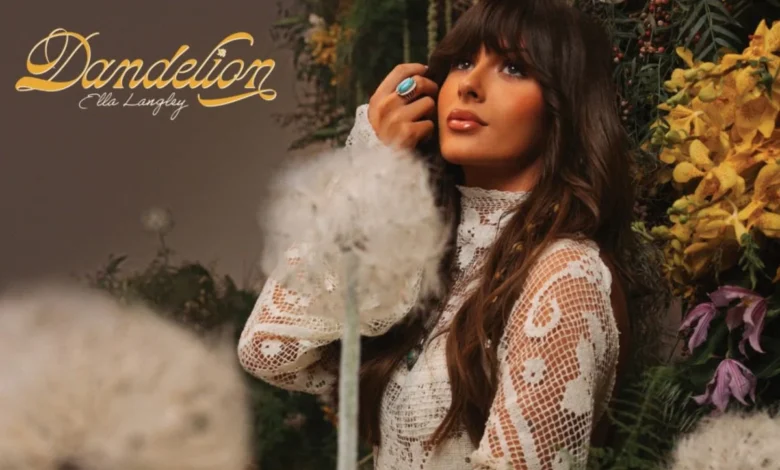
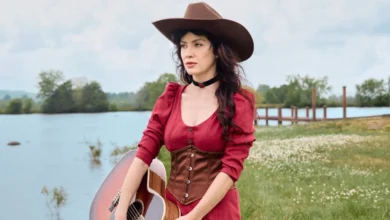
The country music industry is currently witnessing a paradigm shift as a new generation of female artists achieves unprecedented levels of commercial success and critical acclaim. Led by figures such as Ella Langley, Megan Moroney, and Lainey Wilson, women are not only reclaiming their space on the airwaves but are also setting historic benchmarks on the national charts. This movement represents a significant departure from previous decades, where female voices often faced systemic barriers to entry in mainstream country radio and award recognition. Today, these artists are leveraging diverse platforms and authentic storytelling to command the top of the Billboard charts and lead the field in major industry nominations.
A Historic Milestone on the Billboard Charts
The scale of this shift was recently punctuated by a historic achievement on the Billboard charts involving Ella Langley and Megan Moroney. In a feat never before accomplished by a female country duo, the two artists simultaneously topped the major all-genre Billboard charts. Megan Moroney’s latest project, Cloud 9, ascended to the number one spot on the Billboard 200 albums chart, marking her first career leader on the all-genre ranking. Simultaneously, Ella Langley’s viral hit "Choosin’ Texas" secured the number one position on the Billboard Hot 100 singles chart.
This dual dominance is particularly noteworthy because it reflects a broad appeal that transcends the traditional country music demographic. Topping the Billboard 200 requires massive consumption across physical sales, digital downloads, and streaming, while the Hot 100 measures the most popular songs in the United States across all genres. For two female country artists to occupy these summits at the same time signals a level of mainstream penetration that the genre has not seen from women since the crossover eras of Shania Twain and Faith Hill.
Ella Langley’s recent album, Dandelion, has further solidified this trend. The project is currently tracking for a high-profile debut on the Billboard 200, driven by strong streaming numbers and a growing fan base that identifies with her raw, narrative-driven approach to songwriting. In interviews following the release, Langley characterized this moment as a "testament" to the power of authentic storytelling and its ability to resonate with a modern audience that is increasingly seeking diversity in perspective.
Award Season Dominance and the CMA-ACM Connection
The commercial success of these artists has been mirrored by an outpouring of recognition from the industry’s most prestigious voting bodies. During the most recent Country Music Association (CMA) Awards, the narrative of female dominance was impossible to ignore. Megan Moroney, Ella Langley, and Lainey Wilson were tied for the most nominations of the evening, with each artist receiving six nods. This parity at the top of the nomination list served as a formal acknowledgement that the "leading the pack" sentiment often expressed by fans is now a statistical reality.
The momentum has continued into the current Academy of Country Music (ACM) Awards cycle. Megan Moroney leads all artists this year with a total of nine nominations, a staggering figure for an artist relatively early in her career. She is followed closely by veteran powerhouse Miranda Lambert with eight nominations, and both Ella Langley and Lainey Wilson with seven each.
The presence of Miranda Lambert in this group highlights a crucial bridge between generations. Lambert, who remains the most decorated artist in ACM history with 33 wins, has transitioned into a role of both competitor and mentor. Her continued relevance, combined with the explosive rise of newcomers like Langley and Moroney, suggests a healthy ecosystem where established legends and rising stars are collectively elevating the genre’s profile.
Overcoming the "Radio Gap" and Historical Challenges
To understand the magnitude of the current success enjoyed by women in country music, one must consider the historical context of the "radio gap." For years, female artists have struggled to receive equitable airplay on mainstream country radio. This issue gained national attention in 2015 following comments by a radio consultant who suggested that women were the "tomatoes" in a salad where men were the "lettuce," implying that female artists should be played sparingly to maintain ratings.
The data frequently supported this perceived bias. As recently as last year, the industry hit a notable low point when no female artists occupied a spot in the Top 10 of the country radio airplay charts for an 11-week stretch between July and September. This streak was eventually broken by Lainey Wilson with her single "Somewhere Over Laredo," which entered the Top 10 in late September.
Since that breakthrough, the floodgates have seemingly opened. The success of Moroney and Langley on the all-genre charts has forced a re-evaluation of what constitutes a "radio-friendly" hit. By building massive audiences through streaming and social media first, these women have created a level of demand that mainstream radio can no longer ignore. The current environment suggests that the traditional gatekeeping mechanisms are being bypassed by artists who can prove their market viability through direct-to-consumer engagement.
The Role of Mentorship and Collaborative Success
A defining characteristic of this new era is the public and private support system existing among female artists. Rather than viewing the industry as a zero-sum game with limited "slots" for women, the current cohort emphasizes a philosophy of "opening lanes" for one another.
Ella Langley has been vocal about the importance of mentorship, specifically citing Miranda Lambert as a guiding force in her career. Langley has expressed a sense of responsibility to pay this mentorship forward, stating that the success of one woman creates a roadmap for those following behind. This collaborative spirit was evident in the joint success of Langley and Moroney on the Billboard charts, which both artists celebrated as a collective win for the gender rather than an individual rivalry.
Megan Moroney has echoed these sentiments, noting that while the industry is not yet in a "perfect state" regarding gender parity, the fact that women are currently "leading the pack" is a sign of fundamental change. She noted that while great music has always been produced by women, it is currently being "more mainstream and recognized," which she attributes to a shift in listener behavior and a greater institutional willingness to invest in female-led projects.
Narrative and Authenticity: Why the Music is Resonating
The common thread among Langley, Moroney, and Wilson is a commitment to a specific type of lyrical honesty that leans into the complexities of the female experience. From Langley’s gritty, rock-infused country on Dandelion to Moroney’s "emo-cowgirl" aesthetic that blends heartbreak with sharp wit, the music is characterized by a lack of artifice.
Lainey Wilson’s "Bell Bottom Country" movement, which emphasizes being unapologetically oneself, has served as a blueprint for this wave. By focusing on storytelling that is specific yet relatable, these artists have tapped into a demographic of listeners who felt underrepresented by the "bro-country" trends that dominated the previous decade. The "testament to the stories we’re telling," as Langley described it, is reflected in the high engagement rates on streaming platforms, where listeners often cite the emotional vulnerability of the lyrics as a primary draw.
Broader Impact and Industry Implications
The implications of this shift extend beyond chart positions and trophies. The commercial viability of female country artists is changing the investment strategies of major Nashville labels. As artists like Moroney and Langley prove that women can move units and sell out headlining tours at rates comparable to their male counterparts, the industry is seeing an influx of signings of female singer-songwriters.
Furthermore, the success of these artists is diversifying the sound of country music itself. The current wave of female stars incorporates elements of 90s country, southern rock, and indie-pop, creating a more textured and varied sonic landscape. This diversity is essential for the genre’s long-term survival, as it attracts younger, more diverse audiences who may not have been traditional country listeners.
As the industry looks toward the upcoming ACM Awards and the next fiscal year, the trajectory for women in country music remains upward. With Miranda Lambert potentially extending her record-breaking win count and newcomers like Moroney and Langley poised to take home their first major trophies, the narrative has shifted from one of struggle to one of dominance. The "takeover" that Langley and her peers predicted appears to be well underway, fundamentally altering the DNA of American country music for the foreseeable future.
Related posts: