Kanye West sued by photo agency over sample of rapper’s paparazzi outburst

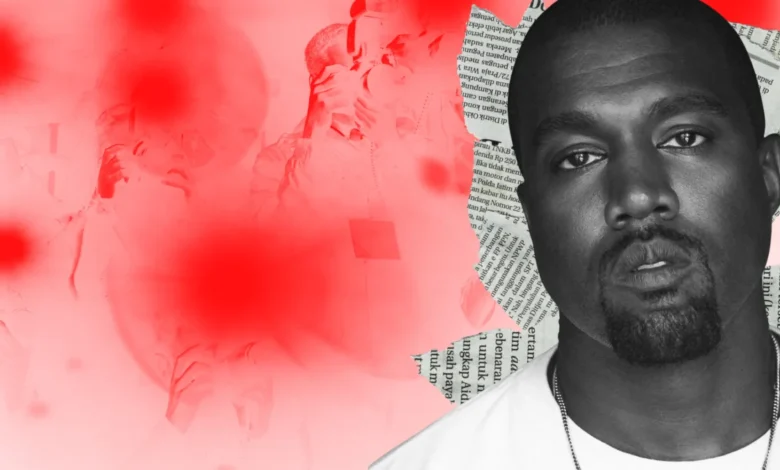
The music industry is no stranger to legal battles over uncleared samples, but a recent lawsuit targeting prominent artists Kanye West and French Montana introduces a novel twist: the plaintiff is a paparazzi agency. This litigation stems from the 2024 collaborative track "Where They At," featured on French Montana’s latest mixtape, ‘Mac & Cheese 5’. The core of the dispute revolves around an audio clip used prominently at the song’s opening, which features West’s voice from a 2013 encounter, aggressively admonishing a paparazzo with the expletive-laden command, "don’t take a f***ing another photo, man!" The video from which this now-infamous clip was extracted is the copyrighted property of celebrity photo agency Bauer-Griffin, which alleges "flagrant and deliberate" infringement of its intellectual property rights.
The Genesis of the Dispute: A Decade-Old Confrontation
The audio sample at the heart of the lawsuit originates from a widely publicized incident that occurred in May 2013. Kanye West, known for his often-contentious relationship with the paparazzi, was captured on video by a Bauer-Griffin photographer during a "volatile confrontation." In the clip, West, visibly agitated, lashes out at the photographer, expressing his strong desire for privacy and an end to the relentless pursuit by the press. This particular incident quickly garnered extensive media attention, circulating across news and entertainment platforms due to West’s celebrity status and his history of skirmishes over perceived violations of his personal space.
West’s disdain for paparazzi intrusion is well-documented, a consistent theme throughout his career. From verbal altercations to more physical encounters, his reactions have often become fodder for headlines, feeding the very media cycle he frequently critiques. This 2013 incident was a prime example, serving as a vivid illustration of the ongoing tension between a public figure’s desire for privacy and the paparazzi’s role in documenting celebrity life. The video, therefore, held significant news value and was a valuable asset for Bauer-Griffin, capturing a moment that encapsulated this enduring conflict.
The Lawsuit’s Allegations and Defendants
Bauer-Griffin’s lawsuit explicitly names Kanye West, French Montana (real name Karim Kharbouch), and their distributor Gamma as defendants. The agency asserts that these parties "purposefully copied the audio sample and used it prominently as the infringing record’s intro" without obtaining the requisite permission or license, and without providing any credit to the video’s author or rights holder. The use of the term "flagrantly and deliberately" underscores the agency’s belief that the infringement was not an oversight but a conscious decision to appropriate their copyrighted material for commercial gain.
The complaint highlights the significance of the sampled audio, noting its prominent placement at the very beginning of "Where They At." This positioning is crucial because it suggests that the sample is not merely incidental but an integral part of the song’s identity and introductory narrative, thereby maximizing its impact and potential for commercial exploitation. The agency argues that by using this clip, the defendants are directly benefiting from Bauer-Griffin’s original journalistic work and the commercial value derived from capturing such a high-profile, newsworthy event.
Navigating Copyright Law: The Peculiar Case of Paparazzi Imagery
The legal landscape surrounding paparazzi photography and videography presents a unique paradox. While celebrities are the subjects of these images and videos, the copyright inherently belongs to the photographer or the agency employing them. This fundamental principle means that if a celebrity wishes to control the distribution of an image or video featuring themselves, they cannot typically invoke copyright law, as they are not the copyright owner. Instead, they must often rely on other legal avenues such as privacy laws, personality rights, or rights of publicity, which vary significantly by jurisdiction and can be challenging to assert successfully against legitimate newsgathering activities.
Conversely, if a celebrity desires to use an image or video in which they appear, they are legally obligated to secure a license from the copyright holder – the photographer or agency. This requirement holds true even though the intrinsic value of such an image or video is often directly tied to the celebrity’s fame and public persona. Numerous pop stars and public figures have faced legal action in recent years for posting paparazzi photos of themselves on their own social media accounts without obtaining proper permission. Notable examples include Gigi Hadid, Dua Lipa, Jennifer Lopez, and Khloe Kardashian, all of whom have been sued by photography agencies for unauthorized use of images they themselves were the subject of. These cases underscore the strict enforcement of copyright within the photography industry, irrespective of the subject’s identity.
By the same logic, Bauer-Griffin contends that West and Kharbouch were bound to obtain permission before incorporating a clip from their copyrighted video into "Where They At." The agency’s position is that the audio snippet, despite being a brief spoken-word segment, is a direct derivative of their original audiovisual work and, as such, falls squarely under their copyright protection.
The Role of Copyright Registration and Damages
An interesting aspect of this case is the timing of Bauer-Griffin’s copyright registration. Although the video documenting the 2013 confrontation was published over a decade ago, the agency’s copyright in the work was only certified by the U.S. Copyright Office in January 2024. This timing suggests a strategic move by Bauer-Griffin, likely undertaken in preparation for the current litigation. Under U.S. copyright law, a work generally needs to be registered with the Copyright Office before an infringement lawsuit can be filed.
However, the late registration has significant implications for the types of damages Bauer-Griffin can seek. Because the registration occurred after the alleged infringement – specifically, after the February 2024 release of "Where They At" – the agency is precluded from seeking statutory damages or attorney’s fees as part of its action. Statutory damages are pre-set amounts defined by law, often ranging from $750 to $30,000 per infringement, and up to $150,000 for willful infringement, without the need to prove actual financial loss. The inability to claim these can significantly reduce the potential financial leverage for the plaintiff.
Despite this limitation, Bauer-Griffin is still entitled to claim "actual damages." These damages are directly connected to the demonstrable financial losses incurred by the copyright holder due to the infringement, or, more commonly in such cases, the profits generated by the infringers (West, Kharbouch, and Gamma) that are attributable to the unauthorized use of the copyrighted material. Proving actual damages can be more complex than claiming statutory damages, requiring detailed financial analysis of the song’s revenue streams and the degree to which the sampled clip contributed to its commercial success.
Timeline of Key Events
- May 2013: Kanye West’s "volatile confrontation" with a paparazzo is captured on video by a Bauer-Griffin photographer. The video quickly gains "extensive media attention" and is widely distributed across news and entertainment outlets.
- Late 2023 / Early 2024: Bauer-Griffin likely initiates the process of registering the copyright for its 2013 video with the U.S. Copyright Office, anticipating potential litigation.
- January 2024: The U.S. Copyright Office officially certifies Bauer-Griffin’s copyright in the 2013 video.
- February 9, 2024: French Montana releases his ‘Mac & Cheese 5’ mixtape, which includes the track "Where They At," featuring Kanye West. The song opens with the uncleared audio clip from Bauer-Griffin’s 2013 video.
- Post-February 9, 2024: Bauer-Griffin files the copyright infringement lawsuit against Kanye West, French Montana (Karim Kharbouch), and Gamma.
Legal Analysis: Fair Use and Transformative Works
In their defense, West and French Montana’s legal teams will likely explore various arguments, with "fair use" under US copyright law being a prominent potential avenue. The fair use doctrine allows for the limited use of copyrighted material without permission for purposes such as criticism, comment, news reporting, teaching, scholarship, or research. To determine if a use is fair, courts typically consider four factors:
- The purpose and character of the use, including whether such use is of a commercial nature or is for nonprofit educational purposes: While "Where They At" is a commercial release, a defense could argue that the sample is transformative, commenting on West’s public persona or the nature of celebrity.
- The nature of the copyrighted work: The original work is a factual news report (a video capturing a real-world event), which often receives less protection than highly creative works.
- The amount and substantiality of the portion used in relation to the copyrighted work as a whole: The sample is brief (a few seconds) but "prominently" featured. The defense might argue its brevity makes it de minimis (too insignificant to be actionable), but its prominent placement could counter this.
- The effect of the use upon the potential market for or value of the copyrighted work: Bauer-Griffin would argue that the unauthorized use deprives them of licensing revenue. The defense might contend that a brief audio clip from a video does not directly compete with the market for the full video.
A strong fair use argument often hinges on the concept of "transformative use," meaning the new work adds new meaning or expression to the original. For example, if the clip was used in a documentary critically examining celebrity culture, a fair use defense might be stronger. However, its use as an intro to a commercial rap track, especially one where West is directly involved, makes a strong transformative argument challenging. Courts have generally held that merely incorporating a sound recording into a new musical work, even a short one, is rarely considered fair use, particularly when it is central to the identity of the new work. The fact that the sample features West himself, addressing the very issue of paparazzi, could be seen as an intentional choice to leverage the original context for artistic and commercial effect.
Broader Implications for the Music and Media Industries
This lawsuit carries significant implications for both the music industry and the broader media landscape. For musicians, it serves as a stark reminder of the expanding scope of copyright enforcement, particularly concerning "found sounds" or non-musical audio snippets. Artists have historically sampled everything from classic songs to movie dialogue and environmental recordings. This case emphasizes that any audio, regardless of its origin, if derived from a copyrighted source, requires proper clearance. The days of assuming that a brief, non-musical soundbite might slip under the radar are increasingly over, especially with sophisticated audio identification technologies and vigilant rights holders.
For media agencies like Bauer-Griffin, the lawsuit underscores their commitment to protecting their intellectual property. It reinforces the principle that the content they produce, whether photographs or videos, possesses commercial value and is subject to the same copyright protections as any other creative work. This case could embolden other paparazzi and news agencies to pursue similar legal actions if their copyrighted material is used without authorization, particularly by high-profile individuals or entities that stand to profit significantly from such use.
Furthermore, the case highlights the ongoing tension between celebrity privacy and the public’s right to information, or at least its appetite for celebrity content. While celebrities often lament the invasive nature of paparazzi, the media they produce is undeniably a commodity. This lawsuit flips the script, demonstrating that the very subjects of paparazzi photography can become infringers when they appropriate the content created about them. It compels artists and their distributors, such as Gamma, to exercise extreme diligence in clearing all samples, regardless of how minor or seemingly innocuous they may appear. Failure to do so, as this case illustrates, can lead to costly litigation and significant financial liabilities, even if only actual damages are at stake. The outcome of Bauer-Griffin v. West, Kharbouch, et al. will undoubtedly set an important precedent for the digital age, shaping how artists approach sampling and how media agencies protect their valuable assets.