New Releases in Contemporary and Archival Jazz: A Comprehensive Overview of Current Industry Highlights

The global jazz landscape is currently experiencing a dual renaissance, characterized by a wave of meticulous archival restorations and a surge of bold, forward-looking contemporary compositions. From the reverberant, sacred spaces of 13th-century Italy to the modern, sun-drenched festival stages of the UK, the following collection of releases underscores the genre’s enduring capacity for reinvention and historical preservation.
The Archival Revival: Rescuing Sonic History
The preservation of jazz history remains a cornerstone of the industry, with labels increasingly turning to original transcription discs and vault recordings to provide listeners with definitive editions of landmark performances.
Central to this movement is the release of Mankunku Big Band: In Full Flight. This 1974 session, unearthed from the South African Broadcasting Corporation’s (SABC) vault by Matsuli Music, represents a critical juncture in South African jazz history. Featuring titans like Winston Mankunku Ngozi and Barney Rachabane, the record captures the only big-band performance of the seminal composition "Yakhal’ Inkomo." The restoration of these transcription discs, which had remained largely inaccessible to the public, serves as a vital historical document, showcasing the vitality of a scene that was both culturally defiant and artistically sophisticated during a tumultuous era of South African politics.
Similarly, Jelly Roll Morton: New Orleans Joys: The Earliest Recordings, 1923-1926 offers a monumental look at the foundations of American music. With 53 tracks meticulously restored from original 78rpm records, this two-disc set serves as a corrective to the degradation of early jazz audio. The inclusion of an 80-page booklet featuring essays by Grammy-winner Ricky Riccardi highlights the industry’s shift toward treating jazz reissues as academic projects rather than mere commercial ventures.
In the realm of avant-garde history, the reissue of Steve Lacy’s Axieme brings the listener back to September 1975. Recorded in the Church of San Francesco in Como, Italy, the album utilizes the unique acoustic properties of the 13th-century architecture. By remastering these solo saxophone performances, Red Records has preserved the raw, meditative intensity of Lacy’s compositions, such as "Tao (Suite)" and "The Crust," ensuring that his influence on the soprano saxophone remains accessible to contemporary scholars and fans.
Modern Interpretations and Tribute Albums
Tribute records often risk redundancy, yet recent releases demonstrate a commitment to deep inquiry rather than simple imitation. Ledisi’s For Dinah (Deluxe Edition) is a case in point. By partnering with bassist Christian McBride and producer Rex Rideout, Ledisi has expanded her tribute to Dinah Washington. The addition of four new tracks, including "Ill Wind (You’re Blowing Me No Good)," frames Washington’s legacy through a modern lens, emphasizing the "Queen of the Blues" as a foundational influence on contemporary soul phrasing.
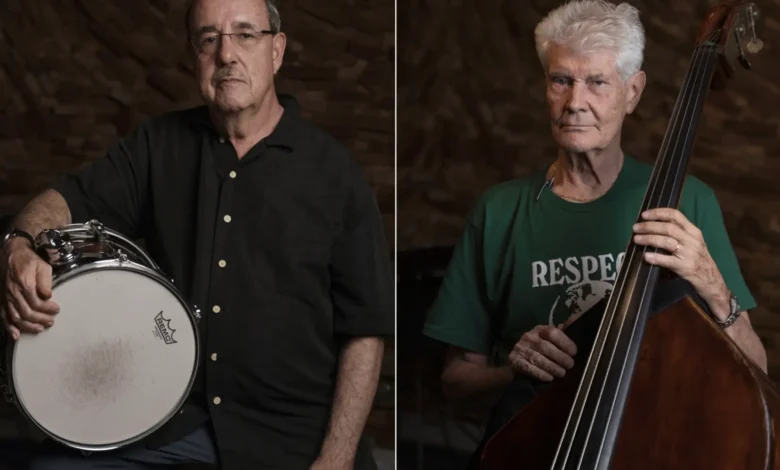
Tony Moreno’s A Celebration Of Elvin Jones operates on a similar principle of mentorship and legacy. By assembling an ensemble that includes Gene Perla—a bassist who served in Jones’s own band during the 1970s—Moreno seeks to translate the rhythmic dynamism of the legendary Coltrane drummer into a modern ensemble context. This release serves as both a pedagogical tool for understanding the "Jones style" and a tribute to the lineage of rhythmic innovation in jazz.
The Evolution of the Ensemble: Contemporary Voices
The contemporary jazz scene is marked by a move toward intimate, narrative-driven compositions that often bridge the gap between technical complexity and emotional vulnerability.
Max Light’s Unlearning represents a significant departure in terms of thematic inspiration. Composed while the guitarist supported his father in a memory care facility, the album serves as a musical chronicle of grief and eventual enlightenment. The inclusion of soprano saxophonist Caleb Wheeler Curtis and pianist Julian Shore allows for a textural depth that mirrors the complex emotional journey of the composer.
In a similar vein, Dominic Miller’s Diana provides a poignant, personal narrative. Dedicated to his mother, who passed away in 2026, the album marks his fourth release on the ECM label. The presence of bandoneonist Santiago Arias and the rhythm section of bassist Nicolas Fiszman and drummer Ziv Ravitz suggests a continuation of the "chamber-jazz" aesthetic that has become synonymous with ECM’s signature sound—a sound characterized by space, clarity, and deep introspection.
Jonny Mansfield’s Wide Step continues to push the boundaries of the vibraphone-led quartet. By recording across two distinct acoustic environments—Fish Factory Studios and the Vortex Jazz Club—Mansfield captures the tension between studio precision and the improvisational spontaneity of a live performance. The inclusion of New York guitarist Emmanuel Michael adds a fresh harmonic layer to the quartet’s established language, signaling a refinement of Mansfield’s approach to collective improvisation.
Crossing Boundaries: Global Fusion and Experimentalism
The definition of "jazz" continues to expand through the work of multi-instrumentalists who integrate global traditions. Stephan Micus remains the foremost practitioner of this "world-jazz" synthesis. His 27th solo album, Traces In The Sand, alongside the vinyl debut of The Garden Of Mirrors, illustrates his career-long project of creating music that is geographically unmoored. By utilizing instruments from as far-flung locations as Borneo, Ethiopia, and Bavaria, Micus creates a soundscape that transcends national identity, focusing instead on universal themes of nature and the human experience.
Kham Meslien’s Vévés Électriques similarly explores the intersection of memory and geography. By layering the double bass with electronic loops and collaborating with artists such as Naïssam Jalal, Meslien constructs what he describes as "imagined territories." This fusion of acoustic tradition and modern technological manipulation has earned him significant acclaim across European radio and the international jazz press, suggesting a growing market for ambient, genre-defying instrumental music.
Industry Trends: The Impact of Live Recording and Charity
The release of Billy Marrows and The Billy Marrows Band’s Dancing On Bentwood Chairs (Live at Love Supreme) underscores a growing trend toward "unvarnished" live recordings. By utilizing a single stereo microphone and minimal post-production, the band captures the raw, discovery-friendly atmosphere of the UK festival circuit. This approach reflects an industry-wide appreciation for the "New Generation Jazz Stage" movement, which prioritizes raw talent and bold, unedited performance over the hyper-produced studio standard.
Simultaneously, the collaborative project Sing, Robin, Sing! by Billy Marrows and Beth Aggett highlights the role of jazz artists in social advocacy. By partnering with World Child Cancer and utilizing the UK’s "Big Give" matching campaign, the artists have successfully linked the release of a holiday EP to a substantial charitable cause. This project serves as a model for how independent artists can leverage seasonal releases to generate meaningful financial support for humanitarian organizations.
Broader Implications for the Genre
The breadth of these releases—ranging from the 1923 recordings of Jelly Roll Morton to the 2024 experimental compositions of Rintaro Mikami—points to a healthy, multifaceted industry. The reliance on independent production, exemplified by labels like Chill Tone and Resonant Postcards, suggests that while the "majors" still hold the keys to historical catalogues, the creative future of the genre is increasingly decentralized.
The focus on "philosophical song cycles," as seen in Mikami’s Cosmolamps, indicates a desire among younger composers to imbue instrumental jazz with narrative and intellectual weight. Furthermore, the continued viability of the "big band" format, as evidenced by the Michael Pagan Big Band’s Burn It Forward, proves that large-ensemble jazz remains a potent vehicle for high-energy, technically demanding music that can bridge the gap between traditional post-bop and modern funk-blues influences.
As these artists continue to navigate the intersection of tradition and innovation, the common thread remains a commitment to the specific, human experience. Whether it is the restoration of lost South African transcription discs or the intimate recording of a guitar suite in a hospital-inspired environment, these releases demonstrate that jazz remains the most effective medium for documenting the nuances of the human condition. The industry is currently defined by a respect for the past and a courageous, if at times melancholy, approach to the present.