Alex Weitz Delivers Cinematic Depth and Lyrical Mastery on His Sophomore Quartet Album Luma

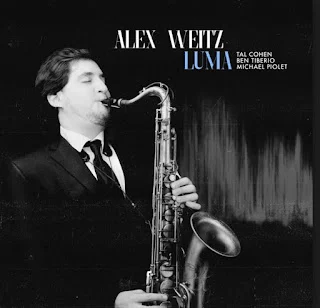
The contemporary jazz landscape continues to evolve through the contributions of artists who successfully bridge historical reverence with modern innovation. Tenor saxophonist and composer Alex Weitz has firmly established his place within this vanguard with the release of his sophomore quartet album, Luma. Following his critically acclaimed debut album, Chroma, Weitz’s latest project offers listeners an immersive, deeply reflective sonic journey. Recorded with a cohesive ensemble featuring pianist Tal Cohen, bassist Ben Tiberio, and drummer Michael Piolet, Luma transcends standard genre boundaries, functioning simultaneously as an intellectual exploration and an intimate emotional narrative.
Across nine distinct tracks—including the two-part centerpiece Song for Peace, Did You Know, Outer Noise, Let It Go, Equilibrium, Azalea, and Reminiscence—Weitz demonstrates a compositional maturity that belies his years. The album has quickly drawn praise from critics and jazz aficionados alike for its cinematic scope, sophisticated harmonic vocabulary, and the telepathic interplay among its core personnel. Rather than relying on technical acrobatics for their own sake, Weitz and his collaborators utilize restraint, nuanced phrasing, and structural cohesion to create a cohesive listening experience that resonates on both spiritual and intellectual levels.
Background Context and the Evolution of a Modern Quartet
To understand the artistic weight of Luma, one must examine the trajectory of Alex Weitz as an emerging force in modern American jazz. Weitz, known for his warm, clean, and dry saxophone tone, has steadily cultivated a reputation as a player deeply rooted in the history of the instrument while maintaining an acute awareness of contemporary sonic possibilities. His debut album, Chroma, introduced audiences to his penchant for vivid tonal palettes and conceptual unity, setting a high benchmark for his subsequent work.
When conceptualizing Luma, Weitz sought to build upon the foundation laid by Chroma while pushing his compositional boundaries further into the realm of narrative-driven music. The title itself—referencing illumination and light—serves as a thematic anchor for a collection of pieces that explore the interplay between human existence, intellectual curiosity, and emotional resilience. The recording process brought together a powerhouse rhythm section comprising musicians who share Weitz’s vision for spontaneous, highly communicative group improvisation.
Tal Cohen, an internationally recognized pianist known for his seamless blend of jazz harmony and Middle Eastern folk influences, provides harmonic sophistication and lyrical counterpoint. Bassist Ben Tiberio anchors the ensemble with a warm, articulate acoustic tone, driving the rhythmic momentum while offering intricate counter-melodies. Drummer Michael Piolet completes the quartet, employing a dynamic, texturally rich approach to the kit that avoids conventional timekeeping clichés in favor of conversational propulsion. Together, this ensemble functions not merely as a backing band for a soloist, but as a unified organism navigating complex musical topographies.
Chronology and Production of the Project
The creation of Luma unfolded through a meticulous process of composition, arrangement, and iterative rehearsal, culminating in a studio session designed to capture the raw immediacy of a live performance. While the precise recording dates remain part of the project’s internal production timeline, the album’s release marks a significant milestone in Weitz’s career as a bandleader.
The nine tracks comprising Luma were selected to form a deliberate, arc-like narrative. The sequence moves purposefully from the inquisitive opener Did You Know and the atmospheric Outer Noise into the emotional gravity of the two-part Song for Peace. This structural pacing allows the listener to traverse varying emotional states, shifting effortlessly from contemplative melancholy to moments of explosive, unbridled improvisational freedom.
Throughout the tracking sessions, Weitz emphasized the importance of maintaining a balance between meticulously arranged ensemble passages and wide-open improvisational spaces. The studio environment was intentionally curated to foster risk-taking, ensuring that spontaneous musical thoughts captured during early takes retained their vitality in the final master recordings. The resulting tracks showcase a rare synergy, where premeditated compositional structures dissolve seamlessly into real-time collaborative invention.
Musical Analysis and Structural Breakdown
A close examination of Luma reveals a sophisticated approach to form and texture. The album is predominantly cast in a contemplative, introspective mood, yet it avoids monotony through clever manipulation of dynamics, pacing, and instrumentation. Weitz’s approach to the tenor saxophone is characterized by an absence of excessive vibrato or manufactured histrionics. Instead, he favors a lean, focused sound that projects clarity and elegance even during passages of intense expressive release.
The opening tracks establish an inquisitive tone, utilizing subtle swing feels and modern harmonic extensions to draw the listener inward. As the album progresses into Song for Peace (Parts 1 and 2), the emotional core of the recording comes into focus. Here, Weitz and pianist Tal Cohen engage in a series of delicate, conversational duets that gradually expand into full-ensemble statements. The interplay is marked by short-form improvisations where musical ideas are introduced, deconstructed, and subsequently transformed before the listener’s ears.
Rhythmically, the album benefits immensely from the sensitive contributions of Tiberio and Piolet. Piolet utilizes the drum kit not merely to maintain pulse, but as a coloristic device, peppering the arrangements with understated cymbal textures and polyrhythmic accents that complement Weitz’s linear phrasing. Meanwhile, Tiberio’s basslines serve as the gravitational center, bridging the harmonic worlds of the piano and the expressive voice of the tenor saxophone.
Furthermore, the album’s arrangements frequently incorporate orchestral voicings and subtle nods to the swing era. Despite the thoroughly modern harmonic language employed by the quartet, a historical awareness underpins the music. This synthesis of past and present prevents the compositions from feeling overly academic, grounding them instead in the visceral, danceable roots of jazz tradition.
Track Listing Overview
- Did You Know
- Outer Noise
- Song For Peace – Part 1
- Song For Peace – Part 2
- Let It Go
- Luma
- Equilibrium
- Azalea
- Reminiscence
Core Personnel
- Alex Weitz – Saxophone
- Tal Cohen – Piano
- Ben Tiberio – Bass
- Michael Piolet – Drums
Critical Reception and Industry Reactions
Since its release, Luma has garnered widespread acclaim from jazz critics, radio programmers, and fellow musicians. Industry analysts have pointed to the album as evidence of a healthy, forward-looking contemporary jazz scene driven by artists who respect historical precedent while fearlessly charting their own artistic paths.
Reviewers have frequently highlighted the cinematic quality of Weitz’s writing, noting that the album evokes vivid visual landscapes despite being purely instrumental. Jazz radio syndicates have embraced tracks such as Let It Go and Equilibrium for their accessibility and high level of musicianship, securing regular rotation on specialty jazz broadcasts across North America and internationally.
Peers within the jazz community have similarly lauded Weitz’s artistic growth between Chroma and Luma. Musicians have praised his restraint, noting that his ability to construct cohesive, emotionally resonant solos without relying on cheap technical clichés demonstrates a maturity rare among artists of his generation. The collaborative chemistry between Weitz, Cohen, Tiberio, and Piolet has also been singled out as a masterclass in modern small-group interaction, with critics emphasizing that the quartet plays with the telepathic cohesion of a unit that has spent decades on the road together.
Broader Impact and Market Implications
The release of Luma arrives at a pivotal time for the contemporary jazz genre, which continues to navigate the complexities of digital distribution, shifting listening habits, and the post-pandemic live performance ecosystem. Albums like Luma demonstrate the enduring viability of acoustic small-group jazz that prioritizes depth, narrative coherence, and intellectual engagement over transient commercial trends.
From a market perspective, Weitz’s steady artistic progression—transitioning from a promising newcomer on Chroma to a fully realized bandleader and composer on Luma—enhances his standing within the global jazz touring circuit. As venues and festivals increasingly seek out acts that can deliver both sophisticated musicianship and engaging live experiences, Weitz’s quartet is well-positioned to expand its footprint.
Ultimately, Luma serves as a testament to the power of thoughtful, inspired musical storytelling. By uniting a world-class rhythm section under the direction of a visionary saxophonist, the album not only solidifies Alex Weitz’s individual legacy but also contributes a vital, uplifting chapter to the ongoing evolution of modern jazz.