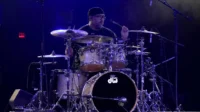
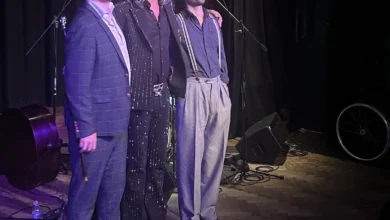
Ayumi Tanaka Thomas Morgan and Thomas Strønen Collaborate on New Album Windflower for ECM Records

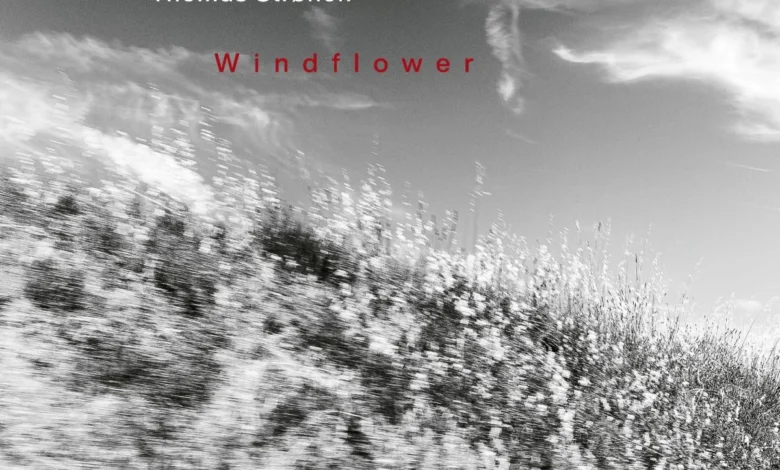
The international jazz community has seen the emergence of a significant new ensemble with the announcement of Windflower, a collaborative album featuring Japanese pianist Ayumi Tanaka, American bassist Thomas Morgan, and Norwegian drummer Thomas Strønen. Recorded in the spring of 2025 at the renowned Studios La Buissonne in Southern France, the project represents a convergence of three distinct musical backgrounds—Asian minimalist aesthetics, North American melodic precision, and Scandinavian textural exploration. Produced by ECM Records founder Manfred Eicher, the album is positioned as a defining document of contemporary spontaneous composition, bridging the gap between chamber music and avant-garde jazz.
The album consists of nine tracks, including eight entirely improvised pieces and a structured yet open-ended interpretation of Tanaka’s original composition, "La Source." The collaboration is characterized by a "crystalline" approach to sound, where silence and space are treated with the same importance as melodic phrasing. Industry analysts suggest that this release solidifies the trio’s position within the "European chamber jazz" movement, a genre that has gained significant traction in the global market over the last decade.
The Genesis of a Transcontinental Trio
The formation of the Tanaka-Morgan-Strønen trio is the result of years of intersecting paths within the global jazz circuit. Ayumi Tanaka, who moved from Japan to Norway over a decade ago to study at the Norwegian Academy of Music, has long been a fixture of the Oslo jazz scene. Her previous work, most notably her ECM debut Subaqueous Silence (2021), established her as a pianist capable of blending the disciplined restraint of Japanese traditional aesthetics with the improvisational freedom of modern jazz.
Thomas Strønen, a veteran of the Norwegian music scene and a frequent collaborator on the ECM label, has spent years refining a percussion style that is more orchestral than rhythmic. His work with groups like Time Is A Blind Guide has demonstrated a preoccupation with melody and texture, making him a natural fit for Tanaka’s sparse piano arrangements. The addition of Thomas Morgan—one of the most sought-after bassists in the world, known for his work with Bill Frisell and the late Paul Motian—provides the trio with a grounding force. Morgan’s reputation for "playing only the necessary notes" aligns perfectly with the minimalist ethos of his collaborators.
The decision to record at Studios La Buissonne in Pernes-les-Fontaines was a strategic one. The studio, located in the quiet landscapes of Southern France, has become a preferred destination for Manfred Eicher and ECM artists due to its exceptional acoustic properties and the high-quality Steinway pianos available on-site. The environment of the Vaucluse department, far from the frantic pace of urban recording hubs, provided the trio with the isolation necessary to foster the deep listening required for spontaneous composition.
Recording Chronology and Technical Process
The timeline for Windflower began in early 2025, following a series of informal rehearsals and performances in Europe. By the time the trio entered Studios La Buissonne in May 2025, they had developed a shorthand communication style that allowed them to bypass traditional notation.
- January 2025: Initial discussions between Tanaka and Eicher regarding a follow-up to her previous trio work.
- March 2025: Thomas Morgan and Thomas Strønen confirmed as the rhythm section, marking the first time these three specific voices would record as a formal unit.
- May 12–15, 2025: The recording sessions took place over four days. Unlike traditional jazz sessions where multiple takes of "standards" are recorded, the Windflower sessions focused on capturing "first-thought" improvisations.
- June–July 2025: Post-production and mastering overseen by Manfred Eicher at the ECM headquarters in Munich. Eicher, known for his "invisible" hand in shaping the sound of modern jazz, focused on maintaining the natural resonance of the room and the physical decay of the piano notes.
The technical approach to the recording emphasized high-fidelity transparency. Engineers at La Buissonne utilized a minimalist microphone setup to capture the natural bleed between instruments, creating a three-dimensional soundstage that places the listener in the center of the trio. This method is a hallmark of the "ECM sound," which prioritizes the "most beautiful sound next to silence."
Analysis of Musical Structure: Spontaneity vs. Composition
While Windflower is rooted in improvisation, it differs from the "free jazz" movements of the 1960s and 70s. Instead of high-energy dissonance, the trio employs a method often referred to as "spontaneous composition." In this framework, the musicians utilize the formal structures of classical chamber music—counterpoint, motivic development, and dynamic shading—but do so without a pre-written score.
The centerpiece of the album, "La Source," serves as the only link to traditional composition. Originally written by Tanaka, the piece is a meditation on fluidity and origin. In the context of the album, however, the written melody acts as a "springboard" rather than a rigid map. Morgan’s bass lines often deviate from the root notes to provide counter-melodies, while Strønen’s percussion avoids standard time-keeping in favor of "coloring" the silence with brushes and bowed cymbals.
The remaining eight pieces are untitled improvisations that emerged during the sessions. These tracks are characterized by what critics describe as "lyrical fragility." Tanaka’s touch on the piano is noted for its clarity, often compared to the way a calligrapher places ink on paper—each note is deliberate and carries significant weight.
Supporting Data and Market Context
The release of Windflower comes at a time when the market for instrumental jazz and "modern classical" crossover music is seeing a resurgence. According to data from the International Federation of the Phonographic Industry (IFPI), the "Jazz and Blues" sector saw a 4.2% increase in global streaming consumption in 2024, with a significant portion of that growth attributed to "ambient" and "minimalist" sub-genres.
ECM Records, which celebrated its 55th anniversary in 2024, continues to dominate this niche. The label’s strategy of pairing international artists from different cultural backgrounds has proven successful both artistically and commercially.
| Category | Data/Metric |
|---|---|
| Recording Location | Studios La Buissonne, France |
| Primary Producer | Manfred Eicher |
| Album Duration | Approximately 52 minutes |
| Instrumentation | Piano, Double Bass, Drums/Percussion |
| Composition Ratio | 89% Spontaneous / 11% Pre-composed |
| Target Audience | Jazz, Classical, and Contemporary Minimalist listeners |
Market research suggests that albums like Windflower find a unique audience in the "Deep Listening" community. Unlike pop-oriented jazz, this music is designed for focused, high-fidelity playback. The trio’s diverse nationalities also provide a broad geographic reach, with Tanaka’s following in Japan, Strønen’s influence in the Nordic countries, and Morgan’s reputation in the United States creating a global footprint for the release.
Official Responses and Artistic Philosophy
While formal press tours are scheduled for late 2025, early statements from the artists highlight a shared philosophy of "listening as the primary act of creation." In a brief reflection on the session, Ayumi Tanaka noted that the goal was not to "play music," but to "allow the music to happen between the three of us." This sentiment reflects a move away from the ego-driven soloing that characterized much of 20th-century jazz.
Thomas Strønen has previously commented on the nature of his collaboration with Tanaka, stating that her ability to leave space is what allows a drummer to become a melodic participant. "In this trio," Strønen remarked during a pre-session interview, "the bass and drums are not a ‘section’ in the traditional sense. We are three equal voices in a conversation."
Manfred Eicher’s involvement is also central to the album’s identity. Eicher is famous for his ability to hear the potential in a musical pairing before the musicians themselves do. His direction at La Buissonne reportedly encouraged the trio to "play the room" as much as they played their instruments, ensuring that the physical atmosphere of the French studio became the "fourth member" of the ensemble.
Broader Impact and Implications for Modern Jazz
Windflower arrives as a significant contribution to the evolution of the piano trio. For decades, the piano trio format was defined by the Bill Evans model of democratic interplay or the Oscar Peterson model of virtuosic swing. However, the Tanaka-Morgan-Strønen trio represents a third path: the "atmospheric trio."
This approach has several implications for the future of the genre:
- Cross-Genre Fluidity: By blurring the lines between jazz improvisation and contemporary classical music, the trio appeals to a broader demographic, including listeners of Max Richter or Nils Frahm.
- Cultural Synthesis: The album proves that the "jazz language" is no longer tied to a specific geography. The synthesis of Japanese space, American lyricism, and Norwegian texture creates a truly globalized art form.
- The Value of the "Physical" Recording: In an era of digital perfection and AI-generated music, Windflower stands as a testament to the value of human interaction in a specific time and place. The "fleeting beauty" mentioned in the album’s description refers to the fact that these specific improvisations can never be recreated exactly as they were captured in May 2025.
As the music industry continues to grapple with the rise of algorithmic curation, albums like Windflower serve as a reminder of the importance of "the moment." The collaboration between Tanaka, Morgan, and Strønen is more than just a collection of songs; it is a document of three masters of their craft engaging in the delicate art of discovery. The album is expected to be a major contender in year-end "Best of Jazz" lists and will likely lead to a series of high-profile festival appearances across Europe and Asia in 2026.