Drake Wagers $1.5 Million on Argentina in 2026 FIFA World Cup Final, Igniting ‘Drake Curse’ Fears Amidst Blockbuster Year

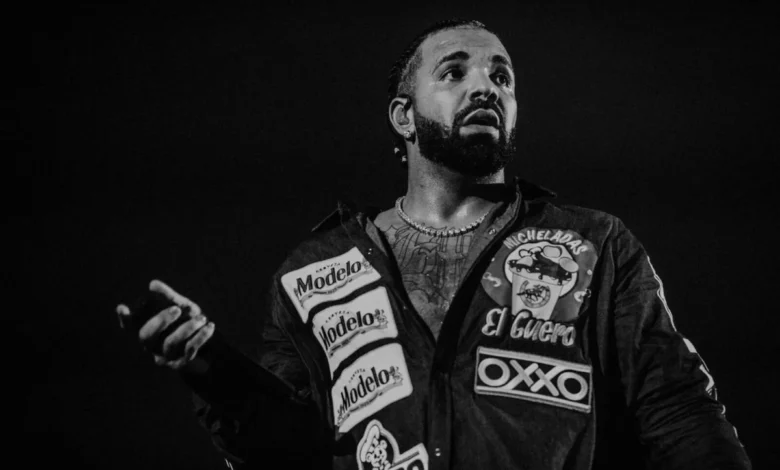
As the global anticipation for the 2026 FIFA World Cup final between footballing giants Argentina and Spain at the New York New Jersey Stadium continues to build, Canadian hip-hop luminary Drake has unequivocally thrown his significant financial backing behind Lionel Messi and the South American squad. The 39-year-old artist, known for his high-stakes wagers, took to Instagram days before the hypothetical high-stakes match, sharing a screenshot that revealed a colossal $1.5 million (£1.1 million) bet placed through the prominent online betting platform, Stake. This audacious move has not only generated immense buzz within the sports and entertainment spheres but also reignited widespread anxieties among fans regarding the infamous "Drake Curse," a superstitious phenomenon linked to the rapper’s public endorsements of athletes and teams.
Should Argentina emerge victorious against Spain to claim football’s most coveted trophy, Drake stands to secure a staggering payout exceeding $5.1 million (£3.79 million), a testament to the magnitude of his wager. The rapper, whose social media presence commands hundreds of millions of followers, accompanied the shared betting slip with a characteristic, playful caption: "What’s that saying??? Better luck next time…" This statement, while seemingly a jab at potential detractors or the opposing team, inadvertently fueled the pre-match narrative, particularly for those who subscribe to the "Drake Curse" theory. The bet underscores Drake’s consistent engagement with high-profile sports betting, a facet of his public persona that has become almost as recognized as his musical achievements. His long-standing partnership with Stake has seen him participate in numerous multi-million-dollar wagers across various sports, consistently drawing headlines and debate.
The Genesis and Grip of the ‘Drake Curse’
The revelation of such a substantial wager, especially from a figure as globally recognized as Drake, inevitably brings to the forefront the enduring legend of the "Drake Curse." This pervasive superstition posits that any team, fighter, or athlete publicly supported, photographed with, or wagered upon by the "God’s Plan" star is predisposed to losing high-profile competitions. What began as a series of coincidental losses has, over the years, evolved into a full-fledged cultural phenomenon, influencing fan sentiment and sports media narratives alike. The origins of the curse can be traced back to the late 2010s, with several high-profile incidents contributing to its notoriety.
One of the earliest and most frequently cited instances involves the UFC fighter Conor McGregor. In 2018, prior to McGregor’s highly anticipated bout against Khabib Nurmagomedov, Drake was seen draped in the Irish fighter’s flag, publicly endorsing him. McGregor subsequently suffered a decisive defeat. This was followed by a string of similar occurrences across different sports. In football, European giants like Paris Saint-Germain (PSG) and AS Roma experienced significant losses shortly after Drake was pictured with their star players or donned their jerseys. For instance, when Drake posed with PSG’s Layvin Kurzawa and Jadon Sancho (then at Borussia Dortmund), both their teams suffered heavy defeats. The curse seemed to extend to basketball as well, with teams like the Golden State Warriors facing unexpected setbacks after Drake’s public support.
The phenomenon gained such traction that dedicated online platforms, such as TheDrakeCurse.com, emerged to meticulously track his sports gambling history and public endorsements, documenting wins and losses with almost statistical rigor. These fan-built trackers serve as a testament to the psychological impact of the curse, transforming what might otherwise be dismissed as mere coincidence into a narrative force within sports culture. Drake’s recent high-profile betting losses have only amplified the superstition. A notable example includes a $1 million wager placed on mixed martial artist Conor McGregor during his UFC 274 bout against Max Holloway. McGregor, despite being a favored fighter, lost the fight, adding another significant entry to the "curse’s" ledger. Such repeated instances, whether truly causal or simply coincidental, have cemented the "Drake Curse" as a powerful narrative, creating a layer of apprehension even among the most ardent Argentine supporters.
The Grand Stage: 2026 FIFA World Cup Final
The context of Drake’s bet is the monumental 2026 FIFA World Cup Final, a spectacle set to captivate billions worldwide. This particular tournament holds immense significance as it marks several historic firsts for FIFA’s flagship event. It will be the first World Cup hosted by three nations: the United States, Canada, and Mexico. Furthermore, it will be the inaugural tournament to feature an expanded format, increasing the number of participating national teams from 32 to 48, a move designed to offer more opportunities for nations globally and enhance the tournament’s competitive diversity.
The New York New Jersey Stadium, widely understood to refer to MetLife Stadium in East Rutherford, New Jersey, has been designated as the venue for the final match. This iconic stadium, with a seating capacity exceeding 82,500, has a rich history of hosting major sporting events, including Super Bowls and international football friendlies. Its selection as the final’s venue underscores its status as a premier global sporting arena, capable of accommodating the immense crowds and logistical demands of a World Cup final. The choice of the New York metropolitan area also highlights North America’s growing prominence in hosting major international sporting events, leveraging its state-of-the-art infrastructure and passionate fan bases.
For Argentina, reaching the 2026 final would represent a continuation of their storied footballing legacy. Following their triumphant victory in the 2022 World Cup, led by the legendary Lionel Messi, the team would aim to defend their title and further solidify their position in football history. Messi, often hailed as the greatest player of all time, would likely be aiming for a final swansong, potentially cementing an unparalleled career with another World Cup triumph. Their squad typically boasts a blend of technical brilliance, tactical discipline, and a fervent attacking spirit. Spain, on the other hand, a nation with its own rich World Cup history, including a victory in 2010, would present a formidable challenge. Known for their intricate passing game, often referred to as ‘tiki-taka,’ and a production line of world-class talent, Spain would be expected to bring a highly competitive and aesthetically pleasing style of football to the final. The prospect of these two footballing powerhouses clashing in the final promises a tactical masterclass and a display of individual brilliance, making it a fitting stage for Drake’s high-stakes gamble.

Drake’s Whirlwind Year: Music, Feuds, and Financial Prowess
Drake’s multi-million-dollar World Cup wager arrives amidst a period of intense activity and unprecedented public visibility for the artist. The summer preceding the bet has been particularly tumultuous and career-defining, marked by a record-shattering, headline-dominating feud with fellow hip-hop titan Kendrick Lamar. This highly publicized lyrical battle, which saw both artists release a series of increasingly aggressive diss tracks, captivated global audiences and redefined hip-hop discourse. Lamar’s chart-topping diss track, "Not Like Us," in particular, achieved immense commercial success and sparked widespread cultural commentary, highlighting the sheer reach and impact of these two artists.
Following the intense lyrical warfare, Drake made an unexpected return to the music charts in May with an unprecedented triple-album drop. The simultaneous release of Iceman, Maid Of Honour, and Habibti marked his first major music collection since 2023’s For All The Dogs. This ambitious release strategy immediately garnered significant attention, with Iceman swiftly ascending to become his seventh number-one album on the UK charts, further cementing his commercial dominance and artistic prolificacy. Such consistent musical output, combined with his enduring appeal, underscores Drake’s immense financial capacity, enabling him to engage in high-stakes ventures like the World Cup bet. His estimated net worth, frequently reported in the hundreds of millions of dollars, positions him among the wealthiest musicians globally, making a $1.5 million wager a significant, yet manageable, risk within his overall financial portfolio.
This period of intense musical and public activity has not only reaffirmed Drake’s status as a cultural icon but also showcased his ability to navigate both the creative and commercial landscapes of the entertainment industry. His ventures into high-stakes sports betting, particularly through partnerships with platforms like Stake, serve as an extension of his brand, aligning him with a lifestyle of luxury, risk-taking, and high reward. Stake, an online casino and sports betting platform, has notably leveraged Drake’s celebrity endorsement to expand its global reach and attract a younger, tech-savvy demographic. The publicity generated by Drake’s bets, regardless of their outcome, provides invaluable marketing for the platform, turning his personal wagers into viral news stories.
Implications and the Broader Context
Drake’s $1.5 million bet on Argentina carries several significant implications, extending beyond the immediate financial stakes. Firstly, it amplifies the global conversation around the 2026 FIFA World Cup, drawing in demographics that might not typically follow football with such intensity. The celebrity endorsement injects an additional layer of entertainment and personal investment for fans. Secondly, it highlights the growing intersection of celebrity culture, sports, and online gambling. High-profile figures like Drake are increasingly blurring the lines between personal interest and brand promotion, often in lucrative partnerships with betting companies. This trend raises questions about responsible gambling and the influence of such endorsements on public perception, particularly among younger audiences.
From a cultural perspective, the "Drake Curse" remains a fascinating example of modern superstition in sports. While devoid of scientific basis, its persistent narrative demonstrates the human tendency to seek patterns and explanations, even in random events. For fans of Argentina, the bet creates a dilemma: the excitement of a global superstar backing their team is tempered by the apprehension that his support might paradoxically jinx their chances. This emotional dichotomy adds a unique psychological dimension to the upcoming final, making every goal and every near-miss a potential affirmation or refutation of the curse.
Economically, the bet, while substantial, represents a fraction of the overall financial ecosystem surrounding the World Cup. The tournament itself generates billions in revenue through broadcasting rights, sponsorships, ticket sales, and tourism. Online sports betting, a rapidly expanding industry, sees trillions of dollars wagered globally each year. Drake’s bet, therefore, serves as a high-profile, albeit small, data point within this vast financial landscape, demonstrating the scale of capital flow within sports and entertainment.
As the 2026 FIFA World Cup Final approaches, all eyes will not only be on the pitch in New Jersey but also on the outcome of Drake’s audacious wager. Whether the "Drake Curse" once again asserts its legendary influence, leading to a Spanish triumph, or if Lionel Messi and Argentina deliver a storybook victory, securing a $5.1 million payday for the Toronto superstar, the event is guaranteed to be etched into sporting and cultural history. The intersection of global football, celebrity influence, and pervasive superstition promises an iconic conclusion to what will undoubtedly be a memorable World Cup tournament.