Trenton Ayers Pushes Mississippi Hill Country Blues Into Modern Era With Taking It To The Mountain

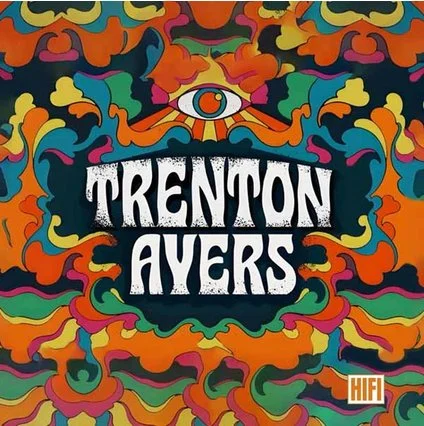
The Mississippi Hill Country blues tradition is a deeply localized, hypnotic art form characterized by driving, one-chord grooves, syncopated rhythms, and a hypnotic, trance-like pulse. For generations, this distinct regional sound has been passed down through family lineages and localized community gatherings, remaining remarkably resilient against the commercial homogenizations of mainstream rock and pop. Yet, the genre’s longevity has always depended on artists capable of honoring its foundational blueprints while simultaneously pushing its sonic boundaries outward. Enter Trenton Ayers, a lifelong practitioner of the Hill Country idiom whose second solo studio album, Taking It To The Mountain, released via the Music Maker Foundation, serves as a masterclass in how to bridge historical authenticity with contemporary execution. Comprising nine tracks spanning a tight and muscular 35 minutes, the record captures an artist working at the intersection of deep-rooted heritage and modern musical exploration.
A Lifetime Immersed in Mississippi Blues Royalty
To understand the artistic weight of Taking It To The Mountain, one must examine Ayers’ extraordinary upbringing. Born in Holly Springs, Mississippi, Ayers was enveloped in the state’s rich musical ecosystem virtually from birth. His father, Earl "Little Joe" Ayers, anchored the rhythm section as the bassist for the legendary Junior Kimbrough, embedding the young Trenton within the inner circle of North Mississippi blues aristocracy. Family gatherings and local juke joint outings routinely placed him in the physical presence of foundational architects such as R.L. Burnside, Robert Balfour, and Jesse Mae Hemphill.
Ayers recalls that guitars were ubiquitous fixtures in his childhood home; any time he picked one up, an experienced hand was readily available to offer an impromptu lesson. This immersive environment accelerated his musical development at an astonishing pace. He took naturally to the guitar by the age of three, and by six, he was already performing professional gigs. His debut performance at a local birthday party yielded an impressive $370 in tips—a sign of things to come for a prodigious young talent.
As he entered his pre-teen and teenage years, Ayers transitioned from a local prodigy to a road-tested professional. At age 12, he joined The Burnside Exploration alongside Kenny Kimbrough and Gary Burnside. Just two years later, at age 14, he hit the road touring with the Slick Ballinger band, securing a coveted opening slot for the legendary B.B. King during a performance in Lexington, Kentucky. His reputation as a premier collaborator solidified further in 2016 when he contributed to Descendants of Hill Country alongside Cedric Burnside and his uncle, Gary Burnside—a collaborative effort that earned a Grammy Award nomination for Best Blues Album.
Over the ensuing decades, Ayers expanded his geographic and sonic footprint, touring extensively across the United States and completing multiple international tours that spanned 22 distinct countries. These global travels exposed him to a diverse array of guitar styles and production aesthetics, ranging from the theatrical pop-funk of Prince to the expansive art-rock soundscapes of Roger Waters. Furthermore, his collaborative spirit manifested in frequent partnerships with genre-bending artists like G. Love, as well as his participation in the 2012 hip-hop blues crossover project Philadelphia Mississippi, which featured an all-star lineup including Alvin Youngblood Hart, Christone "Kingfish" Ingram, R.L. Boyce, and Jontavious Willis.
Chronology of a Legacy: From Family Archives to Solo Stardom
Ayers’ recording career as a primary bandleader began in earnest in 2023 with the release of his debut solo album, A Father – Son Legacy. Despite a lifetime of informal and semi-formal musical partnerships with his father, the two had never formally recorded an album together. Recognizing that his father was advancing in age, Ayers orchestrated the project as a vital archival effort to document the Ayers family musical lineage for future generations and music historians alike.
Following the deeply personal release of A Father – Son Legacy, the momentum for Taking It To The Mountain began to take shape through the encouragement of veteran musician and producer Jimbo Mathus, best known as a co-founder of the Squirrel Nut Zippers. Mathus convinced Ayers to enter the studio to capture a fresh wave of material, stepping in as the album’s producer while contributing instrumental prowess on drums, keyboards, and guitar.
The recording sessions took place within the Music Maker Foundation’s newly engineered "Freeverb" acoustic chamber—a specialized echo chamber designed specifically to enhance and expand the natural, cavernous acoustics intrinsic to the Hill Country blues style. To flesh out the sound, Ayers assembled a tight, high-caliber backing ensemble featuring Kirk Russell on drums and guitar, John Kveen on bass, and rich vocal harmonies provided by The Crimestoppers.
Track-by-Track Breakdown: Tradition Meets Innovation
Taking It To The Mountain opens with "Blues So Bad," a track anchored by a slinky, driving funk guitar lead that immediately establishes the album’s tonal duality. Ayers vocalizes the psychological toll of emotional distress, singing lines like, "Don’t say things that hurt my mind," and "Most people think I’m crazy, some say out of my mind. I have the blues so bad." Midway through the track, he pivots outward, commanding the ensemble with the directive, "Let the band ‘Play On’, everybody play on," transforming personal melancholy into a collective rhythmic exercise.
The energy shifts instrumentally on "Run Leo," a scorching showcase for Ayers’ fretboard dexterity. His guitar lines burst through the mix with rapid-fire precision, heavily complimented by Mathus laying down atmospheric and rhythmic passages on the Hammond B-3 organ.
The album’s title track, "Taking It To The Mountain," serves as its thematic and emotional centerpiece. Over a hypnotic groove, Ayers vocalizes a sense of communal urgency and liberation: "Don’t let me think about it. Goin’ to the river, I’m ‘Taking it to The Mountain’. Me and my people are going to have a conversation." The arrangement is elevated by backing vocals that deliver repeated declarations of "higher"—an overt stylistic nod to the socially conscious, uplifting funk of Sly and the Family Stone. Yet, Ayers’ searing guitar work continuously pulls the composition back into the gritty, earthbound reality of Mississippi blues. This thematic exploration of uninhibited expression continues on "Getting Funky," where Ayers explicitly outlines his artistic philosophy: "When times are ‘Getting Funky’, we have no rules. We will show you how funky we can get." This thesis statement flows directly into "Insight," a soulful plea for interpersonal connection: "Come to me, baby. I need your ‘Insight’, I need your knowledge."
On "Snake Hips," Ayers dips his toes into what he describes as "Hill Country rap," delivering rhythmic, spoken-word cadences over a rock-solid groove: "Come on baby, now snake hips, now wiggle when you want to. Slide to the left, now crawl, now slide to the right." This modern rhythmic delivery showcases his ability to converse with contemporary hip-hop and spoken-word traditions without abandoning his blues foundation.
The emotional stakes are raised on "Long Time No See," wherein Ayers expresses deep loyalty and devotion ("It’s about time, ain’t nothing in the world I wouldn’t do for you"), before the album reaches its conclusion with "Thang Going On." On the closing track, he laments a lost romance with a classic blues lament—"I cried and cried, cried all night long as my baby is up and gone"—before resolving into an infectious, groove-laden affirmation: "You know I love you baby, doing the things you make me do. We got a thang going on."
Broader Impact and Industry Implications
Taking It To The Mountain arrives at a critical juncture for traditional American roots music. As older generations of blues originators pass away, the cultural imperative to preserve their techniques has intensified. However, musicologists and industry analysts frequently debate the best method for keeping the genre viable for younger demographics.
By refusing to treat the Hill Country blues as a museum piece, Trenton Ayers offers a definitive blueprint for the genre’s survival. His integration of classic North Mississippi drone-and-stomp patterns with the sophisticated harmonic sensibilities of Prince, the expansive sonic architecture of Roger Waters, and the rhythmic cadence of urban funk and rap demonstrates that regional folk forms can evolve without losing their core identity.
Through the production framework provided by Jimbo Mathus and the institutional support of the Music Maker Foundation, Taking It To The Mountain bridges historical reverence with forward-thinking musicianship. For the listener, the album provides a visceral reminder that the blues is not merely a catalogue of historical grievances, but a living, breathing, and continuously mutating language. As Ayers leads his ensemble up the metaphorical mountain, he firmly establishes himself not just as a custodian of a legendary family legacy, but as a primary architect of the genre’s vibrant future.