Tom Morello Looks Back on a Legendary Career of Rebellion, Blockbusters, and Surprising Collaborations in NME Trivia Challenge

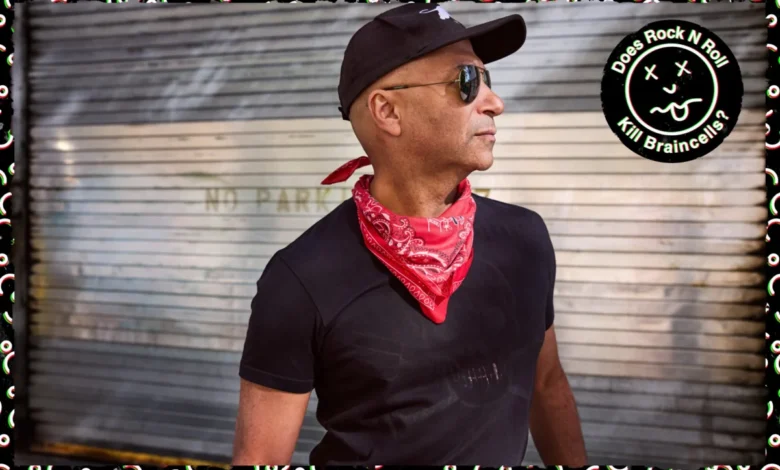
Guitar virtuoso, political activist, and sonic innovator Tom Morello recently sat down for an extensive retrospective interview and trivia challenge, examining the sprawling highlights and hidden depths of his decades-long career. Best known for pioneering the alternative metal and rap-rock genres with Rage Against the Machine and Audioslave, Morello navigated a series of challenging questions spanning his early underground days, cinematic side projects, high-profile arrests, and unexpected pop crossovers. While Morello ultimately finished with a modest score of three out of ten correct answers, the exercise served as a fascinating archival journey through the milestones of modern rock history.
From Star Trek Cameos to Underground Beginnings: The Pre-Rage Years
Long before he was commanding stadiums with ferocious, turntable-like guitar solos, Morello was an ambitious young musician navigating the fringes of the Los Angeles music scene. Reflecting on his acting credits, the musician fondly recalled his television appearances in the Star Trek franchise. In 1998, he appeared as a So’na alien in Star Trek: Insurrection, enduring five hours of prosthetic makeup daily. Two years later, in 2000, he made a brief cameo as crewman Mitchell in an episode of Star Trek: Voyager, famously delivering the deadpan line, "To the left, ma’am." He noted with amusement that fellow extras were oblivious to his burgeoning music career until they recognized him, frequently handing over demo tapes of their own bands.
Morello’s path to mainstream success was forged through trial and error, most notably with his late-1980s band Lock Up, which signed to Geffen Records and released the album Something Bitchin’ This Way Comes, featuring a distinctive horse head on the cover. Morello has frequently pointed to this period as a vital learning curve. The band faced stifling commercial pressures, including record label demands that their frontman remain closeted regarding his sexuality to ensure radio play. Unhappy with the resulting commercial compromises, Morello made a definitive vow the day the band dissolved: never to play another note of music he did not authentically believe in. That pivotal resolve led him straight to the living room couch where he began crafting the foundational riffs for Rage Against the Machine.
The Rise of Rage Against the Machine and Iconic Activism
The formation of Rage Against the Machine in the early 1990s injected a ferocious, politically charged urgency into the global mainstream. Morello recalled the band’s introduction to British audiences, including their notoriously disruptive 1993 television appearance on Channel 4’s The Word, where he inadvertently wore a Warrant T-shirt ironically before cementing a lasting affinity for Kiss. The watershed moment for the band’s UK connection arrived at the 1993 Reading Festival, where the explosive false-ending of "Know Your Enemy" revealed an entire sea of festival-goers moving in synchronization, confirming that their message had crossed international borders.
True to their ethos, Rage Against the Machine frequently married their sonic aggression with provocative, high-concept political protests. One of the most infamous instances occurred during the 1993 Lollapalooza festival in Philadelphia. Stripping entirely naked with duct tape over their mouths and the letters "P.M.R.C." painted across their chests—a direct protest against the Parents Music Resource Center and their crusade for parental advisory warning stickers—the band stood completely silent on stage for fifteen minutes.
Morello recalled the chaotic execution of the stunt, which was orchestrated with a strict fifteen-minute window before local law enforcement intervened. What began as a euphoric display quickly morphed into a tense standoff, culminating in audience members hurling loose change at the band members before they departed without playing a single note. The aftermath was equally chaotic, leading Morello to seek refuge from police and disgruntled fans by hiding out on Fishbone’s tour bus, sitting entirely naked while watching Star Wars.

Cinematic Collaborations and Supergroups: Audioslave, Prophets of Rage, and Class of ’99
Following the initial dissolution of Rage Against the Machine in 2000, Morello joined forces with Soundgarden frontman Chris Cornell, alongside his former bandmates Tim Commerford and Brad Wilk, to form Audioslave. The supergroup made a spectacular live debut on the Late Show with David Letterman in 2002, performing atop a New York City rooftop while actress Lisa Kudrow appeared as a guest inside the studio. The band quickly established a formidable presence, releasing a critically acclaimed self-titled debut album driven by the bombastic lead single "Cochise."
Morello’s collaborative spirit also extended to various cinematic and inter-band projects throughout the 1990s and 2000s. In 1998, he teamed up with Alice in Chains vocalist Layne Staley, Jane’s Addiction drummer Stephen Perkins, bassist Martyn LeNoble, and keyboardist Matt Serletic to form the supergroup Class of ’99. The ensemble recorded a heavy, industrial-inflected cover of Pink Floyd’s "Another Brick in the Wall" (Parts 1 and 2) for Robert Rodriguez’s sci-fi horror film The Faculty. Morello reflected somberly on the recording sessions, noting that it marked one of Layne Staley’s final vocal performances before his tragic passing from a drug overdose in 2002, capturing a moment of immense musical power weighed down by personal struggles.
Continuing his dedication to politically driven supergroups, Morello later united with members of Public Enemy (Chuck D) and Cypress Hill (B-Real) to form Prophets of Rage. The group’s 2017 self-titled debut album achieved commercial success, peaking at number six on the UK album chart, further solidifying Morello’s legacy of bridging the worlds of heavy rock and socially conscious hip-hop.
The Infamous New York Stock Exchange Raid and Pop Collaborations
Few promotional campaigns in rock history match the sheer disruption of the 2000 music video for "Sleep Now in the Fire," directed by documentary filmmaker Michael Moore. Originally conceived around a satirical game show titled Who Wants To Be Filthy F#&%ing Rich, the shoot escalated rapidly when the band and crew bypassed police barriers to stage an unscheduled performance directly in front of the New York Stock Exchange. The resulting chaos led to Moore’s temporary arrest and forced the closure of the trading floor doors. Notably, the video captured a day trader holding a sign reading "Trump for President 2000," an eerie piece of political prophecy that Morello often jokingly acknowledges as a historical oddity bearing minor cultural responsibility.
Despite his deep roots in alternative and heavy metal—culminating in his role as musical director for Black Sabbath’s monumental farewell events celebrating Ozzy Osbourne—Morello has consistently embraced cross-genre experimentation. In 2019, he surprised fans by contributing a signature guitar solo to "Teeth," a single by Australian pop-rock outfit 5 Seconds of Summer. Prompted by producer Andrew Wyatt during sessions for an Ozzy Osbourne project, Morello recorded the track with little prior familiarity with the pop group. However, discovering the band’s massive following through his son’s social circle led to a gracious live encounter at the Hollywood Palladium.
Broader Impact and Legacy
Tom Morello’s reflections highlight a career defined by uncompromising artistic integrity, radical political activism, and a relentless desire to push the boundaries of the electric guitar. From the underground clubs of Los Angeles and the protesting stages of Lollapalooza to rooftop debuts in New York and unexpected pop crossovers, Morello has continuously challenged industry norms. While his trivia score may not have reflected a meticulous memory of every chart position or guest star, his enduring footprint on the architecture of modern music remains absolute, cementing his status as one of the definitive sonic architects of the past three decades.