Pink Addresses Controversy Surrounding Reaction to Macklemore Pro-Palestine Comments

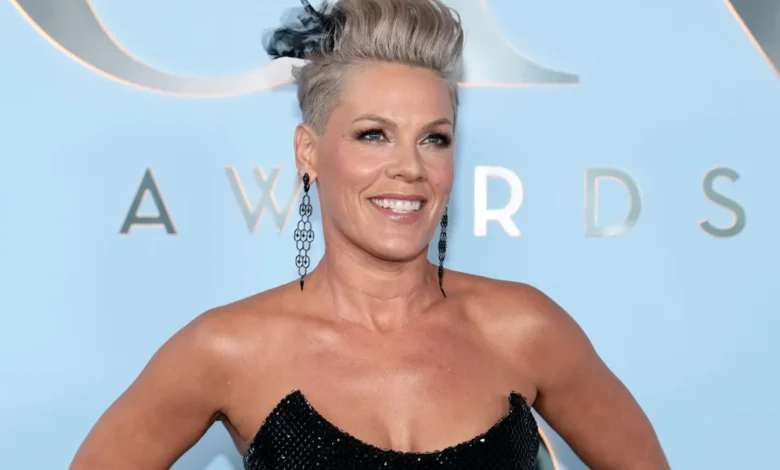
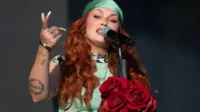
Pop star Pink has issued a formal and extensive response following a week of intense public scrutiny regarding her online reaction to rapper Macklemore’s recent onstage advocacy for Palestine. The controversy, which unfolded in the digital space before spilling into mainstream discourse, centers on a series of social media interactions that drew criticism from fans and observers alike. Pink’s statement, posted to Instagram on Friday, September 11, serves as both a clarification of her political position and a reflection on the volatile nature of discourse regarding the Israel-Hamas conflict within the music industry.
The Chronology of the Dispute
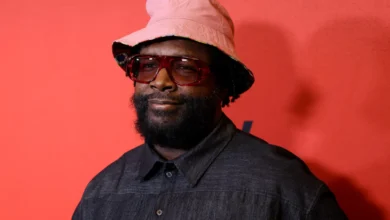
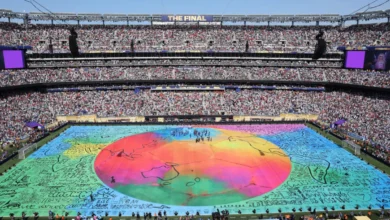
The tension originated during the September 4 and 5 performances of Ed Sheeran’s "Loop Tour" at MetLife Stadium in East Rutherford, New Jersey. Macklemore, who has been a consistent presence as a supporting act for the tour, utilized his platform to make vocal pro-Palestine remarks. These comments, which included explicit calls to "free Palestine," were met with immediate polarization.
Shortly after the events, Pink—whose real name is Alecia Beth Moore—reshared a social media post originally published by the advocacy organization StopAntisemitism. The shared post explicitly criticized Macklemore’s remarks and advocated for his removal from the remainder of the Sheeran tour. Because Pink is a high-profile figure who has previously been outspoken on humanitarian issues, the resharing of the post was interpreted by many as an endorsement of the call to silence the rapper. The backlash was swift, with critics questioning the singer’s stance on the humanitarian crisis in Gaza and the implications of attempting to suppress an artist’s political speech.
Pink’s Clarification and Reflection
In her multi-part Instagram statement, Pink acknowledged that her initial reaction was reactionary and lacked the nuance required for such a sensitive geopolitical topic. She admitted that the speed of social media often encourages a "cheap and fast" form of communication that fails to capture the complexity of an artist’s actual beliefs.
"A repost isn’t a statement, and a meme isn’t a spine," Pink wrote, expressing regret for the manner in which she engaged with the controversy. She emphasized that she was born Jewish and has never attempted to conceal her heritage. However, she pushed back against the assumption that her Jewish identity automatically equates to a specific stance on the actions of the Israeli government.
She explicitly stated, "I have never spoken for Israel, or for any government." Her statement further articulated a desire to see a future for Palestinians that respects human rights, while simultaneously condemning Hamas as a terrorist organization. She highlighted a foundational principle of her advocacy: the belief that the loss of innocent life, particularly that of children, is an unqualified tragedy that should not be weaponized for political gain.
Contextualizing the History Between the Artists
To understand the intensity of the public reaction, one must consider the historical context between Pink and Macklemore. Pink referenced a 2014 incident in which Macklemore appeared in a costume that was widely denounced as antisemitic. At the time, the rapper issued an apology, which Pink noted she had accepted in the interest of moving forward.

However, she expressed that the recent stadium performance—occurring against a backdrop of war-related imagery—evoked a sense of fear that was personal to her. She argued that when an artist uses a massive platform to address a complex conflict, the delivery can unintentionally alienate and alarm members of their audience. Her objection, she clarified, was not to the slogan "Free Palestine" itself, but to the feeling that Jewish attendees were being singled out or forced to navigate a political environment that felt hostile to their identity.
Broader Implications and Industry Impact
The incident has reignited debates regarding the role of artists in political activism and the expectations placed upon them by their fan bases. Macklemore has remained steadfast in his position, posting to social media that "wanting all humans to be treated equal should never be controversial." His refusal to back down has solidified his role as a prominent voice in the entertainment industry’s pro-Palestine movement.
Meanwhile, the Israeli-American Council (IAC) has taken a more formal step, launching a petition to remove Macklemore from the remaining eight dates of the Ed Sheeran tour. This action highlights the growing pressure on tour promoters and venues to manage the political expressions of their performers. The incident serves as a case study for the modern music industry, where the lines between performance, personal belief, and public accountability are increasingly blurred.
Humanitarian Advocacy vs. Political Rhetoric
Pink defended her track record by pointing to her decade-long tenure as a UNICEF ambassador. She argued that her history of humanitarian work—specifically her efforts to assist children in war zones—is evidence of her commitment to human rights that transcends national borders. She rejected the binary nature of the online debate, which often demands that celebrities choose a side and adhere to specific slogans to prove their moral standing.
"I’m not going to litigate a complex war in an Instagram caption, and I’m not going to recite anybody’s slogan to earn back a follower," she asserted. This sentiment resonates with a growing segment of the public that is weary of performative activism. By opting out of the "slogan-based" discourse, Pink is attempting to reclaim her own narrative, insisting that her identity as a Jewish mother and her long-standing humanitarian record should be viewed as distinct from the inflammatory political rhetoric circulating on social media.
The Role of Public Figures in Global Crises
The incident at MetLife Stadium reflects a broader trend: the intersection of stadium-sized platforms and urgent, violent global conflicts. As audiences become more politically active, the expectation for artists to address current events has intensified. However, as evidenced by this fallout, the resulting discourse is frequently fraught with misunderstandings, leading to reactionary digital behavior that often obscures the underlying humanitarian concerns.
For Pink, the goal of her statement was to reset the conversation. By closing her post with a traditional "shana tova" (a wish for a good year) in light of the upcoming Rosh Hashanah holiday, she attempted to ground the controversy in a personal, cultural context rather than a purely political one.
As the debate continues to simmer, the music industry faces a period of introspection. The clash between Pink and Macklemore is not merely a disagreement between two performers; it is a manifestation of the deep divisions within society at large. Whether this will lead to a change in how artists approach political messaging during live sets remains to be seen, but it is clear that the scrutiny applied to these moments will only continue to grow. As of now, both artists remain on their respective professional paths, though the resonance of this exchange is likely to be felt throughout the remainder of the touring season.