John Malkovich Cancels Israel Trip Over Fabricated Thrilled to Return and Solidarity Quote

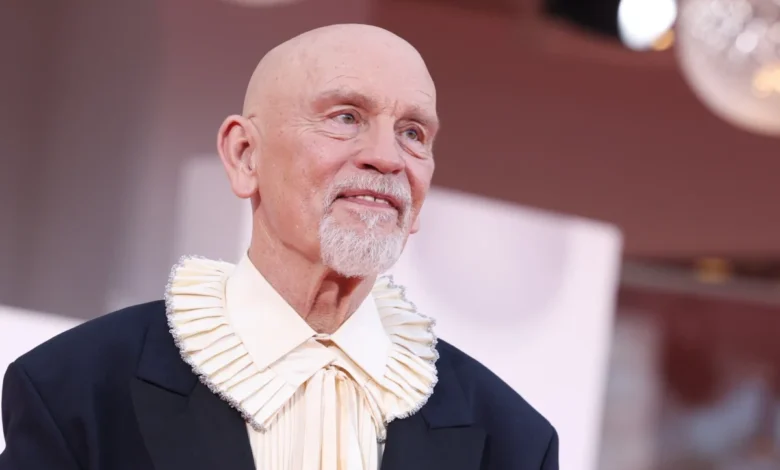
Renowned actor John Malkovich has officially called off his upcoming theatrical engagement in Israel, citing a severe breach of professional trust stemming from an unauthorized and completely fabricated press release. The controversy erupted after a public relations firm representing an Israeli promoter published statements falsely attributed to the actor, expressing artificial enthusiasm for returning to the country and declaring political solidarity. The incident has not only resulted in the immediate cancellation of Malkovich’s planned performance of The Music Critic in Tel Aviv, but has also ignited a broader conversation regarding the ethics of arts promotion, the boundaries of celebrity endorsement, and the delicate intersection of international culture and geopolitics.
The cancelled event, a unique theatrical-musical satire composed by the acclaimed Jewish violinist Aleksey Igudesman, was scheduled to take place at Tel Aviv’s prestigious Charles Bronfman Auditorium in April 2027. The production blends classical music with sharp comedy, utilizing Malkovich’s distinct vocal delivery and dramatic gravitas to skewer famous historical music critics. Anticipation for the show was high, given Malkovich’s long-standing reputation as a magnetic stage presence and his previous cultural engagements in the region. However, the trajectory of the booking shifted dramatically following a communications blitz initiated by local organizers in early September.
The Genesis of the Controversy and the False Quotes
On September 5, a press release was distributed to various media outlets, including prominent regional publications such as The Jerusalem Post, promoting Malkovich’s upcoming arrival. Contained within this promotional material were direct quotes explicitly attributed to the Academy Award-nominated actor. The fabricated text claimed that Malkovich was “thrilled to return to Israel” and looked “forward to meeting the warm Israeli audience once again, to whom I feel a strong closeness and solidarity.”
For an internationally recognized artist, the public assignment of explicit geopolitical sentiments—particularly concerning a region experiencing profound and deeply polarized conflict—carries immense weight. Malkovich was completely unaware of the statements until the news filtered back to him via international entertainment reporting, specifically through coverage by The Hollywood Reporter. Upon discovering that declarations of political and personal solidarity had been published in his name without his knowledge, consent, or review, the actor took swift and decisive action to distance himself from the messaging and the engagement entirely.
Malkovich’s Official Statement and Rejection of Implied Endorsement
In a comprehensive and sharply worded statement issued to the press, John Malkovich laid bare his absolute frustration with the unauthorized communication. He clarified that the words had been entirely manufactured by a public relations agency hired by the local promoter, noting that he was neither consulted nor informed prior to publication.
“I did not utter these phrases, and they most certainly are not approved by me, nor do they reflect my feelings,” Malkovich stated. “The fact that they were printed as direct quotes from me is unacceptable and untenable. For this reason, I have decided I cannot participate in the Tel Aviv performance.”
Beyond addressing the immediate falsehood, Malkovich utilized the statement to articulate a broader philosophy regarding his global career and the nature of international performance. He emphasized that accepting theatrical engagements across diverse geographical and political landscapes should never be misconstrued as a blanket endorsement of a host nation’s government, leadership, policies, or military actions.
“Throughout my long career, I’ve been lucky to perform across a quite wide swath of the world—in countries with governments whose values or culture I do not share and in front of audiences of many differing faiths and ideologies,” he wrote. He explained that traveling to regions with differing worldviews offers an invaluable opportunity to listen, learn, and share the universal languages of storytelling and music, which serve to illuminate the shared human condition.
Crucially, Malkovich drew a firm line regarding how his artistic presence is perceived by the public. “My appearance in any country, even my own, does not constitute approval of said country’s policies, nor actions, nor its elected or unelected leaders,” he continued. “My appearances would also not condone nor mean that I am in supposed ‘solidarity’ with any particular political cause, nor with the killing of innocents, nor with any acts of terrorism, nor any other kind of barbarity.”
Admissions and Apologies from the Promoting Parties
Faced with the immediate fallout and the cancellation of a high-profile cultural event, the Israeli PR firm responsible for drafting and distributing the release issued a formal and unreserved apology. The agency acknowledged that the statements had been fabricated entirely within their offices and erroneously attributed to the actor to drum up local enthusiasm.
“Mr. Malkovich did not make, provide, authorise or approve this statement, nor was it approved by his representatives,” the PR firm conceded in their public retraction. “We sincerely apologise to Mr. Malkovich and his representatives for the incorrect attribution and regret that this occurred.”
Despite the apology and the rapid admission of fault, the damage to the production proved irreversible. The unauthorized fabrication had crossed a red line for the actor, making a successful, tension-free artistic residency in Tel Aviv untenable.
Historical Context of Malkovich’s Appearances in Israel
The cancellation brings an abrupt halt to what would have been Malkovich’s return to Israeli stages after more than a decade. The actor’s history with Israeli audiences includes notable, well-received performances that highlight his willingness to engage with diverse theatrical markets. In 2013, Malkovich starred in The Infernal Comedy: Confessions Of A Serial Killer, a gripping theatrical piece where he portrayed a convicted murderer reading his autobiography. Prior to that, in 2008, he served as a guest of honor at the prestigious Jerusalem Film Festival, participating in masterclasses and engaging with local cinephiles.
These past visits were characterized by cultural exchange rather than political alignment, a distinction that Malkovich’s recent statement sought to reinforce. By cutting ties over the manufactured solidarity quote, the actor demonstrated that he guards his personal autonomy and public voice fiercely, unwilling to let local marketing strategies co-opt his artistic integrity for political positioning.
Concurrent Career Milestones and Professional Outlook
While the cancellation of The Music Critic marks an unfortunate chapter in Malkovich’s touring schedule, the actor remains exceptionally busy across international film and television. The controversy unfolds just as Malkovich garners critical acclaim for his latest cinematic venture, the dark comedy Wild Horse Nine.
Directed and shaped by top-tier talent, Wild Horse Nine features an ensemble cast that includes Malkovich alongside fellow heavyweight Sam Rockwell. The film made its high-profile premiere at the Venice Film Festival to largely positive reviews. Set in the early 1970s against the volatile backdrop leading up to the military coup in Chile that overthrew President Salvador Allende, the film follows a pair of eccentric CIA agents whose history of international meddling catches up with them in darkly comedic fashion.
Critical reception for the film has been robust. Reviewers have lauded its caustic wit and the palpable chemistry between its leads, with industry trades predicting a strong showing during the upcoming awards season. Following its festival debut, Wild Horse Nine is scheduled for its UK premiere at the BFI London Film Festival before rolling out for a general theatrical release.
Broader Implications for Arts Promotion and Celebrity Autonomy
The incident involving John Malkovich serves as a cautionary tale for public relations agencies, promoters, and event organizers operating within high-stakes geopolitical environments. In an era where cultural boycotts, political sensitivities, and digital media scrutiny intersect daily, the temptation for marketing teams to manufacture enthusiasm or fabricate personal statements can carry catastrophic professional consequences.
For artists of Malkovich’s stature, maintaining absolute control over one’s public declarations is paramount. When publicists invent quotes—particularly those touching on sensitive topics like regional solidarity or national allegiance—they risk alienating the very talent they are paid to promote. Malkovich’s swift withdrawal from The Music Critic sends a clear message to the entertainment industry: artistic participation must be built on mutual trust, factual accuracy, and explicit consent, rather than fabricated rhetoric designed to manipulate public perception.