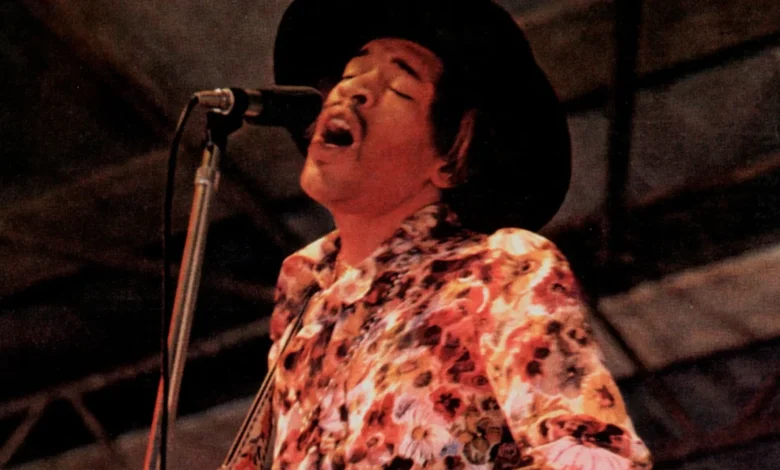
The 1960s served as the definitive crucible for modern popular music, providing a sonic blueprint that has dictated the trajectory of rock, pop, and folk for over half a century. While the decade is often celebrated for its revolutionary instrumentation and the advent of psychedelic production, the foundational element of its enduring appeal remains the human voice. During this era, the "rock star" archetype moved away from the polished, crooning standards of the 1950s toward a raw, idiosyncratic, and highly personal form of expression. In the landscape of 1960s music, three voices stand out as instantly recognizable, possessing timbres so distinct that they can be identified within the first few bars of a recording: John Lennon, Bob Dylan, and Jimi Hendrix.
The Evolution of the Rock Vocal Archetype
Before the mid-1960s, the recording industry largely favored singers with traditional tonal purity and formal training. However, the social upheavals of the decade demanded a different kind of delivery—one that prioritized authenticity over technical perfection. This shift allowed for the emergence of "signature" voices that acted as more than just melodic carriers; they became symbols of cultural identity.
John Lennon of The Beatles provided a bridge between the high-energy rock and roll of the 1950s and the introspective avant-garde of the late 1960s. Bob Dylan challenged the very definition of a "singer," proving that phrasing and lyrical depth could outweigh melodic precision. Jimi Hendrix, primarily lauded for his virtuosic guitar work, utilized his voice as a rhythmic and atmospheric tool, blending the blues tradition with a modern, conversational style. Together, these three artists redefined the parameters of the human voice in a commercial recording context.
John Lennon: The Scrape and the Shine
As a founding member of The Beatles, John Lennon was instrumental in the group’s transition from a Liverpool beat combo to a global cultural phenomenon. While the band was famous for its tight, three-part harmonies, Lennon’s solo lead vocals often provided the grit and emotional weight that balanced Paul McCartney’s melodic sweetness.
Lennon’s voice was characterized by a distinctive "sandpaper" quality, particularly when he pushed into his upper register. A primary example of this is the 1963 recording of "Twist and Shout." Recorded at the end of a grueling 12-hour session for the Please Please Me album, Lennon was suffering from a severe cold. The resulting vocal—shredded, raw, and ecstatic—became a benchmark for rock vocal performance. It was a sound that "scraped the sky," as critics often noted, breaking up with a natural distortion that echoed the electricity of the band’s instruments.
As the decade progressed, Lennon’s voice evolved alongside the band’s songwriting. By the mid-1960s, he began experimenting with vocal processing, such as Artificial Double Tracking (ADT) and Leslie speaker cabinets, to further distinguish his sound. In tracks like "Tomorrow Never Knows" (1966) and "Strawberry Fields Forever" (1967), his voice took on a ghostly, ethereal quality that defined the psychedelic era. Despite these technological enhancements, the core of his vocal identity—a mix of vulnerability and defiant power—remained unmistakable.
Bob Dylan: The Architecture of Phrasing
If Lennon was the voice of the rock revolution, Bob Dylan was the voice of the era’s conscience. Emerging from the Greenwich Village folk scene in the early 1960s, Dylan’s vocal style was initially met with skepticism by the musical establishment. Critics often described his voice as "nasal," "scratchy," or "unconventional." However, it was precisely this lack of traditional polish that lent his songs their immense authority.
Dylan’s 1960s output, particularly his transition from acoustic protest songs to electric rock in 1965, changed the way audiences listened to music. On tracks like "Blowin’ in the Wind" and "Like a Rolling Stone," his delivery was more akin to spoken-word poetry or a rhythmic chant than a standard pop melody. He utilized a technique known as "rhetorical singing," where the emphasis is placed on the meaning of the words rather than the sustain of the notes.
His 1965 performance at the Newport Folk Festival, where he "went electric," remains a pivotal moment in music history. The hostility he faced from folk purists was often directed at his voice, yet his influence was undeniable. By the late 1960s, Dylan’s style had cleared a path for other "non-traditional" singers, establishing the idea that a rock singer’s primary job was to be honest, not necessarily "pretty." His ability to bend vowels and delay phrases created a buoyant, unmistakable cadence that remains one of the most imitated styles in music history.
Jimi Hendrix: The Soulful Conversationalist
Jimi Hendrix is frequently cited as the greatest guitarist in the history of rock music, a reputation that often overshadows his capabilities as a vocalist. Born in Seattle and rising to fame in London, Hendrix brought a unique blend of American R&B, blues, and British rock to his performances. His singing voice was a perfect complement to his "wailing" Stratocaster, characterized by a relaxed, almost conversational tone that could pivot into gritty, soulful shouts.
In hits such as "Purple Haze" and "The Wind Cries Mary," Hendrix’s voice possesses a rhythmic fluidity that mirrors his guitar playing. He often used "call and response" techniques, where his vocal lines would be answered by a guitar lick, creating a seamless dialogue between the man and the machine. Unlike many of his contemporaries who sought to hit high, operatic notes, Hendrix operated in a mid-to-low range, relying on timbre and "feel" to convey emotion.
Musicologists have noted that Hendrix was initially self-conscious about his singing, often asking engineers to bury his vocals in the mix. However, his work on albums like Are You Experienced (1967) and Electric Ladyland (1968) reveals a singer with impeccable timing and a deep understanding of the blues tradition. His voice was "gritty and perfect," providing a human grounding to the often-experimental and cosmic sounds of his instrumentation.
Chronology of Influence: 1962–1969
To understand the impact of these voices, one must look at the timeline of their most influential releases during the 1960s:
- 1962–1963: The Beatles release "Love Me Do" and "Twist and Shout." Lennon’s voice introduces the "British Invasion" sound to the United States, blending American R&B with a new, aggressive energy.
- 1963–1964: Bob Dylan releases The Freewheelin’ Bob Dylan and The Times They Are A-Changin’. His voice becomes synonymous with the Civil Rights Movement and the anti-war sentiment.
- 1965: Dylan releases "Like a Rolling Stone," a six-minute epic that shatters the three-minute pop song mold. His "snarling" vocal delivery sets a new standard for rock attitude.
- 1966: The Beatles release Revolver. Lennon’s voice is manipulated through studio effects, signaling the birth of studio-as-instrument rock.
- 1967: The Jimi Hendrix Experience releases Are You Experienced. Hendrix’s vocal style on "Fire" and "Foxy Lady" blends sexuality, blues, and psychedelia.
- 1969: The decade concludes with landmark performances at Woodstock, where Hendrix’s vocal and instrumental rendition of "The Star-Spangled Banner" becomes a defining image of the era.
Supporting Data and Industry Impact
The commercial success of these three artists provides empirical evidence of their vocal appeal. According to RIAA (Recording Industry Association of America) data, The Beatles remain the best-selling artists of all time, with Lennon’s vocals featuring on the vast majority of their 183 million certified units sold in the US alone.
Bob Dylan’s impact is measured not just in sales—though he has sold over 125 million records—but in his peer recognition. In 2016, he became the first songwriter to receive the Nobel Prize in Literature, an accolade that validated the "voice" he gave to a generation.
Jimi Hendrix, despite a mainstream career that lasted only four years before his death in 1970, has seen his catalog maintain consistent sales and airplay. "Purple Haze" and "All Along the Watchtower" (a Dylan cover) remain staples of classic rock radio, with Hendrix’s vocal versions often cited as the definitive interpretations of the material.
Official Responses and Critical Analysis
Throughout the decades, fellow musicians and critics have commented on the unique power of these three voices.
On Lennon, producer George Martin once remarked, "John had a passionate voice. He had a great deal of what we call ‘soul.’ He didn’t like his own voice very much, which I could never understand, because it was one of the best voices I’ve ever heard."
Regarding Dylan, Bruce Springsteen stated during Dylan’s Rock and Roll Hall of Fame induction, "Bob freed your mind the way Elvis freed your body. He showed us that just because the music was innately physical did not mean that it was anti-intellectual."
On Hendrix, guitarist Eric Clapton recalled the first time he heard Hendrix sing and play: "He played just about every style you could think of… and his voice was the perfect vehicle for those songs. It was effortless."
Broader Implications and Legacy
The legacy of Lennon, Dylan, and Hendrix extends far beyond the 1960s. By popularizing "imperfect" but highly expressive vocal styles, they opened the door for subsequent genres. The punk rock movement of the 1970s, the grunge era of the 1990s, and the modern indie-rock scene all owe a debt to the vocal groundwork laid by these three men.
The shift toward vocal authenticity meant that singers no longer had to sound like Bing Crosby or Frank Sinatra to be successful. Instead, they could sound like themselves. This democratization of the singing voice allowed for a wider range of human experiences to be captured on record. Today, when a listener identifies John Lennon’s rasp, Bob Dylan’s drawl, or Jimi Hendrix’s bluesy mumble within seconds, they are not just recognizing a person; they are recognizing the blueprint of modern rock music itself. The 1960s may have set the stage, but it was these voices that gave the era its soul and its lasting resonance.
Related posts: