Agitate Ableton Live tempos, chop up YouTube slop, more with Oliver Torr

The Evolution of the Glazmo Network
The Glazmo Network serves as the hub for Torr’s collaborative research and development. Originally known for his contributions to hardware engineering, Torr has transitioned his methodology toward software-defined environments, utilizing the Glazmo Discord server as a collaborative space for transparent sound design. This shift mirrors a broader trend in the independent music technology sector, where creators are increasingly moving away from closed-source, proprietary black-box plugins in favor of modular, transparent, and highly hackable frameworks.
Torr’s partnership with the duo MIRA 新伝統 has been instrumental in this development. MIRA 新伝統, noted for their recent album Mythoplaxy, has garnered critical attention for their ability to blend technical sound design with lyrical, ambient, and space-age motifs. Their previous collaboration, the Max for Live device HyperSplash, set a precedent for this current wave of tools by offering a high-performance engine for generating granular foley and glitch-based percussion.
Agitator: Redefining Tempo Manipulation
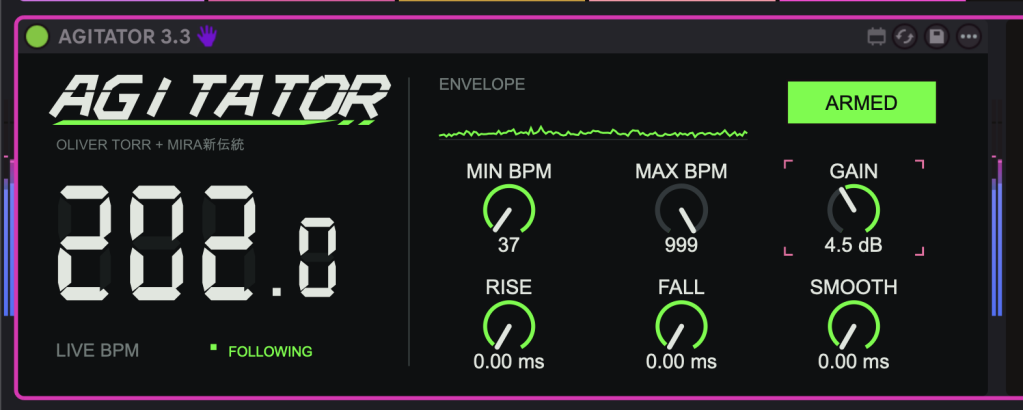
The first of the new releases, Agitator, addresses a long-standing limitation in Ableton Live’s internal automation. While Ableton’s native Envelope Follower is capable of modulating various parameters, it does not natively offer the ability to modulate the project’s master tempo in real-time. Agitator, developed by Torr and MIRA 新伝統, functions as a bridge between audio input and global tempo control.
By feeding an audio signal into the device, users can dynamically adjust the project’s tempo based on the amplitude or spectral characteristics of the incoming sound. The device includes essential controls for slew rate, rise, and fall, allowing for the smoothing of tempo fluctuations. This creates a "breathing" effect that is particularly useful for experimental, ambient, and glitch genres where rigid quantization is often undesirable. From a technical standpoint, this tool leverages the Live Object Model (LOM) to bypass standard automation limitations, providing a fluid, responsive tempo experience that was previously difficult to achieve without complex, external MIDI routing.
GLAZMO_DREAM_PORT and the AI Sampling Paradigm
The second tool, GLAZMO_DREAM_PORT, represents a more ambitious application of generative AI within the production chain. Unlike standard sample-based synthesizers, this device functions as a recursive search engine. It accepts text-based prompts—referred to by the creators as "koans"—which are then interpreted by an AI engine to perform automated queries on YouTube. The audio retrieved from these queries is then automatically sliced, processed, and mapped into usable pads or drum kits.
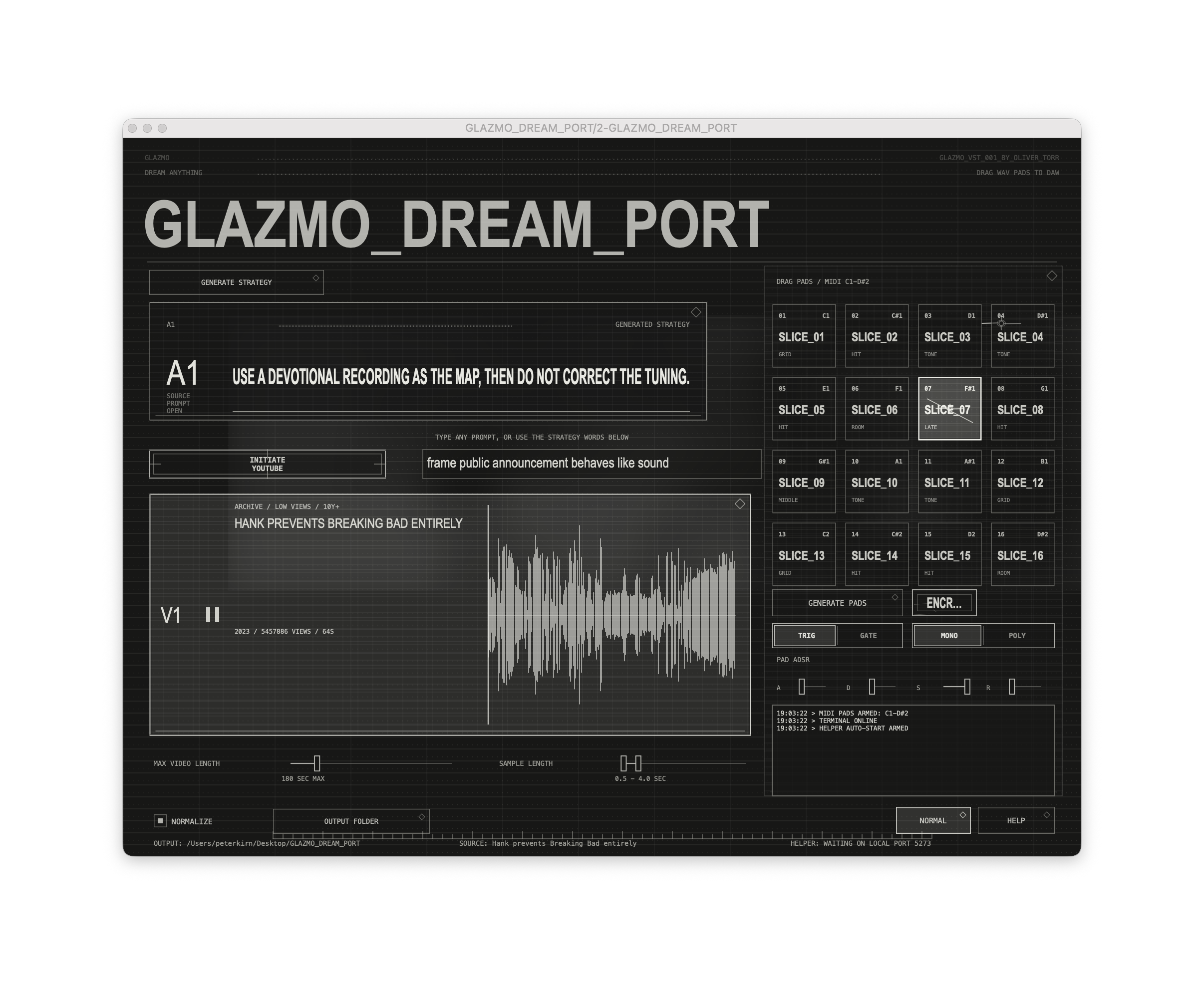
This process essentially turns the internet into a giant, decentralized sample library. To mitigate the unpredictability of this workflow, the tool includes an "Encrypt" function, which further mangles the audio to create "corrupted" or dream-like variations of the source material.
Crucially, the tool addresses the sensitive issue of copyright and metadata. It includes built-in authorship tracking to assist producers in managing sample clearance. While the tool is currently available exclusively for macOS (supporting both Apple Silicon and Intel-based systems), its arrival marks a pivotal moment for producers seeking to incorporate "found sound" aesthetics without the manual labor of hours-long crate-digging sessions.
Contextualizing the AI-Assisted Workflow
The integration of Large Language Models (LLMs) and generative audio tools like GLAZMO_DREAM_PORT highlights a shift in how musicians view the concept of authorship. Historically, sampling required a manual process of selecting, recording, and editing audio. AI-assisted tools automate the selection process, effectively acting as an intelligent curator.
From an industry perspective, this raises questions regarding the sustainability and legality of AI-generated content. However, by providing tools that include authorship information and focusing on experimental, non-commercial applications, developers like Torr and MIRA 新伝統 are navigating the ethical landscape with a focus on transparency. Their approach emphasizes the creative agency of the user; the AI acts as a collaborator that introduces "entropy" into the creative process, rather than a replacement for the producer’s artistic vision.
Chronology of Development and Impact
The development of these tools follows a clear trajectory within the underground electronic music community:
- Initial Research (2023–2024): Oliver Torr establishes the Glazmo Network, focusing on modular synthesis and archaic sound design processes.
- HyperSplash Release (2024): The partnership with MIRA 新伝統 yields a highly successful Max for Live device for glitch percussion, proving the market demand for unconventional production tools.
- Glazmo Discord Launch: Torr opens his production workflows to the public, fostering a community of users who contribute to the refinement of his software.
- Current Release (2026): The launch of Agitator and GLAZMO_DREAM_PORT provides a comprehensive suite for producers to manipulate tempo and sample synthesis.
Broader Implications for Digital Music Production
The success of these tools signals a growing interest in "digital psychedelia." As DAW software becomes increasingly standardized and "clean," there is a rising demand for plugins that introduce controlled chaos. Agitator and GLAZMO_DREAM_PORT provide this through two different avenues: the former via temporal manipulation and the latter via recursive, AI-driven sampling.
The professional response to these tools has been largely positive, particularly among artists operating within the IDM (Intelligent Dance Music) and experimental electronic spheres. By releasing these tools at an accessible price point—and in some cases, inviting donations—the creators are prioritizing the democratization of complex sound design.
Furthermore, the aesthetic output of these tools is directly linked to the recent discography of the developers. Albums such as Mythoplaxy and Headstock Comforts serve as case studies for what is possible when these specific tools are pushed to their limits. Headstock Comforts is particularly notable for its dense, layered production that feels simultaneously organic and hyper-digital. The album demonstrates that while the tools are automated, the final aesthetic is deeply rooted in the artistic intent of the producer.
Future Outlook
As the Glazmo Network continues to evolve, the integration of more sophisticated AI models remains a possibility. The current limitations—such as macOS-only compatibility for GLAZMO_DREAM_PORT—are likely to be addressed in future iterations as the software matures. The community-driven nature of these projects suggests that further developments will be highly responsive to user feedback, potentially leading to more advanced features such as Creative Commons-only filtering for AI queries or broader platform support.
In conclusion, Oliver Torr and MIRA 新伝統 have successfully bridged the gap between cutting-edge AI technology and the practical, gritty needs of the experimental producer. By making their "secret sauce" available to the public, they have not only empowered a new generation of musicians but have also challenged the conventional boundaries of what constitutes a DAW-based workflow. Whether used for subtle texture generation or total sonic deconstruction, these tools are set to become staples for those looking to inject a sense of "digital psychosis" and rhythmic uncertainty into their work.