Karol G’s Viajando Por El Mundo Tropitour Is a Love Letter to Latinidad, Heartbreak, and the Woman Behind La Bichota: Review


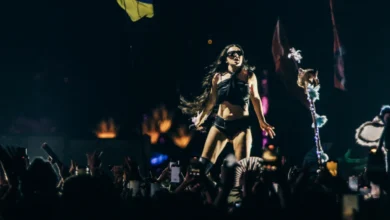
The global ascent of Karol G reached a new zenith this Thursday at MetLife Stadium in East Rutherford, New Jersey, during the first of two sold-out performances. The event, part of her ambitious Viajando Por El Mundo Tropitour, served not merely as a concert but as a comprehensive exploration of the intersection between massive stadium pop production and the intimate, often painful, realities of the human experience. While the evening was punctuated by a headline-grabbing surprise appearance from collaborators Judeline, rusowsky, and producer Tainy for the live debut of the hit single “Bby Wow,” the true narrative arc of the performance centered on the evolution of Carolina Giraldo Navarro—the woman behind the stage persona of "La Bichota."
A Shift in Artistic Trajectory
Since her emergence in the reggaeton scene in 2017 with the breakthrough track “Ahora Me Llama,” featuring Bad Bunny, Karol G has meticulously cultivated a brand defined by female empowerment and the defiant spirit of perreo. Her early discography encouraged listeners to shed the weight of past relationships and reclaim their autonomy. However, her current tour and the accompanying album, No Me Arrepiento de Sentir Tanto, mark a deliberate pivot.
The concert at MetLife Stadium illustrated this evolution through a structural duality. The show began with the vibrant, high-energy aesthetics of her Tropicoqueta era, characterized by an orange-hued, jungle-inspired stage design that underscored her connection to her Colombian roots. Yet, the production quickly transitioned into a more somber, introspective phase, reflecting the themes of her latest record, which features contributions from global icons like Drake and Bruno Mars. This shift indicates that the artist has reached a level of creative agency where she is no longer bound by the expectations of the reggaeton genre alone, opting instead to weave a narrative of vulnerability into her high-production-value performances.
Chronology of the Tropitour Spectacle
The performance was meticulously paced, functioning as a sonic and visual journey across Latin American cultural touchstones. Opening with “Latina Foreva” and “Un Gatito Me Llamó,” the stage served as a microcosm of tropical biodiversity. As the evening progressed, the set design and musical arrangements moved fluidly through various regional identities.
The middle segment of the show featured an all-female mariachi band for a powerful rendition of “Ese Hombre Es Malo,” a nod to Mexican musical traditions. This was followed by a shift into Brazilian-inspired choreography and a reimagined version of “Si Antes Te Hubiera Conocido” that leaned heavily into Dominican bachata rhythms. Throughout the two-hour set, the integration of Puerto Rican reggaeton beats remained the constant, providing a rhythmic anchor for the stylistic variations.
The highlight of the technical production arrived late in the set. As the stadium lighting shifted from warm, vibrant oranges to a reflective, melancholic deep blue, the audience witnessed the live debut of “Bby Wow.” The orchestration of this moment—with Tainy, Judeline, and rusowsky joining the stage—was a strategic convergence of talent. By positioning the artists around a DJ table adorned with the flags of Colombia, Spain, and Puerto Rico, the production underscored the transnational nature of modern Latin music.
The Socio-Political Context of the Performance
The Viajando Por El Mundo Tropitour coincides with Hispanic Heritage Month, a timing that adds layers of socio-political significance to the performance. Karol G’s emphasis on the diverse flags present in the stadium crowd was a clear nod to the pan-Latin identity she champions.
The political undertones were made explicit during the opening set by Venezuelan singer Elena Rose. During her performance, Rose addressed the audience with a sobering anecdote regarding her photographer, who had been detained by Immigration and Customs Enforcement (ICE) while traveling to the venue. This incident, shared in an environment defined by the celebration of Latin culture, highlighted the sharp contrast between the artistic success of Latin musicians in the United States and the precarious reality faced by many in the immigrant community.
This tension was further addressed through a pre-recorded vignette featuring actor Edward James Olmos. His message—calling for unity and pride in one’s origins—served as a bridge between the entertainment aspects of the night and the broader societal conversations regarding identity, migration, and representation.
Analysis of Musical and Economic Impact
From an industry perspective, Karol G’s ability to sell out stadiums like MetLife is a testament to the current dominance of Spanish-language music in the global marketplace. Data from the music industry consistently reflects that Latin music consumption has outpaced general market growth over the last five years. By moving away from the purely “empowerment anthem” formula and into the realm of “sad perreo,” Karol G is tapping into a more nuanced demographic that values emotional resonance alongside danceability.
Her creative choices—specifically the decision to prioritize themes of "collecting wounds" and embracing heartbreak—represent a sophisticated approach to artist branding. By grounding the "La Bichota" persona in the real-world experiences of Carolina Giraldo Navarro, she fosters a deeper parasocial connection with her fan base. This is a critical strategy for sustaining long-term relevance in a market that often discards artists after a few chart-topping cycles.
Industry Reception and Future Implications
While the mainstream music press has largely focused on the star power of the guest appearances, the underlying success of the tour lies in its logistical and emotional cohesion. The incorporation of diverse regional sounds—from bachata to mariachi—demonstrates a commitment to musical education and cultural preservation that elevates the show from a standard pop concert to a curated cultural experience.
Observers in the industry have noted that the "Tropitour" model, which relies on high-concept stage design and a narrative-driven setlist, is likely to set a new standard for touring Latin artists. As she continues her tour, the emphasis on the "real person" behind the superstar serves as a blueprint for how legacy acts and rising stars alike might maintain authenticity while scaling their productions to stadium-sized audiences.
Conclusion: A Legacy of Vulnerability
The final moments of the MetLife performance reaffirmed the tour’s central thesis. Despite the pyrotechnics, the costume changes, and the high-profile collaborations, the show remained an intimate portrait of a woman navigating the complexities of fame and personal growth.
Karol G’s transition from a regional star to a global phenomenon has been defined by her ability to synthesize the sounds of Latin America into a cohesive, stadium-ready package. However, the Viajando Por El Mundo Tropitour proves that her true power lies in her willingness to be vulnerable. By acknowledging the pain of her experiences and presenting them as a source of strength, she has created a template for modern stardom that is as grounded as it is grand. As she moves forward in her career, the distinction between the icon and the individual continues to blur, ultimately benefiting a fanbase that sees in her own journey a reflection of their own struggles and triumphs. The success of the New Jersey shows confirms that the audience is not just here for the hits—they are here for the person standing at the center of the stage, ready to feel it all.