Pulp Reflect on 1996 Mercury Win, Brian Eno Mishap, and the Enduring Power of the Album at the 2026 Awards

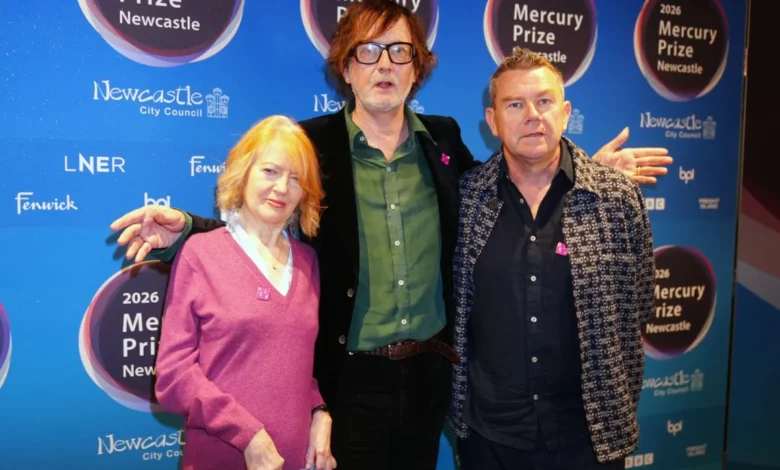
Britpop icons Pulp experienced a profound full-circle moment at the 2026 Mercury Prize ceremony in Newcastle, taking to the stage to perform their track “Begging For Change.” Their performance served as a tribute to the shortlisted charity compilation album Help(2), produced in aid of War Child. While the evening’s ultimate prize was ultimately awarded to RAYE for her acclaimed record This Music May Contain Hope, the event offered the legendary Sheffield band a reflective platform to look back on their historic 1996 victory, an infamous brush with producer Brian Eno, and the shifting landscape of the modern music industry.
A Full-Circle Humanitarian Legacy
The release of Help(2) in 2026 marks over three decades of high-profile musicians uniting to support children in conflict zones. The project directly follows and draws inspiration from the landmark 1995 Help album, a legendary single-day recording session spearheaded by Brian Eno at Abbey Road Studios. That original 1995 release featured a powerhouse roster of 90s alternative royalty, including Oasis, Blur, Radiohead, Portishead, Massive Attack, Suede, Sinéad O’Connor, and the Manic Street Preachers, raising vital funds for children affected by the Bosnian War.
Three decades later, the 2026 sequel assembled a fresh, diverse generation of contemporary music heavyweights. Produced by James Ford, Help(2) features contributions from the Arctic Monkeys, Fontaines D.C., Wet Leg, Young Fathers, English Teacher, Damon Albarn, Geese frontman Cameron Winter, and global pop superstar Olivia Rodrigo, among others. Pulp’s involvement in representing the project at the Mercury Prize highlighted the enduring intersection of mainstream British alternative music and philanthropic activism.
Remembering 1996: Different Class and the Near-Loss of £25,000
Pulp’s return to the Mercury Prize ceremony invited natural comparisons to their watershed moment three decades prior. In 1996, the band’s definitive breakthrough album, Different Class, won the prestigious Mercury Music Prize, famously beating out the original Help compilation. Despite taking home the competitive trophy, Pulp famously donated their entire £25,000 prize money directly to the War Child charity.
However, the logistics of the philanthropic gesture nearly went awry due to a comedic administrative oversight involving legendary producer Brian Eno. Keyboardist Candida Doyle recalled the surreal handover during an interview at the Newcastle ceremony.
"I remember we decided to give the cheque to the first War Child LP," Doyle recounted. "I had the cheque in an envelope with the award, and I gave it to Brian Eno. He just took it and thought he was just getting the award. I spoke to him later and he said, ‘I nearly threw that envelope away.’ He didn’t realise I’d given him £25,000. That was the first time I spoke to Brian Eno, which was very exciting."
Frontman Jarvis Cocker dryly noted the subsequent bond formed from the incident, adding, "You’ve been on the phone to him every week ever since," before Doyle recalled another specific detail of the encounter: "I found out his dad was a postman. I do remember that very well."
Reflecting on the hazy memories of their 1996 victory night, Cocker quipped, "Terrible, I have no memories at all. I was pissed out my…" Drummer Nick Banks offered a slightly clearer, albeit stereotypical, recollection: "Very little memory, although there is footage of me spraying champagne over everyone." Cocker retorted, "Stereotypical drummer behaviour, Nick," to which Banks replied, "Absolutely, it’s part of the manual. If you win something and you’ve got champagne…"

The Renaissance of the Album Format
Amidst discussions of charity compilations and historical anecdotes, the band also weighed in on the contemporary state of recorded music and the physical album format. Following the 2025 release of More—Pulp’s first studio album in 24 years—the band members expressed measured optimism regarding how audiences consume music today.
Addressing what constitutes a great album, Doyle stated simply, "Great songs." Meanwhile, Banks praised producer James Ford’s ability to cohesively bind disparate genres and styles across a multi-artist compilation like Help(2).
Expanding on the broader economic and cultural viability of the long-player format, Cocker championed the enduring appeal of physical media. "Albums, I think they’re coming back," Cocker observed. "Vinyl sales are up, CDs are kind of scheduled to disappear, and no one buys an album digitally. I always thought that a vinyl album was where records worked best. You’ve got a side that’s only 20 minutes long, you can listen to it, go and make a cup of tea or whatever, and it’s a good thing. Albums are coming back, that’s what I’m saying. They’re back!"
Looking Beyond the Mercury Prize
The 2026 Mercury Prize ceremony showcased a fiercely competitive shortlist. RAYE secured the coveted trophy for This Music May Contain Hope, triumphing over a diverse field that included heavyweights and innovators such as Paul McCartney, JADE, Nia Archives, Dave, Suede, Florence + The Machine, Olivia Dean, Knats, Dove Ellis, and Kojey Radical.
For Pulp, the appearance at the Mercury Prize follows a whirlwind period of renewed activity. Following the release of More and their subsequent touring schedule, the band has also expanded their cinematic footprint with the release of the Garth Jennings-directed live documentary What Do You Do For An Encore?, currently streaming on MUBI.
As for the long-term future of Pulp following their triumphant return to the studio and stage, Cocker remains characteristically pragmatic about what lies ahead. Speaking earlier this summer about the band’s trajectory, Cocker remarked: "I mean, I think there is a future. The thing is, I don’t like to make pronouncements on the future because the whole thing about the future is you just don’t know what’s going to happen. We did the album More, and making it was quite a pleasant experience; playing it has been good, so that’s an inspiration, but obviously it came after a 24-year gap."
"We just can’t do that anymore because I’ll be dead in 24 years," Cocker added. "What will probably happen is that everybody is going to have a bit of a rest. Maybe I’ll ring people up towards the end of the year and say, ‘Shall we have a practice or something?’ We’ll just see what will happen. I like to think of Pulp as an organic thing. Sometimes it bears fruit and sometimes it doesn’t, but I feel fairly confident that we will manage to do something else, but I don’t know when."
Whether through philanthropic support for War Child, retrospective celebrations of Britpop’s golden era, or continued creative output, Pulp’s legacy within the British musical canon remains as vital and culturally resonant as it was when they first claimed the Mercury Prize three decades ago.