Ben Folds Slams Trump’s Kennedy Center Takeover Before Congress: ‘When You Politicize Art, You’ve Got Propaganda’

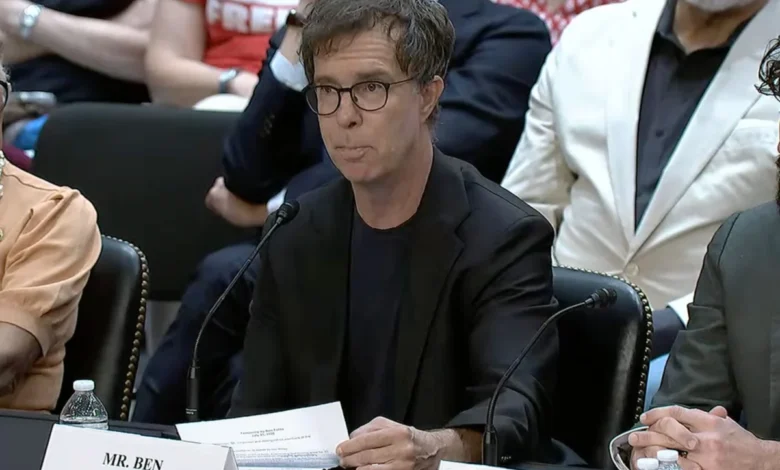
A congressional forum convened on Tuesday, July 21, 2026, to scrutinize what lawmakers termed President Donald Trump’s "vanity projects," initiatives alleged to have diverted substantial public funds. Central to the hearing, titled "Monumental Waste – How Donald Trump Is Spending Millions Destroying American Landmarks," was the testimony of renowned singer, songwriter, and pianist Ben Folds. Folds, who previously served as the artistic advisor to the National Symphony Orchestra (NSO) at the John F. Kennedy Center for the Performing Arts, detailed the profound changes he witnessed following an unprecedented presidential overhaul of the institution’s board in February 2025, ultimately leading to his resignation.
Folds’ Testimony: A "Hyper-Politicized Environment"
Addressing lawmakers, including Senator Richard Blumenthal, who presided over the hearing, Folds painted a stark picture of the Kennedy Center’s transformation. He recounted how, prior to the presidential intervention, the venerable cultural institution had maintained an unwavering commitment to its artistic mission, largely insulated from political interference. "I never heard politics discussed in any meetings or gatherings at the center," Folds recalled, emphasizing that this apolitical stance held even during President Trump’s first term from 2017 to 2021. "Everyone involved, including the Trump board, knew we were there to create, educate and showcase art for all Americans, not to further a political agenda."
However, this neutrality, according to Folds, eroded rapidly after President Trump removed a significant number of existing board members and assumed the role of chairman himself in February 2025. The Kennedy Center, Folds asserted, swiftly devolved into a "hyper-politicized environment." His testimony underscored the fundamental conflict he perceived between art and political agenda: "I think most of us understand that when you politicize art, you’ve got propaganda."
Folds elaborated on the detrimental effects of this politicization, highlighting how it compromised the center’s reputation and core mission. He noted that artists invited to perform at the venue could no longer accept or decline without their decision being interpreted as either an endorsement or a protest of the administration. More critically, Folds expressed deep concern for the safety and freedom of expression of the artists he was responsible for booking. "I could not trust that the artists I booked to play at the Kennedy Center would be safe from retribution if they said or sung something that might displease the president or his political allies," he stated. It was this inability to guarantee artistic integrity and safety that, with "great sadness," compelled him to resign from his post.
A Timeline of Disruption at the Kennedy Center
The events leading to Folds’ testimony and resignation represent a significant departure from the Kennedy Center’s historical operations:
- Pre-February 2025: Ben Folds had served as the artistic advisor for the National Symphony Orchestra for nearly a decade, during which the Kennedy Center operated with a widely respected, non-partisan board, focusing solely on its cultural mandate.
- February 2025: President Donald Trump initiated an unprecedented overhaul of the Kennedy Center’s board of trustees. This involved the removal of several established board members, many of whom had deep roots in the arts and philanthropy, and the President’s personal assumption of the chairmanship. This move was widely criticized by arts advocates as a direct attempt to exert political control over a vital cultural institution. In response, Folds resigned, and several other artists publicly denounced the takeover, canceling planned concerts at the venue in protest.
- September 2025: The politicization manifested in a specific incident involving singer Yasmin Levy. Levy reportedly criticized the board’s new Diversity, Equity, and Inclusion (DEI) and programming changes in an email exchange with Richard Grenell, then-interim executive director, a presidential appointee. Despite her criticisms, Levy proceeded with her performance in solidarity with the Kennedy Center’s dedicated staff and union members. However, her performance was marred by hecklers, allegedly paid by Rick Loughery, Grenell’s executive vice president, to disrupt her act. This incident was cited by Folds as a chilling example of the hostile environment artists faced.
- May 2026: A federal judge issued a significant ruling, ordering that President Trump could not add his name to the Kennedy Center’s title and mandated the immediate removal of any reference to him on the building’s signage. This judicial intervention signaled a legal pushback against the administration’s perceived overreach.
- July 21, 2026: The congressional forum convened, bringing these issues into the legislative spotlight and allowing Folds to deliver his detailed testimony.
The Kennedy Center: A Legacy Under Threat
Established in 1964 as a living memorial to President John F. Kennedy, the Kennedy Center is the nation’s cultural center, dedicated to presenting and producing a wide array of performing arts, fostering arts education, and serving as a beacon of cultural diplomacy. Its board of trustees, traditionally composed of prominent citizens, philanthropists, and arts professionals, has historically operated with a degree of independence crucial for maintaining artistic integrity and public trust. The Center receives federal funding, but also relies heavily on private donations, which can be jeopardized by political controversies. Its mission, as enshrined in its founding legislation, is to be a national stage for the performing arts, accessible to all Americans, free from partisan influence.
The presidential takeover in 2025 marked a radical departure from this established governance model. While the administration’s stated rationale for such an overhaul was not explicitly detailed in the forum, similar actions in other federal bodies have often been justified under the guise of "streamlining operations," "improving efficiency," or "aligning with national priorities." However, critics, including Ben Folds, argue that these actions served primarily to consolidate political control and introduce partisan agendas into an institution whose strength lay in its neutrality. The appointment of individuals like Richard Grenell, known for his political background rather than extensive arts management experience, further fueled concerns about the politicization of leadership roles.

Wider Implications for Artistic Freedom and Federal Institutions
Folds’ testimony highlighted not just the specific challenges at the Kennedy Center but also the broader implications for artistic freedom and the independence of cultural institutions across the nation. When the impartiality of a prominent venue like the Kennedy Center is compromised, it sends a chilling message to artists, potentially leading to self-censorship or a reluctance to engage with federally funded institutions. This can stifle creativity, limit the diversity of voices, and ultimately diminish the cultural landscape.
The financial health of such institutions also comes into question. Many cultural organizations rely on a delicate balance of federal funding, corporate sponsorships, and individual philanthropy. A perception of political bias or direct governmental control can deter donors and sponsors who prefer to support institutions free from partisan entanglement. Folds’ assertion that the "takeover hobbled the Kennedy Center, broke its once-proven successful business model and disrespected its original core mission" speaks directly to these multifaceted impacts.
The Congressional Forum: A Broader Inquiry into "Vanity Projects"
The congressional forum extended beyond the Kennedy Center, examining a range of projects that lawmakers alleged amounted to "Trump’s vanity projects [that] have wasted hundreds of millions of your hard-earned tax dollars." These concerns spanned several federal domains, suggesting a pattern of extravagant spending and perceived self-aggrandizement.
Other testifiers at the forum brought forth additional evidence of questionable expenditures:
- Rep. Joyce Beatty reportedly shared observations regarding extensive and costly renovations to parts of the White House, questioning the necessity and transparency of such projects. These renovations, often undertaken with little public disclosure, raised flags about fiscal responsibility and adherence to historical preservation guidelines.
- Jimi Shaughnessy, manager of veterans programs for the National Parks Conservation, discussed concerns related to the Lincoln Memorial’s reflecting pool. While specific details were not provided, such discussions typically revolve around controversial design changes, inflated costs, or projects that deviate from established conservation principles for iconic national landmarks.
- Jon Gollinger, a democracy advocate from Public Citizen, presented testimony on the construction of a large triumphal arch in Washington, D.C. Such a project, typically costing tens or hundreds of millions of dollars, would represent a significant public works undertaking and, in the context of the forum, was likely framed as an unnecessary expenditure reflecting personal glorification rather than public benefit.
The cumulative impact of these alleged "vanity projects," as presented at the forum, painted a picture of widespread fiscal mismanagement and a disregard for established norms in federal spending and cultural preservation. Senator Blumenthal’s decision to convene the hearing underscored a legislative intent to hold the administration accountable for these actions and to investigate the extent of taxpayer money diverted to projects perceived as serving personal rather than public interests.
Legal Challenges and the Path Forward
The federal judge’s ruling in May 2026, which blocked President Trump from adding his name to the Kennedy Center, represented a critical legal victory for those advocating for the institution’s independence. This ruling, likely based on legal precedents concerning federal naming rights and the proper governance of national monuments, set a crucial boundary for presidential authority over such cultural assets. It also provided a precedent for future legal challenges against similar actions.
However, the judge’s order, while significant, does not fully address the "hyper-politicized environment" Folds described. The long-term implications for the Kennedy Center and other federal cultural institutions remain a subject of intense debate and concern. Restoring the center’s reputation, rebuilding trust within the artistic community, and re-establishing its non-partisan governance structure will require sustained effort, potentially spanning multiple administrations.
Ben Folds concluded his testimony with a poignant appeal for bipartisan cooperation: "I can only hope your concerns can find their way to the hearts and minds of your colleagues on the other side of the aisle, who seem absent today." His words underscored the gravity of the situation, highlighting that the integrity of America’s cultural institutions is a matter that transcends partisan divides and demands a unified commitment to artistic freedom and institutional independence. The ongoing saga at the Kennedy Center, juxtaposed with the broader inquiry into "vanity projects," exemplifies a critical moment for the intersection of politics, art, and public trust in American governance.