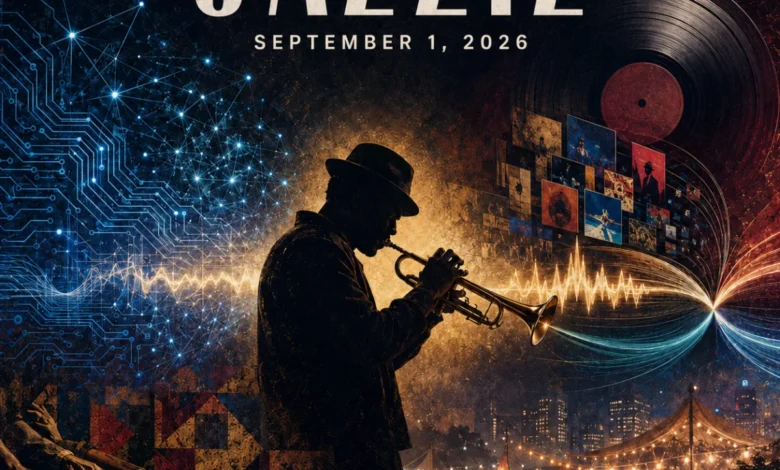
Jazz enters the month of September standing at a profound crossroads, defined by two competing visions of the future: one driven by the cold efficiency of industrial scale and the other by the enduring power of human connection. As major music corporations tighten their grip on digital infrastructure and artificial intelligence, the jazz ecosystem—a genre historically dependent on niche audiences and deep archival curation—finds itself uniquely exposed to the shifting tides of the music industry. The industry is currently witnessing a rapid acceleration of two distinct strategies: the consolidation of massive, AI-ready catalogs and the push for direct, creator-to-fan commerce.
A Chronology of Corporate Consolidation and AI Litigation
The final week of August 2026 served as a microcosm of these conflicting forces. On August 25, the "Big Three" labels—Universal Music Group (UMG), Sony Music Group, and Warner Music Group—announced a landmark $76 million Series B investment in Stability AI. This move was not merely a financial transaction; it was a strategic pivot. By backing a generative AI company, the major labels have signaled a new "licensed-first" era. They are effectively drawing a legal line in the sand: AI models that utilize their licensed, high-quality data will be deemed "legitimate," while those that do not will face the full weight of the industry’s legal machinery.
This aggressive litigation strategy manifested just three days later, on August 28, when Sony Music Publishing and Warner Chappell filed a high-profile lawsuit against the AI developer Anthropic. The publishers allege that Anthropic ingested tens of thousands of copyrighted compositions to train its Claude model without authorization. Concurrently, UMG and Sony ramped up their ongoing litigation against Suno, accusing the company of using "stream-ripping" technology to circumvent YouTube’s security protocols and pilfer audio for training purposes. While Suno and Anthropic continue to dispute these claims, the message from the majors is clear: the unauthorized use of music for AI training is now the industry’s primary legal target.
The BMG-Concord Merger: A New Powerhouse
Beyond AI, the physical and digital landscape of music ownership is undergoing a tectonic shift. The impending merger of BMG and Concord, expected to close in the third quarter of 2026, will create a formidable entity controlling more than four million songs. With an estimated annual revenue of $2.2 billion, the new BMG will command a massive portion of the music market.
For the jazz community, the stakes are particularly high. Concord, through its stewardship of Concord Jazz and Craft Recordings, holds the keys to some of the most important catalogs in American history, including definitive works by Miles Davis, John Coltrane, and Bill Evans. While a larger corporate entity promises greater resources for restoration, high-fidelity reissues, and global marketing, critics of such consolidation worry about the "centralization of taste." When a smaller number of executives controls the archival output of the 20th century, there is a risk that niche, albeit historically significant, recordings may be relegated to the vaults in favor of high-performing, mass-appeal masters. The challenge for this new entity will be to maintain the "specialist" care that jazz fans demand while operating with the aggressive efficiency of a global conglomerate.
The Shift Toward Direct-to-Fan Commerce
In direct opposition to the model of massive aggregation, SoundCloud is attempting to decentralize the marketplace. On August 26, the platform launched a beta program allowing select U.S.-based "Artist Pro" creators to sell WAV and MP3 files directly to fans, commission-free. This initiative targets a fundamental truth of the music business: streaming revenue, while consistent, often fails to adequately reward the most committed, high-value listeners.
For jazz artists, who have long relied on the "merchandise table" and the sale of physical media to sustain their careers, this model represents a return to a more traditional, intimate exchange. By removing the middleman, SoundCloud is betting that the most devoted jazz fans—those who value the liner notes, the recording quality, and the artist’s personal narrative—will pay a premium for direct access. If successful, this could provide a lifeline for independent musicians to monetize their back catalogs and exclusive live recordings without being at the mercy of platform algorithms.
Industry Implications and the "Copyright Trap"
The legal environment is becoming increasingly perilous for brands and organizations that operate in the digital space. The August 21 lawsuit filed by Sony Music against the retail giant Kroger—alleging hundreds of instances of unauthorized music use in social media marketing—serves as a stark warning. As jazz festivals, labels, and cultural institutions lean into video content and digital marketing to build their audiences, the complexity of music licensing has never been greater.
The "Kroger case" highlights a common misconception: that social media platforms grant a "blanket license" for all commercial use. In reality, the legal requirements for a branded social media campaign are vastly different from those of a user-generated post. For the jazz industry, which relies heavily on sponsorship from corporate partners, failing to clear master and publishing rights for every digital asset could result in crippling statutory damages. Professionalizing the rights-clearance process is no longer a bureaucratic task; it is a prerequisite for survival.
The Human Element: Tradition and Live Performance
Amidst these corporate maneuvers, the actual production of jazz remains a deeply human endeavor. The recent release of Erykah Badu and the Alchemist’s Before the World Blows, featuring luminaries like Kamasi Washington and Thundercat, demonstrates the genre’s ongoing capacity for cross-pollination with hip-hop and R&B. Simultaneously, the release of Sullivan Fortner’s Leave That In There and Miguel Zenón and Luis Perdomo’s El Arte del Bolero, Vol. 3 highlights the enduring appeal of the "intimate record"—the work that prioritizes personal narrative and artistic evolution over mass-market trends.
The passing of Uruguayan legend Rubén Rada on August 26 serves as a somber reminder of what is at stake. Rada’s career, which fused Afro-Uruguayan candombe with jazz and funk, reminds us that the history of music is not just a collection of assets to be bought and sold. It is a living, breathing tradition transmitted by people.
This human element is perhaps most visible in the continued success of major public jazz festivals. Both the DC JazzFest and the Detroit Jazz Festival are proving that jazz can thrive in the public square. By leveraging a complex, diversified funding model—combining private donations, corporate sponsorship, government grants, and hospitality—these festivals sustain large-scale, free public access to world-class art.
Conclusion: The Balance of Power
The jazz industry is moving into a period where the "power of scale" and the "value of connection" will exist in a state of constant, often uncomfortable, tension. The major labels are attempting to turn the history of music into a machine-readable commodity to power the next generation of AI. Meanwhile, artists and independent platforms are searching for ways to forge direct, meaningful relationships with listeners.
The ultimate test for the industry will be whether these new corporate giants can demonstrate that their scale serves the art form rather than just the balance sheet. Transparency in AI licensing, the preservation of archival context, and the fair compensation of creators will be the metrics by which this new era is judged. As the industry recalibrates, it must remember the lesson of the live festival: the most durable, valuable, and culturally significant aspects of music are those that bring people together in a shared experience. The future of jazz will not be decided by algorithms alone; it will be decided by whether the business can protect the humanity, the history, and the community that make the music worth listening to in the first place.