Hamburg’s Antisemitism Commissioner Demands Cancellation of DJ Sama’ Abdulhadi’s Habitat Festival Performance Amid Accusations of Antisemitism.

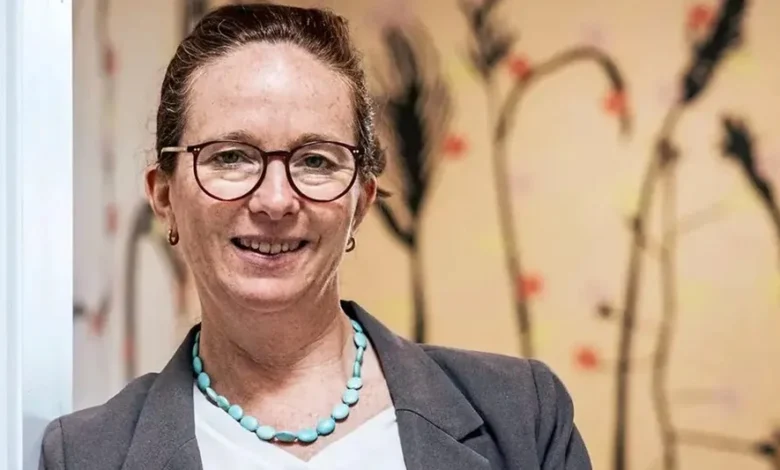
The planned performance of Palestinian techno DJ Sama’ Abdulhadi at Hamburg’s Habitat Festival this coming weekend has become the focal point of a significant cultural and political controversy, with Anna von Villiez, Hamburg’s Antisemitism Commissioner, emphatically calling for its cancellation. Von Villiez accuses Abdulhadi of glorifying the brutal murder of over 1,000 people on October 7, 2023, as a "liberation struggle" and of disseminating antisemitic positions through her statements on social media. This demand reignites a debate that has simmered for months within Germany’s cultural landscape, pitting artistic freedom against the imperative to combat antisemitism.
Deepening the Controversy: Specific Accusations and Context
Anna von Villiez’s demand for the cancellation is rooted in specific online communications attributed to Sama’ Abdulhadi. The commissioner highlighted an Instagram post from October 7, 2023, in which Abdulhadi allegedly described the Hamas attacks as an element of "Palestinian resistance" and subsequently characterized Israel’s military response in the Gaza Strip as "one of the cruelest genocide campaigns in history." These statements, made in the immediate aftermath of the deadliest single day for Jews since the Holocaust, are viewed by von Villiez and many others as deeply problematic and unacceptable.
The gravity of Abdulhadi’s alleged statements is amplified by the tragic context of the October 7th attacks. Von Villiez underscored the harrowing detail that a substantial number of the victims on that day were attendees of a music festival – the Nova Music Festival near Re’im – drawing a stark, poignant parallel to the setting of Abdulhadi’s scheduled performance. The massacre at the Nova Festival, where over 360 young people were brutally murdered, raped, and abducted by Hamas terrorists, remains a raw wound for many, particularly within the international music community. For an artist scheduled to perform at a music festival to appear to legitimize the actions of those responsible for such an atrocity at another music festival is perceived by critics as not merely insensitive but actively harmful and profoundly offensive.
Von Villiez’s argument extends beyond the immediate offense, positing that allowing Abdulhadi to perform would send a detrimental signal. She asserted that a last-minute disinvitation remains feasible and would constitute a vital stance against antisemitism, demonstrating a clear commitment to upholding values that reject the glorification of violence and hate speech. This perspective aligns with a broader push in Germany to ensure that public platforms, especially those receiving public funding or operating in public spaces, do not become conduits for antisemitic or anti-Israel sentiments that cross the line into demonization or justification of terrorism.
A Precedent: Felix Klein’s Earlier Intervention
The current controversy in Hamburg is not an isolated incident but rather a continuation of concerns first raised months ago. In April, Felix Klein, the Federal Government Commissioner for Jewish Life in Germany and the Fight Against Antisemitism, had already sharply criticized Abdulhadi’s planned appearance. Speaking to the Berliner Morgenpost, Klein stated unequivocally that Abdulhadi disseminates a "highly polarizing, antisemitic worldview." He too had urged the Habitat Festival organizers to cancel her performance, expressing his disappointment that the festival had, in his view, "missed the opportunity to send a clear signal against antisemitism."
Klein’s earlier intervention highlights the systemic concern among German authorities regarding the propagation of antisemitic narratives, particularly within cultural spheres. As a nation grappling with its historical responsibility, Germany maintains a strong commitment to combating antisemitism in all its forms, often adopting a robust stance that includes criticism of actions or statements perceived as undermining Israel’s right to exist or glorifying violence against Israelis. The continuity of concern from both federal and local antisemitism commissioners underscores the perceived seriousness of Abdulhadi’s statements in the German context.
The Festival’s Defense: Artistic Freedom and Pluralism
In response to the mounting pressure, the organizers of the Habitat Festival have firmly rejected the demands for Abdulhadi’s disinvitation. Their official statement emphasizes the festival’s foundational principles: a commitment to a diverse, open, and international music and cultural scene. While unequivocally stating that "Antisemitism has no place at the festival," the organizers articulate a nuanced position regarding Abdulhadi’s inclusion.
They contend that extending an invitation to Abdulhadi does not automatically imply an endorsement of all the artist’s political statements. Instead, they frame her performance as an integral part of a pluralistic cultural landscape, where a multitude of voices can find representation. The festival’s statement reads: "Our festival is not a political platform, but a music festival. This does not absolve us of responsibility, but it means that we evaluate the performance for what it is in the specific context: an artistic, musical performance."
This argument reflects a common dilemma faced by cultural institutions: how to balance the principles of artistic freedom and open dialogue with the responsibility to prevent the spread of hate speech or offensive content. The festival’s stance suggests a desire to compartmentalize the artistic contribution from the artist’s political views, asserting that the primary focus is on the musical experience rather than ideological alignment. This approach, however, often clashes with the view that an artist’s platform inherently lends legitimacy to their broader public persona and statements, especially when those statements touch upon deeply sensitive geopolitical conflicts and human rights issues. For critics, separating the art from the artist’s public political declarations in such a volatile context is a false dichotomy.
Sama’ Abdulhadi: Pioneer DJ and Political Voice
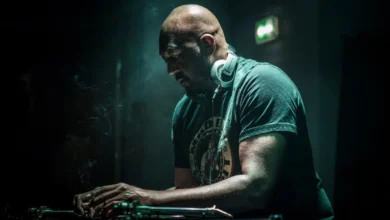
Sama’ Abdulhadi, born in Jordan in 1990 and raised in the West Bank, has achieved international acclaim as one of the most prominent techno DJs hailing from Palestine. Her rise to global recognition has been significant, breaking barriers and introducing Palestinian electronic music to a wider audience. She is often credited with pioneering the techno scene in Ramallah, her unique sound blending traditional Arabic elements with contemporary electronic beats. Her performances at major festivals and clubs worldwide have cemented her status as a respected figure in the global electronic music community.
Beyond her musical prowess, Abdulhadi has long been an outspoken advocate for the Palestinian cause. Her public platform, amplified by her artistic success, has consistently been used to express her views on the Israeli-Palestinian conflict, reflecting a deep personal and political connection to her homeland. It is this very public engagement that has now brought her into direct conflict with German antisemitism watchdogs, highlighting the complex intersection of art, identity, and politics in an increasingly scrutinized global environment. Her supporters view her political activism as a legitimate exercise of free speech and an expression of her identity, integral to her artistic persona, while critics see her specific statements as crossing a line into unacceptable territory.
The Broader Context: Germany, Antisemitism, and Cultural Debate
The controversy surrounding Sama’ Abdulhadi is emblematic of a larger, ongoing debate within Germany concerning artistic freedom, the fight against antisemitism, and the complexities of the Israeli-Palestinian conflict. Germany’s historical responsibility for the Holocaust has instilled a deep-seated commitment to combating antisemitism, which often translates into staunch support for Israel’s security and a low tolerance for rhetoric perceived as anti-Israel or antisemitic.
Since the October 7th Hamas attacks, this commitment has been intensified. The attacks, which resulted in the deaths of approximately 1,200 people (predominantly civilians), including women, children, and elderly, and the abduction of over 250 hostages, sent shockwaves globally. The subsequent Israeli military operation in Gaza, aimed at dismantling Hamas, has led to a catastrophic humanitarian crisis and a soaring death toll among Palestinians. This brutal conflict has exacerbated tensions worldwide, leading to a demonstrable increase in both antisemitic and Islamophobic incidents.
In Germany, the debate over cultural expressions related to the conflict has been particularly fraught. There have been numerous instances where artists, cultural institutions, or events have faced scrutiny, protests, or cancellations due to perceived antisemitic content or associations. Examples include controversies surrounding the documenta art exhibition, where antisemitic imagery was displayed, and debates over the participation of artists who support the Boycott, Divestment, and Sanctions (BDS) movement, which the German Bundestag has condemned as antisemitic. These cases illustrate a cultural climate where artistic expressions touching on the Israeli-Palestinian conflict are meticulously scrutinized, and where public figures are expected to adhere to certain standards regarding their rhetoric on these sensitive issues.
The terms used by Abdulhadi – "Palestinian resistance" in reference to the October 7th attacks and "genocide campaign" to describe Israel’s actions – are particularly charged. For many, especially within Jewish communities and among Israeli supporters, describing Hamas’s actions as "resistance" normalizes or even glorifies acts of terrorism, including the deliberate targeting of civilians. Similarly, the accusation of "genocide" against Israel is fiercely rejected by Israel and its allies as a profound misrepresentation of its military objectives and a term that risks trivializing actual genocides. The use of such language, especially by a public figure, is seen by critics as fueling antisemitic narratives and delegitimizing Israel.
Implications and the Path Forward
The standoff between the Hamburg Antisemitism Commissioner and the Habitat Festival organizers carries significant implications for all parties involved and for the broader cultural landscape in Germany. For Sama’ Abdulhadi, such controversies, while potentially boosting her profile among certain activist circles, can also lead to increased scrutiny, future performance cancellations, and reputational damage in regions sensitive to antisemitism. For the Habitat Festival, proceeding with the performance risks alienating public officials, potentially affecting future public funding or permits, and drawing further protests. Canceling the performance, conversely, could lead to accusations of censorship and undermining artistic freedom, alienating parts of its audience and the artistic community that champions unrestricted expression.
This situation highlights the immense challenge cultural institutions face in navigating complex geopolitical issues. They are increasingly expected not only to provide entertainment or artistic experiences but also to serve as morally responsible actors in public discourse. The pressure from government-appointed commissioners for antisemitism reflects a growing trend in Germany where political leadership is actively intervening in cultural programming to uphold specific ethical and political standards, particularly concerning antisemitism.
The debate also underscores the ongoing tension between universal principles of artistic freedom and the specific national context of Germany’s commitment to fighting antisemitism. While some argue that any restriction on artistic expression, even for controversial political views, is a dangerous step towards censorship, others contend that there are legitimate boundaries when expressions are perceived to glorify violence, deny historical atrocities, or promote hate speech. The absence of a clear, universally accepted line often leads to highly charged public disputes, leaving organizers and artists alike in a precarious position.
Ultimately, the controversy surrounding Sama’ Abdulhadi’s performance at the Habitat Festival is more than just a dispute over a single DJ set. It is a microcosm of the broader struggle to reconcile artistic expression with social responsibility, particularly in a world grappling with deeply entrenched conflicts and the resurgence of antisemitism. The outcome in Hamburg will undoubtedly contribute to the ongoing dialogue about the role of culture in addressing, or sometimes exacerbating, these profound societal challenges.