In an unprecedented move for the world’s most watched sporting event, the 2026 FIFA World Cup Final introduced its inaugural halftime show, a spectacle that delivered on grandeur, star power, and an undeniable sense of frenetic energy. Held at the newly designated New York/New Jersey Stadium (formerly MetLife Stadium), the event featured a dizzying array of global superstars including Justin Bieber, Madonna, Shakira, and BTS, among many others. While the ambition was palpable, the execution was widely described as a "spectacular, chaotic mess," a vibrant testament to its scale but also a clear indicator of the logistical challenges in orchestrating such a diverse and rapid-fire production.
A Historic First: The Genesis of a Global Halftime Show
For 96 years, the FIFA World Cup Final has stood as a monument to pure sporting prowess, with halftime breaks traditionally reserved for player recuperation and tactical adjustments, devoid of the lavish entertainment spectacles common in American sports. The decision by FIFA to introduce a full-fledged halftime show for the 2026 tournament marked a significant departure from this long-standing tradition, signaling a deliberate effort to broaden the appeal of the Final beyond its traditional football audience. This strategic shift was undoubtedly influenced by the immense global success of events like the NFL’s Super Bowl halftime show, which has become a cultural phenomenon in its own right, consistently drawing hundreds of millions of viewers worldwide and generating colossal revenue through advertising and sponsorships.
To accommodate the elaborate production, FIFA even bent its own regulations, extending the usual 15-minute halftime interval to a generous 30 minutes. This extended period was crucial, not just for the artists to perform, but for the complex logistical dance of transforming a pristine football pitch into a concert stage and back again. The choice of the New York/New Jersey Stadium, a venue accustomed to hosting large-scale concerts and major sporting events, underscored FIFA’s intent to deliver a show that could rival any global entertainment production. The sheer volume of performers, the intricate set changes, and the technical requirements necessitated this extended window, even if the actual performance duration was later estimated at a compact 11 minutes. This decision to embrace entertainment reflected FIFA’s vision for the 2026 World Cup, jointly hosted by the United States, Canada, and Mexico, as not just a sporting event, but a multifaceted cultural celebration designed to captivate a truly global, diverse audience.
The Star-Studded Lineup: A Confluence of Global Icons
The lineup for the inaugural FIFA World Cup Halftime Show was an ambitious fusion of generational talent and diverse musical genres, carefully curated to appeal to every demographic across the globe. Headlining acts included:
- Madonna: The undisputed Queen of Pop, whose career spans decades and whose influence remains profound. Her inclusion was a nod to enduring global artistry.
- Justin Bieber: A Canadian pop phenomenon with a colossal youth following, representing contemporary mainstream pop appeal.
- Shakira: The Colombian superstar, already a FIFA World Cup anthem veteran, known for her electrifying stage presence and global dance hits.
- BTS: The South Korean K-Pop sensation, whose unprecedented global reach and dedicated fanbase (ARMY) guaranteed massive engagement, particularly in Asia and among younger audiences.
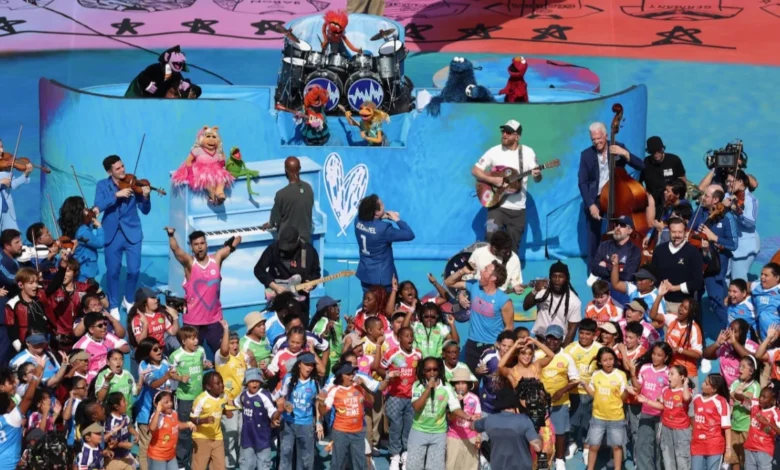
Beyond these marquee names, the show featured an eclectic mix of performers that underscored its global and varied aspirations. This included Brazilian soccer legends Ronaldinho and Ronaldo, adding a direct link to football heritage. The inclusion of Gustavo Dudamel, the celebrated Venezuelan conductor, leading an orchestral collaboration with Iranian vocalist Bijan Mortazavi, Dr. Teeth and the Electric Mayhem (from The Muppets), the New York Philharmonic, and Venezuela’s Simón Bolívar Symphony Orchestra, spoke volumes about the show’s intent to blend high culture with popular entertainment and foster international collaboration. Comedic relief was provided by Jason Sudeikis and Brendan Hunt from the hit show Ted Lasso, further diversifying the appeal. The PS22 Chorus, a well-known children’s choir, Coldplay, Burna Boy, and even beloved Muppets Kermit the Frog and Miss Piggy rounded out an ensemble cast that was arguably too expansive for the allotted time, contributing to the show’s "chaotic" yet "spectacular" reputation.
Chronology of Chaos and Brilliance: A Rapid-Fire Spectacle
The 2026 FIFA World Cup Final Halftime Show unfolded at a breakneck pace, packing an extraordinary amount of talent and production into roughly 11 minutes of live performance. The sequence of events, while exhilarating, also highlighted the challenges of maintaining narrative cohesion amidst such rapid transitions.
The spectacle began immediately after the first half whistle, as the colossal field at New York/New Jersey Stadium was cleared with remarkable efficiency. Anticipation mounted as the lights dimmed, and the stage erupted with the iconic presence of Madonna. Kicking off the show with a high-energy medley of her hits "Music" and "Danceteria," she was joined by Brazilian football legends Ronaldinho and Ronaldo, who briefly showcased their legendary ball skills within a dynamic, nightclub-themed set. The fusion of pop royalty and football icons immediately set a celebratory, global tone, igniting the stadium with a vibrant burst of sound and light.
From this energetic opening, the production pivoted dramatically. The stage transformed for an ambitious orchestral interlude, showcasing the visionary Gustavo Dudamel. He conducted an unprecedented collaboration featuring Iranian vocalist Bijan Mortazavi, the irreverent Dr. Teeth and the Electric Mayhem, the esteemed New York Philharmonic, and Venezuela’s Simón Bolívar Symphony Orchestra. Together, they delivered a rousing, globally-infused rendition of "Seven Nation Army," transforming the familiar sports anthem into a powerful statement of unity and musical diversity. This segment, while musically compelling, marked the first significant tonal shift, moving from pop dance to orchestral grandeur.
The momentum surged again as BTS took the stage, bringing their signature high-octane energy. Performing their global smash hit "Dynamite," the K-Pop septet delivered a meticulously choreographed and electrifying performance that had their immense fanbase, the ARMY, erupting both in the stadium and across social media worldwide. Their segment was a clear highlight, praised for its precision, charisma, and undeniable infectiousness.
However, the high-octane energy of BTS was immediately followed by a stark contrast. Jason Sudeikis and Brendan Hunt, reprising their Ted Lasso roles, introduced Justin Bieber, who then delivered a subdued, acoustic rendition of his new track, "Everything Hallelujah." This intimate performance, while showcasing Bieber’s vocal talent, brought the show’s frenetic momentum to a noticeable standstill. Critics and fans alike noted the jarring tonal whiplash, finding the transition from BTS’s explosive K-Pop to Bieber’s introspective ballad challenging for the overall flow of the spectacle.
The atmosphere was quickly revived by the dynamic duo of Shakira and Burna Boy, who performed "Dai Dai," the official song of the 2026 FIFA World Cup. Their segment was a powerful injection of global rhythm and energy, perfectly suited to the World Cup theme. Shakira’s iconic stage presence and Burna Boy’s vibrant delivery created one of the show’s strongest and most cohesive moments, celebrating the spirit of football and international collaboration.
The grand finale brought together an even more expansive cast. The renowned PS22 Chorus, joined by members of Coldplay, Shakira (making a second appearance), and the beloved Kermit the Frog and Miss Piggy, closed the production with an original song titled "We Dance." This segment was a joyous, sprawling celebration, featuring a seemingly endless procession of musicians and performers, culminating in a powerful message of global unity through music and movement. While visually stunning due to the sheer number of participants, it further underscored the show’s maximalist approach, leaving many to reflect on the extraordinary amount of spectacle crammed into such a brief and intensely orchestrated timeframe.
Behind the Scenes: Production Challenges and Triumphs
The undertaking of the 2026 FIFA World Cup Halftime Show was an unprecedented logistical marvel. The extension of the halftime break to 30 minutes was a direct acknowledgement of the immense preparation required. Within this window, a complex choreography of stage construction, technical setup, sound checks, lighting adjustments, and performer positioning had to be executed flawlessly. The fact that the entire performance, featuring dozens of artists and elaborate sets, was condensed into "roughly 11 minutes" meant that the remaining 19 minutes were dedicated to rapid-fire transitions and ensuring the pitch was pristine for the second half. This tight schedule left little room for error and undoubtedly contributed to the "chaotic" feel as elements were rushed in and out.
The show was produced in collaboration with Global Citizen, an international advocacy organization dedicated to ending extreme poverty. This partnership was instrumental not only in the show’s execution but also in embedding a profound philanthropic mission into the heart of the event. Global Citizen’s experience in orchestrating large-scale, impact-driven concerts, such as the Global Citizen Festival series, was crucial in managing the diverse talent and the complex technical requirements. The organization’s production expertise ensured that despite the perceived messiness, the show’s technical delivery—from sound to visuals—was largely flawless. This collaboration underscored a growing trend in major global events to leverage their massive platforms for social good, moving beyond mere entertainment to deliver tangible impact.
The Philanthropic Heart: The FIFA Global Citizen Education Fund
Beyond the dazzling lights and star-studded performances, the 2026 FIFA World Cup Halftime Show served a significant humanitarian purpose: to spotlight and support the FIFA Global Citizen Education Fund. This joint initiative aimed to raise an ambitious $100 million to expand access to education and football opportunities for children worldwide, particularly in underserved communities. The integration of this cause into such a high-profile event represented a powerful new model for philanthropic fundraising, leveraging the immense global viewership of the World Cup Final.
According to official statements from FIFA and Global Citizen, the campaign had already secured more than $50 million by the time of the halftime show. A key mechanism for this fundraising was a direct contribution model: $1 from every ticket sold to FIFA World Cup 2026 matches throughout the entire tournament was earmarked for the fund. This direct link between attendance and philanthropy allowed millions of football fans to contribute to a global cause simply by participating in the tournament. The funds raised are intended to support various initiatives, including building schools, providing educational resources, training teachers, and establishing football programs that use the sport as a tool for social development, health education, and leadership training. This partnership highlighted Global Citizen’s broader mission to mobilize citizens, corporations, and governments to address pressing global issues, positioning the World Cup not just as a sporting event, but as a catalyst for positive social change on a massive scale.
Artist Momentum: Post-Halftime Show Trajectories
The 2026 FIFA World Cup Halftime Show served as a monumental platform for all participating artists, each arriving with significant career momentum. Their appearances were strategically timed to amplify ongoing projects and tours, leveraging the unparalleled global audience of the Final.
Justin Bieber’s inclusion came amidst an exceptionally active period for the pop star. Just months prior, in April 2026, he had headlined the prestigious Coachella music festival, cementing his status as a major live performer. Following this, he surprised fans with the release of a new live album, SWAG LIVE FROM COACHELLA (WEEKEND I), in June. His World Cup performance, though tonally distinct, provided an additional massive boost to his new material and live offerings, ensuring continued relevance and engagement with his global fanbase.
Madonna, the iconic pop legend, also capitalized on the timing. Her appearance coincided with the release of her highly anticipated new album, Confessions II, earlier that same month. Her performance at the World Cup served as a powerful promotional vehicle, reminding the world of her enduring artistry and capacity to command the largest stages. For an artist of her stature, such a platform reaffirmed her legacy and introduced her new work to an enormous, diverse audience.
The K-Pop juggernaut BTS leveraged their performance to kick off the next leg of their highly anticipated "ARIRANG World Tour." Following their recent reunion, the group was poised to embark on 16 shows across the US and Canada. Their electrifying performance of "Dynamite" at the World Cup Final generated immense excitement and undoubtedly drove ticket sales and streaming numbers for their tour, solidifying their post-reunion global impact.
Similarly, Shakira’s participation came as she was rounding out the final North American leg of her critically acclaimed "Las Mujeres Ya No Lloran World Tour." Her dynamic performance, particularly of the official World Cup song "Dai Dai" with Burna Boy, provided a significant boost to her tour’s visibility and reinforced her status as a global icon synonymous with high-energy, culturally resonant music. For Burna Boy, the collaboration elevated his international profile further, exposing his unique sound to an even broader global audience. Even Coldplay’s members, appearing in the finale, benefited from the exposure, subtly reminding viewers of their continued global presence. The show, therefore, acted as a powerful global launchpad, strategically aligning with the artists’ individual career trajectories.
Critical Reception and Public Discourse
The critical reception and public discourse surrounding the 2026 FIFA World Cup Halftime Show were as varied and vibrant as the performance itself. On social media, the event immediately became a trending topic worldwide, generating millions of posts, memes, and reactions. Fans of individual artists, particularly BTS’s ARMY, expressed overwhelming enthusiasm for their idols’ performances, often praising their energy and stage presence. Shakira’s segment was also widely lauded for its infectious energy and its role as the official anthem.
However, a recurring theme in the commentary was the show’s lack of coherence. Many viewers, accustomed to the tightly choreographed and thematically unified productions of the Super Bowl halftime show, found the FIFA event to be a collection of disparate performances rather than a seamless narrative. The abrupt tonal shifts, most notably the transition from the explosive K-Pop of BTS to Justin Bieber’s subdued acoustic ballad, were frequently cited as moments of "whiplash" that disrupted the flow. While the sheer scale and star power were undeniable, the consensus emerged that the show, despite its individual moments of brilliance, struggled to weave its diverse elements into a cohesive artistic statement.
Journalists and cultural commentators echoed these sentiments, often using terms like "spectacular chaos," "glorious mess," and "tonal rollercoaster." While acknowledging the historical significance and the immense logistical undertaking, many pointed out that the show prioritized quantity of stars over quality of transitions. The comparison to the Super Bowl was inevitable, with critics noting that while FIFA delivered on "biggest sporting event in the world" scale, it had yet to master the polished, integrated entertainment experience that the NFL had cultivated over decades. Despite these critiques, the consensus was that the show was undeniably memorable and achieved its goal of generating immense buzz, even if that buzz included a healthy dose of bewildered fascination.
Broader Implications: The Future of World Cup Entertainment
The inaugural FIFA World Cup Halftime Show of 2026 marked a pivotal moment, signaling FIFA’s clear intention to permanently integrate high-caliber entertainment into its most prestigious event. The experience, while met with mixed reviews regarding its artistic cohesion, undoubtedly achieved its primary objectives: to draw an even larger global audience, generate unprecedented buzz, and create a powerful platform for social good through the FIFA Global Citizen Education Fund.
Moving forward, the success of this first attempt, despite its "chaotic" elements, sets a new precedent. It is highly probable that FIFA will continue this tradition in future tournaments, potentially refining the format based on the lessons learned from 2026. Future shows might see a more curated lineup, focusing on fewer acts with stronger thematic links, or a more extended performance window to allow for smoother transitions and more elaborate storytelling. The sheer global viewership, estimated to have dwarfed even Super Bowl numbers given the World Cup’s reach, presents an irresistible opportunity for both FIFA and potential performers.
The blending of global sports and entertainment is a trend that will only intensify. The World Cup Halftime Show now stands as a direct competitor to other major global entertainment events, pushing the boundaries of live production and cross-cultural collaboration. This move also significantly enhances the FIFA brand, positioning it not just as a governing body for football, but as a major player in the global entertainment industry. Furthermore, the successful integration of the Global Citizen initiative demonstrates a powerful model for leveraging mega-events for significant philanthropic impact, setting a benchmark for future sporting and cultural spectacles to follow suit. The 2026 show, for all its perceived flaws, was a bold, ambitious, and ultimately groundbreaking statement about the evolving nature of global entertainment and its capacity to unite the world, both through sport and through spectacle.