The Beatles and the Global Impact of All You Need Is Love Following Its Historic 1967 United States Release

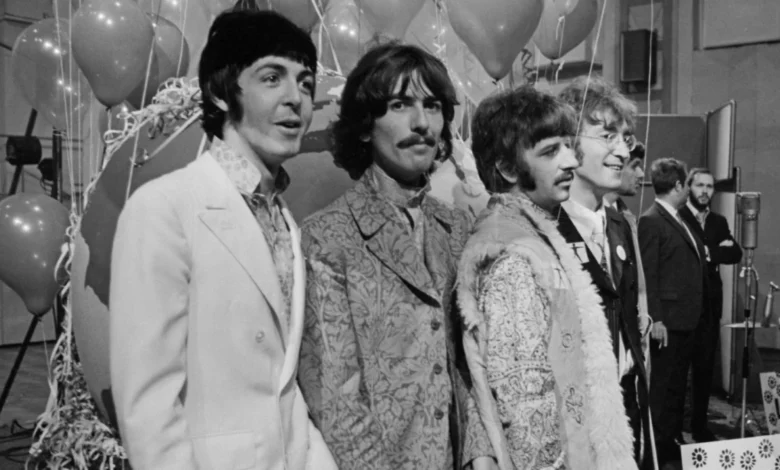
On July 17, 1967, the cultural landscape of the United States underwent a significant shift as Capitol Records released "All You Need Is Love" by the Beatles. While the song had already debuted to a staggering global audience via television weeks earlier, its arrival as a commercial single in the American market solidified its status as the definitive anthem of the "Summer of Love." Written primarily by John Lennon, the track was not merely a pop song but a meticulously crafted message of unity, commissioned for the first-ever live global satellite television program, Our World. The release of the single in the U.S. marked the moment when a piece of avant-garde performance art transitioned into a permanent fixture of the global musical canon, eventually topping the charts in nearly every major music market, including the United States and the United Kingdom.
The Genesis of Our World and the Satellite Revolution
The mid-1960s represented a period of rapid technological advancement, particularly in the realm of telecommunications. By 1967, the British Broadcasting Corporation (BBC) conceived an ambitious plan to utilize newly available satellite relays—specifically the Early Bird (Intelsat I), Lani Bird (Intelsat II), and ATS-1 satellites—to connect television networks across the globe in real-time. This project, titled Our World, was designed to showcase the creative and industrial capabilities of various nations, linking 25 countries and featuring contributions from artists, scientists, and citizens across five continents.
The Beatles were selected to represent the United Kingdom, a choice that reflected their unparalleled status as the world’s most influential cultural icons following the release of their seminal album, Sgt. Pepper’s Lonely Hearts Club Band, earlier that June. The mandate from the program’s producers was specific: the song had to be simple enough to be understood by viewers who did not speak English, yet profound enough to carry a message of international significance.
John Lennon took this challenge literally, crafting a lyrical structure that relied on repetition and universal concepts. According to historical accounts from the band’s inner circle, Paul McCartney also submitted a song for consideration, but the band ultimately chose Lennon’s "All You Need Is Love" for its directness and its alignment with the burgeoning counterculture movements of the era.
A Timeline of Creation and Production
The timeline leading up to the Our World broadcast was remarkably condensed, reflecting the Beatles’ confidence and their ability to work under immense pressure. Despite the magnitude of the upcoming broadcast, the band did not begin formal recording sessions for the track until mid-June, less than two weeks before the air date.
- June 14, 1967: The Beatles began work at Olympic Sound Studios in London. During this session, they recorded the basic rhythm track, which included harpsichord (played by Lennon), banjo (played by George Harrison), double bass (played by Paul McCartney), and drums (played by Ringo Starr).
- June 19, 1967: Additional overdubs were added at Abbey Road Studio 2, including piano, vocals, and the distinctive trumpet flourishes that define the song’s introduction.
- June 23–24, 1967: The band conducted rehearsals with an orchestra. Producer George Martin, tasked with creating an arrangement that felt both celebratory and international, incorporated snippets of diverse musical works, including the French national anthem ("La Marseillaise"), Glenn Miller’s "In the Mood," and Johann Sebastian Bach’s "Brandenburg Concerto No. 2."
- June 25, 1967: The Our World broadcast took place. The Beatles’ segment was filmed in Abbey Road Studio 1. Although the program was broadcast in black and white, the studio was decorated in vibrant, psychedelic colors, and the band was joined by a "happening" of friends and fellow musicians, including Mick Jagger, Keith Richards, Eric Clapton, Marianne Faithfull, and Keith Moon.
The live performance was a technical marvel. While the rhythm track was pre-recorded, the vocals, the orchestra, and the lead guitar solo were performed live in front of an estimated audience of 400 million people.
Musical Composition and Lyrical Simplicity
The enduring power of "All You Need Is Love" lies in the juxtaposition of its simple message with its sophisticated musical structure. The song is notable for its use of asymmetrical time signatures, a hallmark of Lennon’s writing during this period. The verses alternate between 7/4 and 8/4 time, creating a slightly off-kilter, swaying rhythm that prevents the repetitive lyrics from becoming monotonous.
Lyrically, Lennon employed a philosophy of "linguistic propaganda." He believed that if a message was repeated often enough, it would eventually be accepted as truth. The lyrics—"There’s nothing you can do that can’t be done / Nothing you can sing that can’t be sung"—emphasize a sense of total possibility and collective responsibility. By the time the chorus arrives with its emphatic declaration that "love is all you need," the song has built a persuasive case for global empathy.
The outro of the song is equally significant, as it features a collage of musical and self-referential cues. As the track fades, listeners can hear the orchestra playing "Greensleeves" while Lennon ad-libs "She loves you, yeah, yeah, yeah," a nod to the band’s early "Beatlemania" days. This served to bridge the gap between their origins as pop idols and their new roles as leaders of a global cultural movement.
Commercial Performance and Statistical Data
Following the Our World broadcast, the demand for a commercial release was instantaneous. In the United Kingdom, the single was released on July 7, 1967, and immediately shot to number one. In the United States, the July 17 release by Capitol Records (catalog number 5964) saw similar success.
The single’s performance on the Billboard Hot 100 provides a snapshot of its rapid ascent:
- It debuted on the charts in late July.
- By August 19, 1967, it reached the number-one position, where it remained for one week.
- It stayed in the Top 40 for a total of nine weeks.
Globally, the song reached number one in Australia, Canada, Germany, Ireland, and Norway, among others. In the U.S., the B-side, "Baby, You’re a Rich Man," also garnered significant airplay, reaching number 34 on the Billboard charts. The success of the single was a major contributor to the "Summer of Love" phenomenon, providing a soundtrack for the hundreds of thousands of young people who congregated in cities like San Francisco and London to advocate for peace and social change.
Official Responses and Participant Reflections
The participants in the Our World broadcast and the subsequent recording sessions have often reflected on the unique atmosphere of the event. Ringo Starr, speaking years later, emphasized the sincerity of the band’s intentions. "We were big enough to command an audience of that size, and it was for love," Starr noted. "It was for love and bloody peace. It was a fabulous time. I even get excited now when I realize that’s what it was for—peace and love, people putting flowers in guns."
George Martin, the band’s producer, viewed the song as a pinnacle of the Beatles’ ability to communicate complex ideas through the medium of pop. Martin’s arrangement was crucial in giving the song its "world" feel, blending classical traditions with modern rock. He later remarked on the pressure of the live broadcast, noting that the technical constraints of 1967 made the seamless execution of the satellite link-up a "miracle of engineering."
The BBC, as the lead broadcaster, viewed the success of Our World and "All You Need Is Love" as a validation of the potential for television to serve as a unifying global force. The program demonstrated that satellite technology could be used for more than just military or government communication; it could be a tool for cultural exchange.
Broader Impact and Socio-Political Implications
The release of "All You Need Is Love" occurred against a backdrop of intense social and political upheaval. In 1967, the Vietnam War was escalating, and civil rights protests were transforming the American domestic landscape. In this context, the song’s message was frequently adopted by the anti-war movement as a slogan for non-violent resistance.
The song also marked a turning point in the Beatles’ career. It was one of the last projects they completed before the death of their manager, Brian Epstein, in August 1967. Epstein had been instrumental in securing the Our World slot for the band, and the song’s success was a testament to his vision for the group as more than just entertainers.
Furthermore, "All You Need Is Love" helped formalize the role of the "celebrity activist." By using a global platform to promote a specific social philosophy, the Beatles set a precedent for future benefit concerts and global media events, such as Live Aid in 1985. The idea that music could serve a purpose beyond commercial gain—that it could be a vehicle for international diplomacy and moral persuasion—was solidified by the events of the summer of 1967.
Legacy and Modern Significance
Decades after its release, "All You Need Is Love" remains one of the most recognizable and frequently covered songs in the history of popular music. Its inclusion on the Magical Mystery Tour album later in 1967 ensured its continued presence in the public consciousness. In the 21st century, the song continues to be used in major international events, ranging from Olympic ceremonies to humanitarian campaigns.
The July 17 release in the United States remains a key anniversary for music historians. It represents the moment when the technological promise of the satellite age met the creative peak of the world’s most famous band, resulting in a message that continues to resonate. While the utopian ideals of the Summer of Love may have faded, the song’s core assertion—that love is a fundamental and necessary human requirement—remains a powerful and enduring sentiment in a fragmented global society.
Related posts: