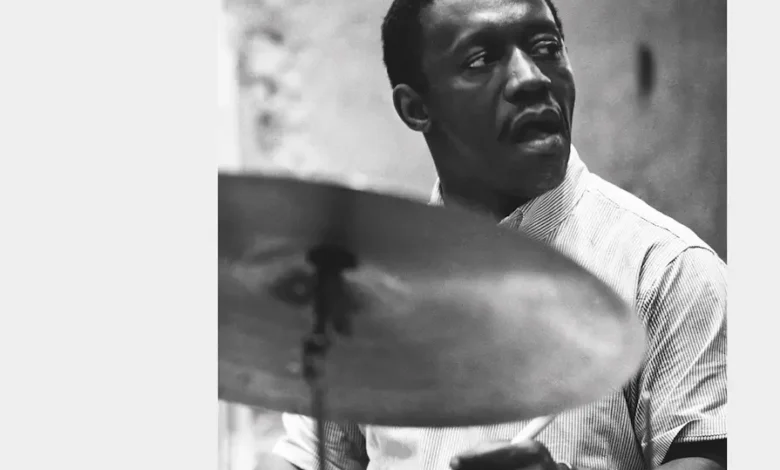
The publication of this monumental volume marks a significant addition to the historical record of American jazz during one of its most transformative eras. Produced by Accart Books, the work serves as a definitive visual archive of the early 1960s jazz scene, capturing the intimate and professional lives of the genre’s most influential figures. Measuring approximately 10 by 13 inches and weighing several pounds, the book transcends the standard dimensions of musical biographies, positioning itself as a high-end "coffee table" retrospective that demands physical space and scholarly attention. The collection comprises 300 black-and-white photographs, many of which have remained unseen by the public for over six decades, offering a rare glimpse into the recording sessions and backstage environments of the Apollo Theater, the Village Vanguard, and the studios of Riverside Records.
The Photographer and the Discovery of the Archive
The images contained within this volume are the work of Steve Schapiro, a photographer whose name became synonymous with the documentation of 20th-century American history. While Schapiro is globally recognized for his iconic coverage of the Civil Rights Movement—including his portraits of Dr. Martin Luther King Jr., Robert F. Kennedy, and James Baldwin—his early career was deeply rooted in the New York jazz scene. These photographs represent a period of Schapiro’s life before his transition into the high-stakes world of political photojournalism and Hollywood unit photography for films such as The Godfather and Taxi Driver.
Following Schapiro’s death in 2022 at the age of 87, his extensive archive became the focus of intense preservation efforts. His wife, Maura Smith, initiated the daunting task of sorting through thousands of negatives and prints. The process of narrowing down a massive repository of nearly a thousand jazz-related images into the 300 featured in this book was a collaborative effort involving Richard Scheinen, a veteran journalist and jazz critic. Scheinen provided the necessary historical context, writing the introduction and detailed commentaries that accompany the photographs, ensuring that each image is anchored in its specific musical and chronological moment.
Historical Context: The Golden Age of Modern Jazz
The early 1960s represented a crossroads for jazz. The genre was moving away from the dominance of swing and big bands toward the intricate textures of hard bop, modal jazz, and the avant-garde. The three locations highlighted in the title—the Apollo Theater, the Village Vanguard, and Riverside Records—were the epicenters of this evolution.
The Apollo Theater in Harlem served as the proving ground for Black excellence, where the standard of performance was set by the most discerning audiences in the world. Conversely, the Village Vanguard in Greenwich Village provided an intimate, subterranean acoustic environment that favored small-group experimentation. Meanwhile, Riverside Records, under the guidance of producer Orrin Keepnews, was responsible for some of the most essential recordings of the era, including landmark sessions by Thelonious Monk and Bill Evans. Schapiro’s presence at these sites allowed him to capture the transition of jazz from a popular entertainment form into a serious, academic, and revolutionary art movement.
A Chronology of the Collection and Artistic Vision
The timeline of the photographs spans roughly from 1961 to 1964, a period of immense creative output. The book’s structure is punctuated by a foreword by the legendary saxophonist Sonny Rollins. In a poignant historical footnote, Rollins was able to review the final proofs of the book shortly before his own health challenges and the book’s completion, lending the project an imprimatur of authenticity from one of the last surviving titans of the era.
Schapiro’s photographic style is characterized by a "fly-on-the-wall" approach, utilizing sharp focus and natural lighting to convey the atmosphere of the recording studio. The collection intentionally juxtaposes conventional performance shots with unconventional, candid moments. A notable example is the series involving Sonny Rollins. One photograph depicts Rollins in a dressing room, assembling his saxophone while conversing with bassist Paul Chambers. Nearby, a heavy weightlifting bar lies on the floor—a testament to Rollins’ well-known dedication to physical fitness as a means of improving his lung capacity and musical endurance. Subsequent images show Rollins in the act of lifting the weights, followed immediately by shots of him with his instrument, illustrating the physical labor behind the ethereal sound of his horn.
Notable Subjects and Visual Data
While the book features a "who’s who" of jazz royalty, it also highlights the session players and sidemen who formed the backbone of the industry. The following figures are among the most prominently featured:
- The Icons: Miles Davis, Count Basie, Art Blakey, Eric Dolphy, and Dizzy Gillespie appear in various states of rehearsal and performance.
- The Modernists: Bill Evans, Wayne Shorter, and the members of the Modern Jazz Quartet (MJQ) are captured during sessions that would eventually become cornerstone albums in the jazz canon.
- The Photogenic Mid-Century Man: Bobby Timmons, the pianist and composer known for "Moanin’," is a recurring subject. His appearance in ten different photographs throughout the book provides a visual through-line, capturing the style and intensity of the hard bop era.
- The Veterans: In a nod to the "nostalgic" sessions organized by Riverside to honor the roots of the music, Schapiro captured elder statesmen like Milt Hinton, Ida Cox, Jimmy Archey, and Lil Hardin Armstrong. These images provide a bridge between the early New Orleans traditions and the modern New York scene.
The technical presentation of the photographs is of the highest caliber. Every image is printed in black and white, maintaining the aesthetic integrity of the original film. The layout varies to prevent visual fatigue, with some images occupying single full pages, others spanning double-page spreads, and some grouped to show a sequence of motion or interaction between musicians.
Official Responses and Critical Reception
Industry experts and archivists have noted that the release of Jazz – Best Of The Apollo, Village Vanguard and Riverside Sessions fills a critical gap in the visual history of the 1960s. Unlike the more staged publicity photos common at the time, Schapiro’s work is praised for its lack of artifice.
Richard Scheinen’s commentary has been lauded for its ability to translate the "language of the studio" for a general audience. By explaining the significance of a particular gaze between a soloist and a drummer, or the presence of a specific producer in the control room, Scheinen elevates the book from a mere gallery into a pedagogical tool. The inclusion of the ISBN 978-1-78884-342-3 ensures its place in library catalogues as a primary source for musicologists and historians.
Early market indicators suggest a strong reception among collectors. Despite its high production value and corresponding retail price, the book has seen significant pre-orders and early sales, often appearing with promotional discounts on major platforms like Amazon. This commercial success points to a sustained interest in the "analog" history of jazz in an increasingly digital age.
Broader Impact and Implications for the Future
The release of this volume has broader implications for the preservation of mid-century American culture. It underscores the importance of the photographer as a silent historian. Had Schapiro’s wife not recognized the value of the stored negatives, a significant portion of jazz history might have remained lost to time.
The success of this publication also suggests the possibility of a "volume two." The Schapiro archive is reportedly vast, containing thousands of images that were not included in this final 300-page edit. As the jazz community continues to lose the last members of the "Golden Age" generation, these visual records become the primary way for future fans and scholars to understand the physical and emotional reality of the music’s creation.
Furthermore, the book reinforces the cultural status of jazz as a high art form. By presenting these musicians through the lens of a world-class photojournalist like Schapiro, the work places the likes of Thelonious Monk and Miles Davis on the same historical plane as the political figures Schapiro later photographed. It asserts that the recording sessions at the Village Vanguard were as pivotal to the American story as the marches in Selma or the political rallies in Washington.
In conclusion, Jazz – Best Of The Apollo, Village Vanguard and Riverside Sessions is more than a collection of photographs; it is a curated experience of a vanished world. It provides a tactile connection to the sweat, the concentration, and the camaraderie of the men and women who defined the sound of the 20th century. For the historian, it is a treasure trove of data; for the jazz enthusiast, it is a visual symphony; and for the art world, it is a testament to the enduring power of Steve Schapiro’s lens.