Troy Roberts Delivers a Masterclass in Modern Jazz with Tales and Tones Featuring an All-Star Quartet

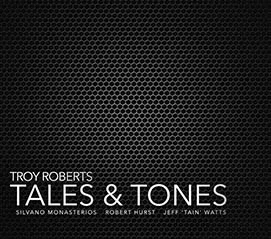
The contemporary jazz landscape is constantly evolving, balancing a deep reverence for the genre’s historic traditions with a relentless push toward modern innovation. Few recent releases capture this delicate equilibrium quite as deftly as Tales & Tones, a compelling nine-track offering led by the prodigious Australian saxophonist Troy Roberts. Released to critical acclaim, the album serves as a definitive showcase for a modern equivalent of the classic jazz power-quartet. Out of the starting gates, Roberts commands attention, opening on soprano saxophone alongside an elite rhythm section comprising pianist Silvano Monasterios, drummer Jeff "Tain" Watts, and bassist Robert Hurst. The visceral energy radiating from this ensemble is palpable from the very first downbeat, as Roberts expertly steers his seasoned collaborators through meticulously controlled moods, vibrant tonal colors, and breathtaking displays of improvisational prowess.
Main Facts and Ensemble Dynamics
At its core, Tales & Tones is a masterclass in dynamic contrast and collective interplay. The album’s repertoire shifts fluidly between breakneck, high-octane romps and deeply contemplative, elegiac reflections. The underlying engine of this sonic machinery is the formidable rhythm section of Watts and Hurst. Watts, a legendary fixture in modern jazz drumming known for his tenure with Wynton Marsalis and Elvin Jones, brings an arsenal of complex polyrhythms and emphatic brushwork to the session. Paired with Hurst—whose deep, resonant basslines provide both a foundational anchor and a melodic counterweight—the rhythm duo keeps Roberts on his toes across every arrangement.
To his immense credit, the young saxophonist rises to the occasion, proving himself to be a remarkably responsive improviser. Whether navigating the ferocious tempos of the opening track, "Decoration," or exploring the lyrical contours of Billy Strayhorn’s timeless standard "Take The A Train," Roberts demonstrates a maturity that belies his years. Meanwhile, pianist Silvano Monasterios bridges the gap between the rhythm section and the horns, delivering crisp, buoyant, and even-handed voicings that effortlessly accommodate both furious, devil-may-care solos and gentle, laid-back balladry.
Background Context and Chronological Journey
The genesis of Tales & Tones lies in a deliberate effort to emphasize narrative depth within modern instrumental jazz. While many contemporary quartets rely heavily on technical wizardry for its own sake, Roberts and his ensemble prioritize storytelling. This narrative arc is established early and sustained across a diverse tracklist that includes "Decoration," "Trams," "Rivera Mountain," "Bernie’s Tune," "Cotu Chi Chi Chi," "Take The A Train," "Pickapoppy," "Mr. Pinononnk," and "Boozy Bluesy."
The album’s chronology moves purposefully through contrasting emotional landscapes. It opens with the visceral, high-intensity assault of "Decoration," where Watts forcefully propels the ensemble. Yet, even in moments of maximum volume and rhythmic intensity, the musicians exercise sophisticated restraint to avoid sensory overload.
This restraint is perhaps most evident on the centerpiece track, "Rivera Mountain." Here, the boisterous energy of the album’s uptempo cuts gives way to visionary authority. Watts replaces his bold, hammer-like strikes with delicate, muted brushwork that stirs the sonic environment like a gentle rain. Hurst responds in kind, playing with a refined gravitas that allows the melody to breathe. Monasterios contributes subtly varied pastel hues delivered at an unusually gentle pace, creating a glowing undercoat of sound. Out of this rich acoustic tapestry emerges Roberts, whose horn yields a soft hail of gem-like notes that gleam, resonate, and bounce with poetic grace.
Technical Brilliance and Stylistic Range
Further examining the album’s structural diversity reveals a striking dichotomy between its aggressive and introspective movements. Fleeting moments in introverted pieces such as "Bernie’s Tune" and "Pickapoppy" feature deeply expressive gestures. Roberts showcases his mastery of the woodwind family—switching fluently between tenor and soprano saxophones—by employing dynamic swells, romantic ritardandos, and elaborate cadential flourishes.
This stylistic duality is a hallmark of the recording. Where tracks like "Decoration" pummel the listener with unrelenting rhythmic drive, pieces like "Rivera Mountain" offer a quiet sanctuary. This fluidity is mirrored in the rhythm section. Hurst’s acoustic bass maintains a steady, singing quality, providing a warm harmonic bed that supports Monasterios’s exploratory piano harmonies. The resulting soundscape is gilded and interlocked with silken threads of communication—an organic cohesion that has become increasingly rare in modern quartet albums.
Critical Reception and Industry Implications
In the broader context of the international jazz community, Tales & Tones has significantly elevated Troy Roberts’s profile. Long recognized in his native Australia as a formidable musical export, Roberts has steadily built a reputation in the United States and abroad as a premier voice on the saxophone. Industry critics have praised the album not only for its individual performances but for the rare synergy achieved by an ad-hoc supergroup of this caliber.
The inclusion of heavyweights like Jeff "Tain" Watts and Robert Hurst—who share an intuitive, almost telepathic musical rapport reminiscent of longtime rhythm section partnerships—lenders the project immediate historical weight. For Monasterios and Roberts, collaborating with such rhythm royalty could have proven daunting; instead, it serves as a catalyst for their finest recorded work to date.
Analysts of contemporary jazz note that albums like Tales & Tones play a crucial role in bridging generational divides within the genre. By pairing veteran architects of the post-bop rhythm tradition with a rising, internationally minded saxophonist, the project honors the lineage of acoustic jazz while injecting fresh, contemporary perspectives into the canon.
Ultimately, Tales & Tones stands as a triumph of ensemble playing, meticulous arrangement, and spontaneous creativity. Through its nine carefully curated tracks, the quartet demonstrates that technical brilliance and emotional resonance are not mutually exclusive. As Troy Roberts continues to cement his status as a major international force in jazz, this recording will undoubtedly be viewed as a definitive milestone in his artistic evolution—a rich, multi-layered listening experience that rewards close attention and underscores the enduring vitality of the modern jazz quartet.