The Comprehensive 2026 Digital Distribution Review: Finding the Best Music Distributor for Independent Artists

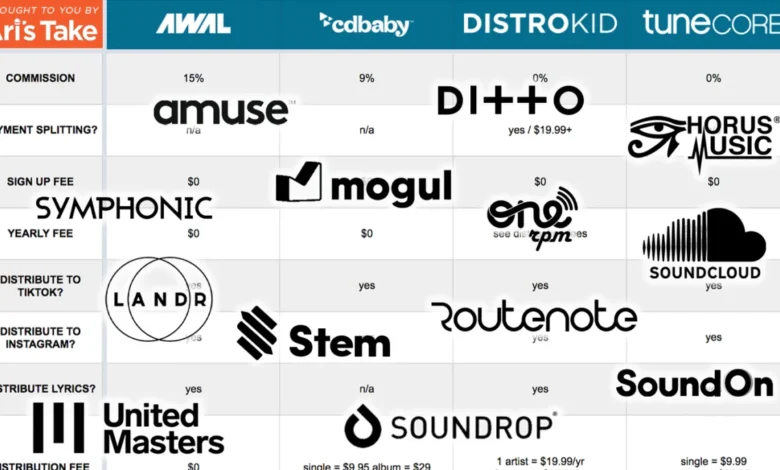
The modern independent music landscape relies heavily on digital service providers (DSPs) to bridge the gap between creators and global audiences. Securing a presence on platforms like Spotify, Apple Music, Amazon Music, TikTok, and Instagram requires partnering with an independent digital music distributor. With the market saturated by dozens of options ranging from flat-fee aggregators to commission-based label services, choosing the right partner is critical for independent artists navigating royalties, copyright ownership, and international markets.
The Evolution of Independent Music Distribution
Over the past decade, digital music distribution companies have steadily evolved from basic pipe networks into comprehensive royalty-collection and administrative hubs for do-it-yourself (DIY) musicians. While historical industry giants like INgrooves, The Orchard, and Believe primarily cater to major label rosters—often demanding commission-heavy cuts or partial master ownership—independent standalone distributors focus strictly on service agreements. These platforms do not claim ownership of copyrights or master recordings; instead, they act as conduits to global digital storefronts while empowering artists to retain 100% of their fundamental rights.
As the industry pivots toward frequent single releases and globalized streaming consumption, digital distributors have expanded their service offerings. Today’s top-tier platforms provide automated payment splitting among collaborators, YouTube Content ID monetization, synchronization licensing opportunities, and direct access to emerging international territories. Most notably, the explosive growth of paid streaming in markets like China—anchored by platforms such as NetEase—has turned international DSP reach into a primary competitive differentiator for independent aggregators.

Core Strategic Considerations: Switching, Multi-Release Strategies, and Royalties
Navigating the distribution landscape requires understanding several operational mechanics. Artists are permitted to use multiple distributors across different releases—meaning an artist can distribute one album via Symphonic and a subsequent single through DistroKid—though each individual release must remain exclusively tied to a single distributor to prevent duplicate listings and algorithmic fragmentation on DSP profiles.
Furthermore, migrating an existing release from one distributor to another is entirely possible, provided creators adhere to strict technical guidelines. Maintaining original ISRC (International Standard Recording Code) and UPC codes during a transfer is vital to preserving cumulative stream counts and algorithmic playlist placements.

Transparency and intelligible reporting have become baseline expectations for independent creators, replacing the opaque accounting practices historically associated with traditional record labels. Additionally, the integration of payment-splitting tools has transformed how artists compensate producers, session musicians, and co-writers. Rather than forcing primary artists to manually calculate and distribute royalties, advanced distributors now automate these payouts directly from incoming revenue streams.
Detailed Review of Leading Independent Music Distributors
Amuse
Amuse has transitioned significantly from its original freemium model, pivoting toward tiered annual subscription packages—Artist ($23.99/year), Artist Plus ($39.99/year), and Professional ($59.99+/year)—designed to support multi-artist profiles and advanced fan email collection. While Amuse offers integrated credit distribution for complex metadata requirements and data-driven royalty advances ranging from $250 to $300,000, the platform currently lacks native lyric distribution and recoupment mechanics within its payment-splitting infrastructure.

AWAL
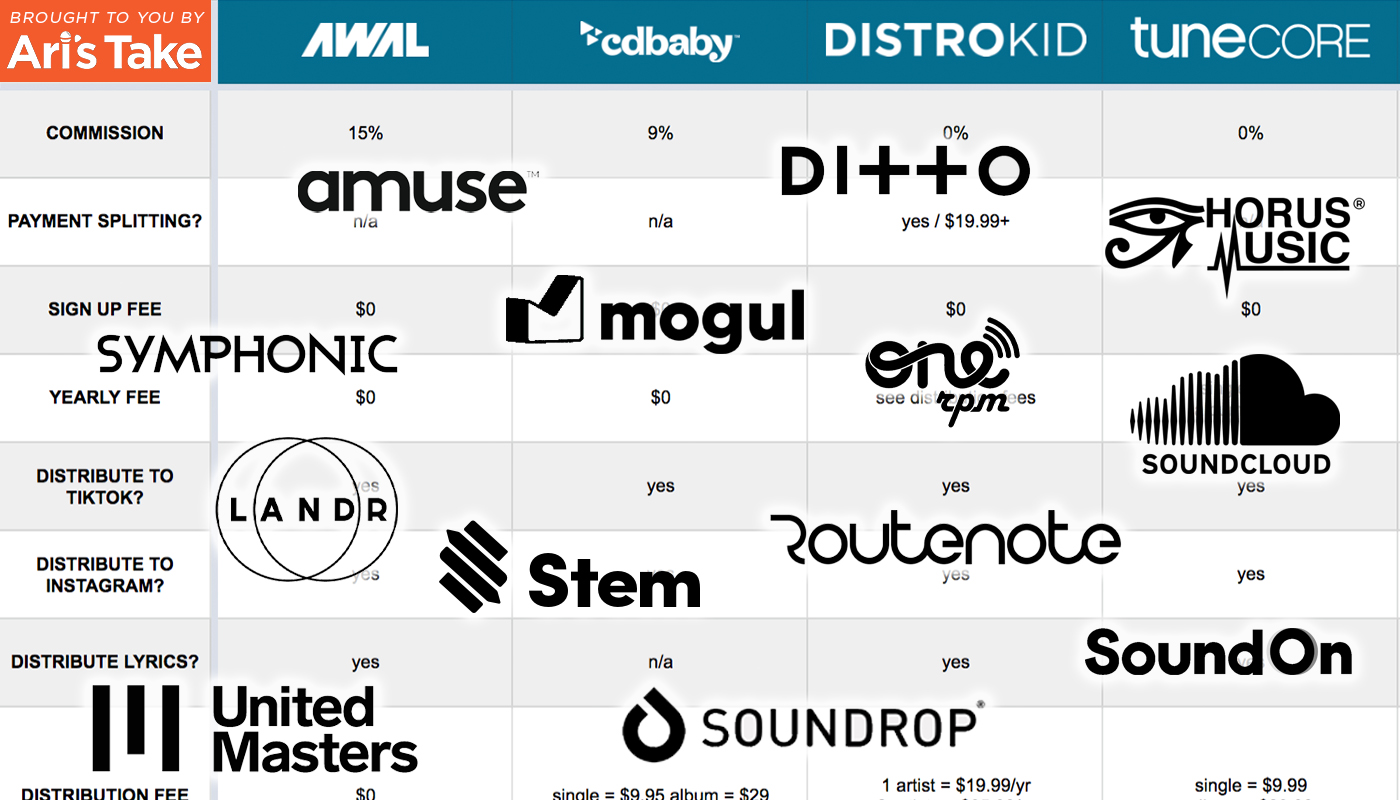
Positioned primarily for established artists with demonstrated traction, AWAL operates on a commission model (typically averaging around 15%) rather than an upfront fee structure. Following its acquisition by Sony Music Entertainment in 2021, AWAL refined its roster to focus on high-performing creators across three distinct tiers: AWAL Core, AWAL+, and AWAL Recordings. While the platform offers white-glove marketing, synchronization pitching, and global label services for its top-tier acts, it lacks automatic payment splitting, requiring artists to manually execute disbursements based on internal calculation tools.
CD Baby
As one of the industry’s longest-standing independent distributors, CD Baby operates under the umbrella of Downtown Music Group. Having discontinued its legacy CD Baby Pro Publishing arm due to administrative shifts within Songtrust, the platform now offers a "Boost" upgrade package to assist with SoundExchange and Mechanical Licensing Collective (MLC) registrations. However, CD Baby has faced widespread criticism for scaling back human customer support in favor of automated systems, leading many long-term users to migrate toward alternative platforms.

DistroKid
DistroKid remains the most widely utilized independent music distributor globally, responsible for a significant share of worldwide uploads. Pioneering the flat-fee, unlimited-upload model in 2013, DistroKid offers rapid delivery speeds, automated payment splitting with recoupment capabilities, and TikTok sound-timestamp customization. Despite its widespread adoption and operational efficiency, DistroKid’s reliance on automated customer support and its auxiliary fee structure—including separate charges for collaborator accounts and video distribution—can significantly increase overall operating costs for independent creators.
Ditto Music
Ditto Music offers unlimited distribution models tailored for independent artists and labels. However, the platform has faced substantial scrutiny regarding customer service reliability, delayed royalty payouts, and administrative errors involving metadata and release takedowns. Due to persistent user grievances and operational disputes, industry analysts frequently advise caution when evaluating Ditto Music for long-term distribution campaigns.

Horus Music
Operating primarily out of the United Kingdom, Horus Music provides standard open-to-all distribution alongside a selective, hands-on label services tier. While the platform delivers clear royalty reporting and zero-commission payout structures on paid annual tiers, music video distribution to platforms like VEVO incurs additional fees not prominently disclosed in standard FAQs. Horus Music has increasingly established a foothold within emerging Asian markets, including India and South Korea.
LANDR
Originally recognized for its instant cloud-mastering technology, LANDR has evolved into a comprehensive creative ecosystem for independent musicians. Its subscription tiers encompass unlimited music distribution, sample libraries, plugin bundles, and free payment-splitting infrastructure that avoids commission penalties on active accounts. LANDR also simplifies cover song licensing through a streamlined one-time fee per track, making it an attractive all-in-one hub for bedroom producers and independent recording artists.

Mogul
Mogul leverages its core expertise in royalty accounting, auditing, and collection to offer an integrated distribution and publishing framework. Priced at $18 monthly or $150 annually for its comprehensive registration services, Mogul includes administrative publishing collection for the US and Canada at no additional commission. Although it provides robust credit distribution and broad DSP reach into international markets like China, the distribution platform currently lacks lyric integration, automated payment splitting, and TikTok sound-timestamp controls.
OFFstep
Emanating from the operational lineage of ONErpm, OFFstep provides a streamlined, budget-friendly distribution infrastructure with annual plans ranging from $12 to $96. Offering free payment splitting, full credit distribution, and YouTube Content ID integration on advanced tiers, OFFstep serves as an efficient solution for independent artists seeking straightforward, commission-free global delivery without complex administrative overhead.

ONErpm
Operating as a hybrid between a DIY distribution platform and a full-service record label, ONErpm generates the majority of its business through curated label services rather than unsigned artist subscriptions. While basic distribution is available under a 15% commission model, artists who demonstrate commercial traction can be transitioned into higher-tier agreements involving marketing support, public relations, and promotional funding. Furthermore, ONErpm operates a massive YouTube Multi-Channel Network (MCN), optimizing digital ad revenue for qualifying creators.
RouteNote
RouteNote provides a flexible entry point for emerging artists through both free tiered models (operating on a 15% commission) and premium paid options. Particularly strong in international market penetration, RouteNote maintains extensive delivery networks across India and China, allowing select independent creators to generate substantial streaming revenue from developing territories outside Western strongholds.

Songtradr Distribution
Originating primarily as a synchronization licensing platform and music library, Songtradr expanded into digital distribution to capture a broader share of independent rights-holders. While the platform facilitates direct sync placements for film, television, and advertising, early historical discrepancies regarding currency conversion rates and Spotify royalty calculations have prompted ongoing evaluations from independent creators.
SoundCloud
Integrating full DSP distribution into its established social-discovery architecture, SoundCloud allows creators to distribute existing catalogs directly to major streaming services through its paid Artist and Artist Pro plans. Featuring free payment splitting, integrated Fan Insights, promotional tools like Feature.fm, and a unique fan-powered royalty model for internal streaming revenue, SoundCloud bridges community-building with functional commercial distribution.
Soundrop
Tailored specifically for cover song creators, Soundrop offers low-cost cover licensing and streamlined payment splitting designed to automate collaborator disbursements. While its administrative infrastructure simplifies royalty allocation for tribute projects, its detailed reporting capabilities remain limited compared to dedicated enterprise-grade analytics platforms.
Stem
Stem operates on an invite-only, submission-based model that pairs independent artists with dedicated project managers and active playlist pitching teams. Renowned for its robust, multi-party payment-splitting infrastructure—which requires mutual approval from all designated contributors prior to distribution—Stem maintains a selective roster supported by a 10% commission structure.

Symphonic Distribution
Symphonic maintains a strong market presence by balancing a selective, commission-based "Partner" tier for established acts with an open-access "Starter" tier priced at $19.99 annually. With physical infrastructure spanning North and South America, Symphonic specializes heavily in urban, electronic, and Latin genres while offering comprehensive neighboring rights collection and specialized partnerships with electronic storefronts like Beatport.
Too Lost
Emerging as a prominent independent distributor, Too Lost offers comprehensive global delivery, transparent analytics, and unique promotional search tools designed to track social media track usage. To combat widespread digital piracy and streaming fraud, Too Lost implements a mandatory photo-ID and facial verification protocol for platform users. While its technical capabilities and feature sets are robust, the platform has faced logistical challenges regarding customer support response times amid rapid scaling.

TuneCore
Following a strategic restructure to compete directly with flat-fee aggregators, TuneCore offers unlimited distribution annual plans ranging from $14.99 to $49.99 while maintaining a 0% commission structure on DSP streaming revenue. Backed by Believe Digital, TuneCore provides exceptional sales analytics, territory-specific licensing controls, and data-driven revenue advance programs that supply upfront capital for production and marketing campaigns.
UnitedMasters
Founded by industry executive Steve Stoute and backed by major strategic investors, UnitedMasters serves as a premier distribution and label services gateway, particularly within the hip-hop community. Providing transparent reporting and direct synchronization partnerships with major brands and athletic leagues, UnitedMasters functions as an incubator, offering localized promotional support and investment capital to independent acts demonstrating organic momentum.

Comparative Summary and Analytical Implications
Ultimately, no single music distributor universally outperforms all others; the optimal choice depends entirely on an artist’s career stage, financial model, and administrative needs. While flat-fee aggregators like DistroKid and TuneCore prioritize unlimited volume and rapid deployment, commission-based and selective partners like Stem, Symphonic, and UnitedMasters offer hands-on label services and strategic playlist promotion for scaling artists. Independent creators must carefully evaluate subscription costs, commission rates, international DSP reach, and automated payment-splitting capabilities to align their distribution partnership with long-term commercial goals.