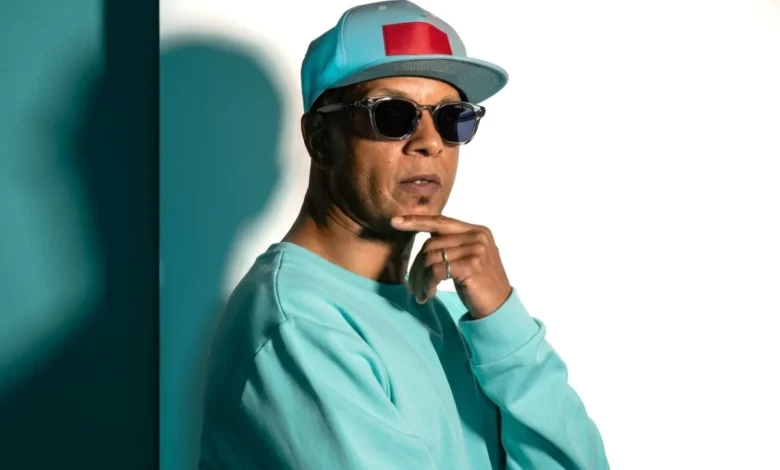
The news was confirmed through an official statement released on the artist’s social media channels, noting that Fisher had been battling a recent cancer diagnosis. His passing marks the conclusion of a four-decade career that saw him evolve from a precocious teenage talent in New Jersey to a globally recognized architect of vocal and tribal house music.
A Legacy Forged in the Golden Age of Clubbing
Born Kevin Fisher in New Jersey, the producer’s entry into the music industry was defined by an early and intense immersion in the regional club scene. While many of his contemporaries were navigating their post-secondary education, Fisher was already securing his footing within the legendary Zanzibar nightclub. His residency at the venue—a hallowed ground for the development of the "Jersey Sound"—began when he was only 17 years old. This formative period provided him with an intimate understanding of dancefloor dynamics, a skill set that would later define his production style.
Following his tenure at Zanzibar, Fisher transitioned into the technical side of the industry, honing his craft at Arthur Baker’s Shakedown Sound Studios. It was here that he transitioned from a local DJ to a skilled engineer and remixer, contributing to the sonic identities of industry giants such as Chaka Khan and Quincy Jones. This transition from performer to technician is often cited by music historians as the reason for his unique production aesthetic: he understood exactly how a track needed to be engineered to maximize its impact on a high-fidelity club sound system.
Chronology of an Influential Career
Fisher’s professional trajectory can be segmented into distinct eras of innovation, beginning with his foundational years in the 1980s.
- The Early Years (1980s): Fisher begins his residency at Zanzibar, immersing himself in the burgeoning house music scene. He gains technical proficiency at Shakedown Sound Studios, working with industry legends.
- The Rise to Prominence (Late 1990s): Fisher cements his status as a house music staple with the release of era-defining anthems. His collaboration with the legendary vocalist Loleatta Holloway on "(You Got Me) Burning Up" becomes a staple of the global club circuit.
- International Expansion (2000s): Fisher shifts his focus toward the European market, securing high-profile residencies and touring extensively. He launches his own imprint, Import Tracks, to maintain creative control over his output.
- Established Tenure (2010s–2024): Fisher maintains a consistent presence as a remixer, collaborator, and international touring act, bridging the gap between the classic New York house sound and modern electronic dance music (EDM) audiences.
Impact on House Music and Global Dance Floors
Fisher’s discography serves as a historical document of the evolution of vocal house. His 1998 track "The Freaks Come Out" became an underground sensation, characterized by its driving, percussive elements and infectious vocal hooks—a hallmark of his production style. His ability to fuse the raw, tribal energy of the New York scene with the polished sensibilities required for international charts allowed him to secure multiple entries on the UK Top 75, a rare feat for a niche house producer during that era.
His work with Loleatta Holloway is frequently analyzed in musicological circles as a prime example of the "diva house" subgenre, where the intensity of the vocal performance is perfectly matched by the rhythmic complexity of the production. By releasing music on seminal labels such as Strictly Rhythm, Defected, and Subliminal, Fisher was positioned at the epicenter of the electronic music industry during its most rapid period of global expansion.
Industry Reaction and Cultural Significance
The electronic music community has responded to the news with an outpouring of tributes, reflecting Fisher’s status as a "producer’s producer." Peers and contemporaries have highlighted not only his technical skill but his role as a mentor and bridge between the analog era of the 1980s and the digital era of the 2000s.
Industry analysts suggest that Fisher’s death serves as a poignant reminder of the aging demographic of the pioneers who built the modern dance music industry. As many of the architects of the house and techno explosion of the 1990s reach their late 50s and 60s, the loss of figures like Fisher prompts a wider conversation regarding the preservation of electronic music history. Unlike traditional genres with established archives, much of the club culture history remains tied to the individuals who lived it, making the loss of a practitioner of Fisher’s stature a significant blow to the collective memory of the industry.
Analysis: The Enduring Blueprint of the New York Sound
Fisher’s career provides a clear blueprint for the "career DJ-producer." His longevity was not the result of a single viral moment, but rather a consistent, decades-long output that balanced commercial success with artistic integrity. His commitment to the club circuit, even after achieving international acclaim, allowed him to stay relevant across generations of dance music listeners.
Furthermore, his establishment of Import Tracks demonstrated a forward-thinking approach to artist autonomy. By controlling his own distribution and creative direction, he was able to pivot when the industry shifted toward streaming and digital media, ensuring that his back catalog remained accessible and relevant to a new generation of DJs who continue to sample and incorporate his work into contemporary sets.
Final Reflections
The official statement confirming his death noted, "The internationally acclaimed DJ leaves behind a loving wife, children, family and friends as well as four decades of music, a global following, and an enduring legacy in house music."
While the industry mourns the loss of a foundational figure, the data regarding his reach—measured in decades of touring, dozens of label releases, and a library of tracks that remain staples in current DJ sets—suggests that his influence will persist. In the world of house music, where songs are designed to live on the dance floor long after their release, Fisher’s work remains as vital as it was during the height of his influence.
As the electronic music community processes this loss, the focus remains on the immense volume of work left behind. From the early, gritty nights at Zanzibar to the polished, international stages of his later career, Cevin Fisher’s life was defined by a singular pursuit: the creation of music that could bring people together in a shared, rhythmic experience. His contributions to the canon of house music are not merely historical footnotes; they remain active components of the global dance culture he helped to build.
For those looking to understand the mechanics of the "New York Sound," Fisher’s catalog serves as a masterclass. His ability to balance the technical demands of the studio with the emotional resonance of a club anthem remains a benchmark for aspiring producers. As the music world reflects on his 59 years, it is clear that Fisher’s legacy is etched into the very foundations of the genre, ensuring that his influence will be felt by the next generation of artists who take to the turntables and the studio console.