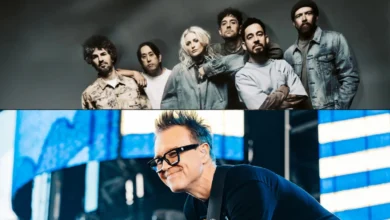
Lights is the winner of the DIY Award at the 2026 Rock Sound Awards, powered by Crazy Color CASA.


This prestigious recognition arrives at a pivotal juncture in the Canadian electro-pop icon’s career, marking the culmination of a significant transition from major-label infrastructure to total creative independence. The DIY Award specifically acknowledges artists who have successfully navigated the complexities of self-management, independent distribution, and autonomous brand cultivation within the modern music industry. By opting to produce her sixth studio album, tentatively titled A6, outside the traditional label system, Lights has set a new benchmark for artist agency in the digital streaming era.
The Evolution of the Rock Sound Awards
The Rock Sound Awards have long served as a bellwether for the alternative and pop-punk music scenes, evolving alongside the industry to recognize not just musical output, but the business acumen required to sustain a career in a fluctuating market. Powered by Crazy Color CASA, the 2026 iteration of the awards highlights the importance of visual and sonic branding. The DIY Award category, introduced to celebrate artists who demonstrate mastery over their own creative ecosystems, serves to distinguish those who prioritize artistic integrity over corporate contractual obligations. This year, the selection of Lights signifies a broader shift in the music industry, where established artists with significant fanbases are increasingly choosing to bypass traditional label structures in favor of greater equity and creative control.
Chronology of an Independent Transition
The journey toward A6 began following the conclusion of Lights’ previous contractual obligations. Having spent the better part of two decades navigating the major label landscape, the artist began a methodical process of decoupling from corporate oversight in late 2024.
The timeline of this transition is characterized by three distinct phases:
- The Strategic Exit (Q4 2024): Lights finalized the conclusion of her legacy label contracts, securing the rights to her creative process and future distribution channels. This period was marked by a strategic focus on building an internal team of long-term collaborators, including engineers and producers who had been with her since her early career.
- The Collaborative Pivot (Q1–Q3 2025): The artist transitioned into a self-funded model. By utilizing a "boutique" production approach, she moved away from the high-cost, high-pressure studio environments typical of major-label projects. During this time, she engaged in a series of intimate, small-scale recording sessions designed to foster a more raw, authentic sound, which would eventually become the foundation of A6.
- The Autonomous Launch (Q4 2025–Present): With the formal announcement of her DIY status, the artist implemented a direct-to-consumer strategy. This involved a partnership with specialized retailers and digital platforms to ensure that the revenue generated from A6 remains within her immediate ecosystem, allowing for greater reinvestment into subsequent projects.
Data-Driven Independence: The Economics of A6
While specific financial figures remain private, the shift toward independent production for an artist of Lights’ stature carries measurable economic implications. Historically, a major-label release involves recoupable costs that can include marketing, distribution, and manufacturing, often leaving the artist with a fraction of the gross revenue. By internalizing these costs, Lights is projected to increase her per-unit revenue significantly.
Market analysis suggests that independent artists with a dedicated following—such as those cultivated over a fifteen-year tenure—can achieve similar chart visibility as label-backed artists when leveraging direct-to-consumer sales. The inclusion of high-value merchandise, such as the exclusive gold-foil T-shirts and limited-edition collector’s coins offered through the Rock Sound shop, exemplifies this model. These "value-add" items are essential in the modern era to compensate for the diminishing returns of streaming royalties, providing a sustainable income stream that is not dependent on the whims of third-party platforms.
Industry Perspectives and Official Reactions
Industry analysts have noted that the success of independent artists like Lights is a direct consequence of the democratization of distribution tools. Where a label once held the keys to radio play and retail placement, digital service providers (DSPs) and social media algorithms have leveled the playing field.
"The decision to go independent for a sixth album is a bold, calculated risk," says industry consultant Marcus Thorne. "Most artists at this stage of their career settle into a rhythm with their labels. To break away requires not only the capital to fund production but the infrastructure to manage the business side—accounting, logistics, and legal. Lights’ recognition by the Rock Sound Awards proves that the industry now views self-management as a legitimate, even superior, pathway for career longevity."
While the artist has not released a formal statement regarding the specific dollar amounts saved by this move, her recent communications with fans have focused on the "freedom of ownership." By reclaiming her masters and controlling her narrative, she is no longer subject to the "shelf-life" expectations often imposed by labels on established female artists in the pop genre.
Broader Impact and Industry Implications
The success of the A6 project serves as a case study for mid-career artists who feel stifled by the rigid structures of the traditional music business. By demonstrating that an artist can win major awards while operating as an independent entity, Lights is validating a blueprint for others to follow.
The implications of this shift are threefold:
- Creative Autonomy: The elimination of the "A&R" filter allows for a more personal discography. For Lights, this has meant the ability to experiment with sounds that might have been rejected by committee-based label systems.
- Fan-Centric Monetization: The transition has allowed for a closer relationship with her fanbase. By cutting out the corporate middleman, the artist can offer more direct engagement and exclusive content, which increases the lifetime value of each listener.
- Long-Term Sustainability: By owning her own intellectual property, Lights is securing her financial future in a way that is not subject to the expiration of recording contracts. This model ensures that her body of work continues to generate value for her directly, rather than for a corporate entity.
Looking Toward the Future
As the industry prepares for the full release of A6, the focus remains on whether this DIY model can be scaled for future projects. The Rock Sound Awards 2026, by honoring this transition, have signaled that the definition of a "successful" artist is changing. It is no longer defined solely by chart position or label support, but by the ability to maintain artistic vision while successfully navigating the commercial demands of the market.
For Lights, the future is now entirely on her own terms. The collaboration with trusted friends and the avoidance of external pressure have resulted in a project that feels more cohesive and authentic than her previous work. As she continues to build her career, the DIY Award will likely be viewed as the moment she successfully transitioned from a label-contracted star to an independent business owner, effectively rewriting the rules of the contemporary music industry.
Fans and collectors interested in supporting this independent trajectory can secure memorabilia through the Rock Sound shop, which continues to provide a vital bridge between independent artists and the consumer base that sustains them. The 2026 Rock Sound Awards stand as a testament to the fact that the most significant innovations in music today are often happening outside the walls of the corporate boardroom.