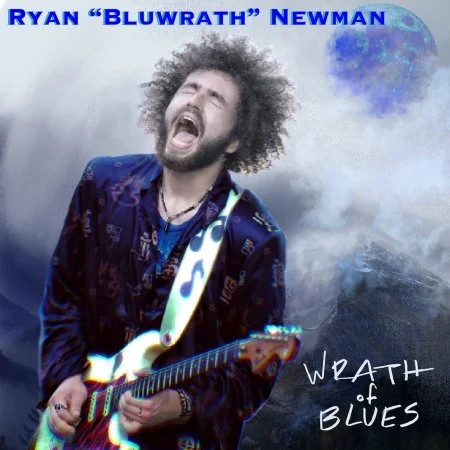
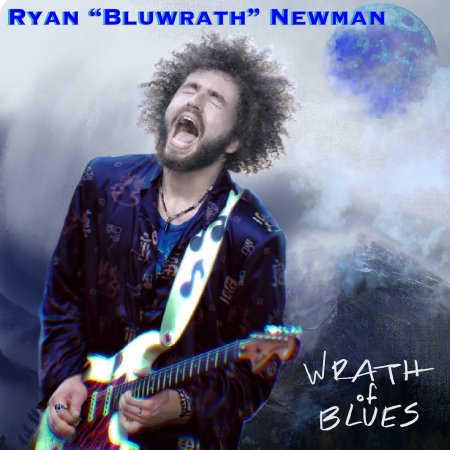
Connecticut-based guitarist Ryan “Bluwrath” Newman has officially entered the contemporary blues scene with his debut full-length studio release, Wrath of Blues. Issued via the Blind Raccoon promotion and management label, the 14-track, 57-minute record represents an ambitious entry into the competitive roots music marketplace. Far from a traditional, singular-vision debut, Newman’s inaugural project functions as an expansive, genre-spanning showcase that bridges classic Chicago blues traditions, 1970s hard rock sensibilities, reggae, and classic soul. Produced in collaboration with Jon Grossbard, the album has rapidly gained traction across the American blues and roots charts, securing top-tier positions on the Roots Music Report and Living Blues charts. This extensive review and industry analysis examines the artistic composition, structural arrangements, chart performance, and broader implications of Newman’s recorded debut.
Main Facts and Artistic Overview
Wrath of Blues is designed as an eclectic masterclass in guitar-driven blues interpretation rather than an entirely original composition vehicle. Across its 14 tracks, Newman relies heavily on a curated selection of canonical blues and rock standards, introducing only one original composition to the tracklist. Despite the heavy reliance on covers, the album avoids the common pitfall of becoming a predictable, note-for-note replication project. Instead, Newman utilizes a rotating ensemble of five guest vocalists, a dynamic horn section, and seasoned instrumentalists to construct a variety-show-style atmosphere.
The core of the record rests on Newman’s formidable guitar work. Rather than engaging in excessive, self-indulgent shredding or prolonged three-minute guitar solos, Newman displays a disciplined restraint. He channels the stylistic influences of legendary guitarists such as Stevie Ray Vaughan, Jimi Hendrix, Albert Collins, and Gary Moore, deploying his solos strategically to enhance the emotional weight of each song. The album opens with an energetic take on Elmore James’s classic "Dust My Broom," immediately establishing a high-energy baseline that mirrors the repertoire of a premier live blues-bar cover band. Throughout the 57-minute runtime, the record moves fluidly through historical blues touchstones, B.B. King associations, funk-infused rhythms, and unexpected selections from reggae and pop-rock canons.
Chronology and Production Background
The conceptualization and execution of Wrath of Blues followed a meticulous path of studio collaboration and arrangement planning orchestrated by Newman and producer Jon Grossbard. The project began taking shape in regional Connecticut studios, where Newman sought to capture the visceral energy of a live performance while maintaining the sonic clarity required for commercial radio and streaming airplay.
The recording timeline prioritized building a versatile foundation through rhythm sections before layering the complex horn arrangements and guest vocal tracks. Rather than relying on a single front-person to carry the 14 tracks, Grossbard and Newman adopted an ensemble approach. Organist Vic Washington emerged as a central musical force during these recording sessions, contributing not only essential keyboard textures but also taking over lead vocal duties on pivotal tracks like B.B. King’s "The Thrill Is Gone."
As the tracking phases concluded in late 2025, the project partnered with Blind Raccoon for PR and distribution, leading up to its formal 2026 release. Following the deployment of promotional singles to roots radio programmers, the album steadily climbed specialized genre charts, validating the decision to blend traditional blues structures with cross-genre selections.
Supporting Data and Track-by-Track Analysis
The tracklist of Wrath of Blues is defined by its impressive breadth of eras and genres, spanning from 1942 compositions to 1980s rock covers. The album’s structural integrity relies on careful sequencing that alternates between heavy guitar showcases, vocal-driven soul numbers, and stylistic departures.
Newman’s guitar prowess is prominently displayed on blues-rock anthems such as Stevie Ray Vaughan’s "Texas Flood" and "Be Careful With A Fool." On these tracks, his tone balances biting high-end frequencies with a warm, tube-driven midrange that honors his primary influences. Gary Moore’s "Oh, Pretty Woman" serves as another highlight, providing a collaborative canvas where Newman’s aggressive fretwork intertwines seamlessly with Vic Washington’s Hammond organ lines. Washington’s authentic, weathered vocal delivery on "The Thrill Is Gone" grounds the arrangement in traditional blues melancholy, offering a respectful nod to the late King of the Blues without attempting a direct impersonation.
One of the project’s boldest departures is its inclusion of Bob Marley’s "Get Up, Stand Up." Rather than treating the reggae anthem as a novelty, the arrangement reimagines the rhythmic cadence within a blues-rock framework, demonstrating the permeability of genre boundaries. This adventurous spirit also characterizes the album’s sole original composition, "Leaving This World Tonight." Washed in a lush, punchy horn section, the track serves as Newman’s compositional calling card. During the solo section, he explicitly pays homage to his idols—Jimi Hendrix, Stevie Ray Vaughan, and Albert Collins—while maintaining a distinct personal voice.
Hard rock elements surface powerfully on Jeff Beck’s "Let Me Love You," featuring lead vocals by Arlene Wow. The track radiates a 1970s blues-hard-rock aesthetic that feels simultaneously nostalgic and fresh, standing out as one of the record’s most commercially viable cuts. Conversely, the project injects unexpected whimsy elsewhere: a cheeky, disco-infused cover of The Rolling Stones’ "Miss You" introduces a danceable groove, while Hoagy Carmichael’s 1942 standard "Baltimore Oriole" represents the chronological anchor of the album, showcasing Newman’s appreciation for pre-war and mid-century American songcraft.
Earl King’s "Come On" accelerates the tempo, energized by call-and-response background singers and a swelling horn section. Bob Dylan’s "Highway 61 Revisited" highlights Newman’s vocal range, proving that his performance capabilities extend beyond the fretboard. The album closes with Aretha Franklin’s "Good To Me As I Am To You," anchored by a soulful, commanding vocal performance from Arlene Wow that leaves a lasting impression on the listener.
Official Responses and Industry Reception
The commercial and critical response to Wrath of Blues has exceeded expectations for a debut independent release. Industry analysts and genre-specific publication reviewers have praised the album’s accessibility and production value.
In statements regarding the album’s direction, representatives for Blind Raccoon highlighted the strategic advantage of Newman’s song selection. By anchoring the tracklist with universally recognized standards while infusing them with fresh arrangements and a rotating cast of vocalists, the production team successfully mitigated the primary risk facing debut blues artists: listener fatigue.
Radio programmers across the United States have responded favorably to the record’s polished production and familiar thematic elements. The inclusion of diverse vocalists—including Arlene Wow and Vic Washington—has provided DJs with multiple entry points for single rotation, driving the album’s steady ascent into the top 10 of the Roots Music Report and securing a solid foothold in the top 20 of Living Blues charts. Critics have noted that while the heavy reliance on covers might occasionally obscure Newman’s individual songwriting identity—given that only one original track is present—the sheer instrumental execution and cohesive band chemistry compensate for any lack of original narrative depth.
Broader Impact and Market Implications
The success of Wrath of Blues points to shifting consumption patterns within the contemporary blues and roots music landscape. In an era where niche genres increasingly rely on streaming algorithms to find audiences, debut artists face the challenge of immediate listener retention. By leveraging well-known compositions by Elmore James, Bob Marley, The Rolling Stones, and Bob Dylan, Newman and producer Jon Grossbard created a bridge that invites casual blues listeners deeper into the genre while satisfying purists with high-level musicianship.
Furthermore, the album’s performance demonstrates the continued viability of the "big band" or ensemble approach in modern blues production. Rather than marketing a solitary guitar hero, the project celebrates a community of regional talent—highlighting horn players, organists, and diverse vocalists—which translates directly into a compelling live performance product.
Looking ahead to the fall and winter seasons, Ryan "Bluwrath" Newman is slated to transition these recorded arrangements to the live stage, bringing his energetic spin on the blues to music venues and clubs across New England. Industry observers will be monitoring whether this regional touring momentum can be leveraged into national festival appearances, and whether Newman’s sophomore release will lean further into original songwriting to solidify his long-term artistic legacy. For now, Wrath of Blues stands as a formidable calling card—a polished, crowd-pleasing, and expertly executed debut that signals the arrival of a notable new talent in the American roots scene.