Lee Ranaldo Explores Cinematic Soundscapes with The System Soundtrack and Curates Influential Guitar Scores

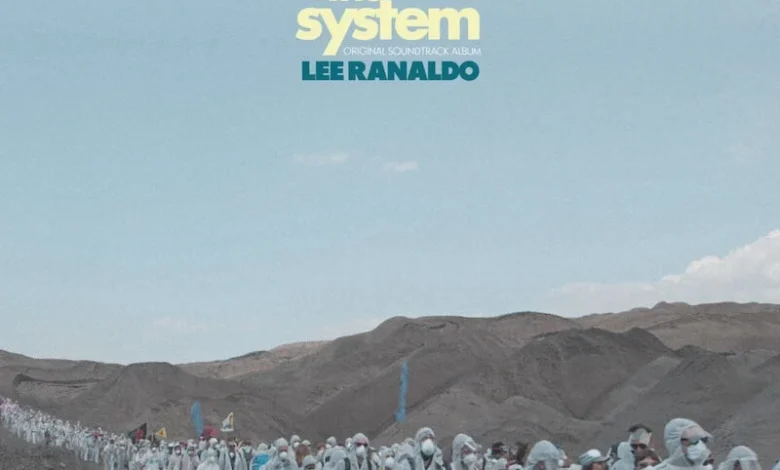
The intersection of avant-garde rock and documentary filmmaking has yielded some of the most compelling audio-visual collaborations in contemporary music history. Lee Ranaldo, best known as a co-founder, vocalist, and guitarist of the pioneering alternative rock band Sonic Youth, has officially expanded his storied career into feature-length film scoring. Ranaldo has composed the original soundtrack for The System, a newly released ecological documentary directed by Dutch filmmaker Joris Postema. To mark the commercial release of the soundtrack album, Ranaldo shared an exclusive, curated list of nine seminal guitar-centric film scores that served as conceptual blueprints and aesthetic inspirations during the composition process for The System.
Throughout a career spanning more than four decades, Ranaldo has consistently interrogated the structural and sonic limitations of the guitar. From his foundational work with Sonic Youth—where conventional tuning, feedback manipulation, and the physical preparation of instruments redefined the vernacular of American rock—to his sprawling solo endeavors, collaborations with the band Drift, and numerous contributions to free improvisation, Ranaldo has treated the instrument less as a harmonic tool and more as a dynamic source of raw acoustic and electronic phenomena. This background positions him uniquely to translate complex environmental and systemic narratives into rich, textural musical landscapes.
The partnership with director Joris Postema on The System represents a distinct departure for the musician, pivoting from the stage-centric spontaneity of rock and roll to the rigorous, narrative-serving discipline of cinematic composition. While Ranaldo has previously contributed music to various art installations, short films, and multimedia projects, The System marks a significant institutional step into feature-length documentary scoring.
Chronology and Production Background
The genesis of The System soundtrack lies in the intersecting worlds of European documentary filmmaking and the New York downtown avant-garde scene. Joris Postema, recognized for his incisive, socially conscious documentary work, approached Ranaldo to capture the overarching themes of his latest cinematic venture. Postema’s The System positions itself as an "eco-doc," examining the complex, often obscured machinery of global environmental exploitation, corporate governance, and ecological degradation.
Recognizing that traditional orchestral scoring might feel overly sentimental or disconnected from the harsh realities of ecological collapse, Postema sought a composer capable of extracting organic, harsh, yet deeply emotive sounds from physical materials. Ranaldo’s history of using guitars not merely to play notes, but to generate weather-like soundscapes through bowed strings, percussive preparation, and amplification feedback, made him an ideal collaborator.
The production timeline for the score spanned the better part of a year, during which Ranaldo worked between his studio in New York City and remote recording environments. Working closely with Postema’s rough cuts, Ranaldo developed a thematic palette that mirrors the documentary’s narrative arc—moving from structural ambient tones representing industrial scale to chaotic, discordant passages illustrating ecological strain, and finally to meditative, resonant acoustic passages that point toward environmental fragility and resilience.
Conceptual Inspirations and the Curated List
In tandem with the release of the album, Ranaldo offered music critics and fans a rare glimpse into the subconscious architecture of the score. Rather than relying on classical film scoring traditions, Ranaldo drew inspiration from a lineage of guitarists and composers who weaponized or reinvented the instrument for the screen. The curated selection of nine guitar-centric soundtracks highlights works that successfully divorced the guitar from its traditional genre confines, proving its viability as a primary vehicle for cinematic storytelling.
Among the historical precedents acknowledged by Ranaldo are works that utilize minimalism, extended techniques, and ambient textures. By examining how predecessors manipulated the guitar to evoke specific geographic locations, emotional states, and temporal dislocations, Ranaldo was able to establish a distinct sonic vocabulary for The System. These influences helped him navigate the delicate balance required in documentary scoring: providing an underlying emotional framework without dictating or manipulating the audience’s interpretation of hard journalistic facts.
Industry observers note that this curatorial approach reinforces a growing trend among legacy alternative musicians who cross over into film scoring. Artists such as Jonny Greenwood of Radiohead, Trent Reznor and Atticus Ross of Nine Inch Nails, and Warren Ellis of The Dirty Three have successfully transitioned from rock royalty to Academy Award-winning cinematic composers, leveraging their mastery of non-traditional sound design to redefine Hollywood and independent film aesthetics.
Supporting Data and Context within Ranaldo’s Discography
Lee Ranaldo’s entry into formal film composition comes at a time of sustained creative output following the indefinite hiatus of Sonic Youth in 2011. Over the subsequent decade, Ranaldo released a string of critically acclaimed solo albums—including Between the Times and the Tides (2012), Last Night on Earth (2013), Electric Trim (2017), and In Virus Times (2021)—each demonstrating a steady evolution from noisy deconstruction toward sophisticated songcraft and expansive ambient composition.
In Virus Times, an instrumental suite composed and recorded entirely during the COVID-19 pandemic lockdowns, served as an immediate precursor to the methodology employed in The System. Utilizing multi-tracked acoustic and electric guitars, Ranaldo created long-form, cyclical patterns that prioritized atmosphere and patience over traditional verse-chorus structures. This methodology scaled effortlessly to the demands of feature-length documentary scoring, where music must frequently sustain tension over extended sequences without dialogue or traditional narrative markers.
The economic and structural realities of modern documentary filmmaking also frame the release of The System. Independent eco-documentaries frequently operate under strict financial constraints, relying heavily on innovative, smaller-scale music production rather than massive orchestral sessions. Ranaldo’s ability to generate an orchestra’s worth of texture, dissonance, and harmony using a curated collection of electric guitars, prepared strings, and electronic processors provided the production with a high-end, bespoke sonic identity while remaining fiscally viable.
Official Responses and Industry Reception
While major trade publications are still unspooling their full reviews of The System and its accompanying soundtrack, early reactions from independent film circles and avant-garde music communities have been overwhelmingly positive.
Director Joris Postema praised Ranaldo’s dedication to the project, noting in promotional materials that the musician’s sensitivity to the film’s environmental themes elevated the documentary from an investigative piece of journalism to a visceral sensory experience. Postema emphasized that Ranaldo’s willingness to experiment with feedback and altered tunings allowed the score to mirror the unpredictable, volatile nature of the ecological systems depicted on screen.
Music critics have likewise highlighted the seamless integration of Ranaldo’s signature guitar techniques with the atmospheric demands of modern documentary scoring. Reviewers point out that rather than sounding like a collection of rock instrumentals slapped over footage, the album operates as a cohesive, standalone work of contemporary classical and ambient music—a testament to Ranaldo’s deep understanding of cinematic pacing and space.
Broader Impact and Implications for Modern Film Scoring
The release of The System soundtrack and Lee Ranaldo’s transition into formal film composition underscore a broader shift in the entertainment industry’s approach to hiring film composers. For decades, the film scoring industry was dominated by classically trained orchestrators working within strict institutional pipelines. However, the rise of prestige television, streaming platforms, and independent documentary filmmaking has created an insatiable demand for distinct, auteur-driven sonic signatures.
Directors increasingly look to figures from the rock, ambient, and electronic underground to score non-fiction and narrative works, valuing idiosyncratic texture and authentic emotional resonance over academic proficiency. By demonstrating how a veteran avant-garde rocker can adapt his signature language to serve the rigorous demands of an environmental documentary, Ranaldo’s work on The System opens new doors for cross-disciplinary collaboration.
Furthermore, the release serves to recontextualize the guitar itself. In an era where mainstream pop music frequently marginalizes the electric guitar in favor of programmed beats and synthesized basslines, projects like The System prove that the instrument remains an infinitely malleable technological and artistic marvel. Through thoughtful composition, extended techniques, and a willingness to explore the outer limits of sound, Ranaldo and his peers continue to ensure that the guitar retains its vital, disruptive voice in modern culture.
As The System rolls out to international film festivals and streaming platforms, the accompanying soundtrack stands as a major milestone in Lee Ranaldo’s post-Sonic Youth evolution. By successfully bridging the gap between rigorous ecological documentary filmmaking and uncompromising avant-garde guitar exploration, Ranaldo has firmly established his credentials as a vital new voice in contemporary cinematic composition.