The Bifurcated State of Jazz: Global Expansion Meets Infrastructural Volatility in 2026

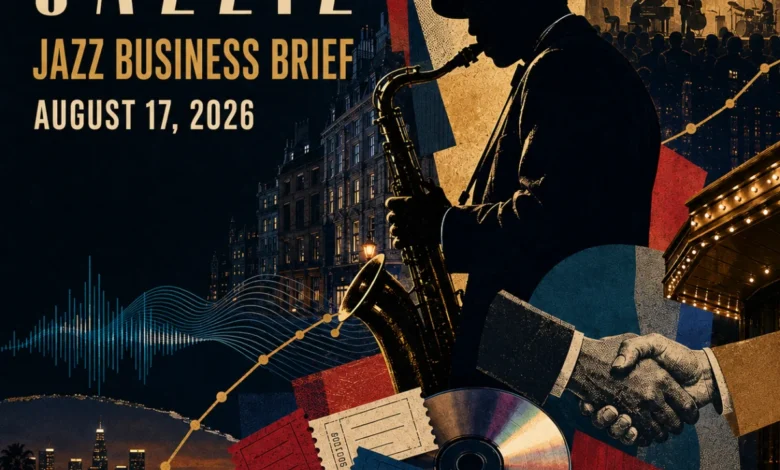
The week of August 17, 2026, served as a definitive case study in the dual realities of the modern jazz industry. On one hand, the sector displayed unprecedented artistic output and high-level institutional investment, anchored by major record label activity and the expansion of branded hospitality ventures. On the other hand, the abrupt collapse of the inaugural LA Jazz Festival underscored a persistent, structural fragility in the live event ecosystem. As the industry navigates an era of decentralized listening habits and shifting economic models, these contrasting events illuminate a landscape that is simultaneously thriving in its creative reach and struggling with the logistical complexities of large-scale public engagement.
The industry’s current momentum is largely driven by a departure from the "traditional" jazz market, moving toward a more fluid, crossover-friendly model. This shift was underscored by a flurry of high-visibility releases in mid-August. Jon Batiste, a figurehead of the genre’s modern crossover appeal, dominated the conversation with the release of three solo-piano albums—Black Mozart, Monk Meditations, and Monk Movements—via Decca and Verve. These projects, released on August 14, are not merely recordings but are positioned as academic and cultural investigations into the intersection of classical tradition and Black musical identity.
However, the rollout was marred by the cancellation of three high-profile concert dates in New Haven, Philadelphia, and New York. While Batiste’s management cited "unspecified personal circumstances," the incident highlighted a key risk in the contemporary artist-brand economy: when a campaign is hyper-focused on a single, high-profile individual, the volatility of that brand becomes the volatility of the entire commercial rollout.
Contrasting this solo-centric model, independent label Empire saw significant traction with the release of Watchu Bringing? by Dinner Party, the supergroup featuring Terrace Martin, Robert Glasper, Kamasi Washington, and 9th Wonder. By utilizing independent infrastructure rather than a legacy jazz imprint, the group successfully navigated the space between jazz, hip-hop, and R&B. This indicates that the most successful "jazz" entities in 2026 are those that resist being marketed as conventional jazz, opting instead to reach audiences through genre-agnostic platforms. Simultaneously, the upcoming Nonesuch release of Fifteen, a collaboration between Henry Threadgill, Vijay Iyer, and Dafnis Prieto, serves as a reminder that artistic prestige and long-term collaborative legacy remain a viable, if more niche, business proposition.
The Blue Note London Expansion: A Strategic Pivot
While digital releases occupy the attention of global listeners, the most significant capital investment in the physical jazz economy is currently concentrated in London. The impending September 23 opening of Blue Note London beneath the St Martins Lane hotel in Covent Garden marks a strategic evolution in the brand’s business model.
The venue is designed as a multifunctional ecosystem. With a 250-capacity main room and a 100-capacity "B-Side" space, the club is prioritizing high-end hospitality—food, beverage, and late-night programming—as a revenue buffer against the inherent risks of live music performance. By curating a program that features international stars like Robert Glasper alongside local fixtures such as Nubya Garcia and Yussef Dayes, the venue seeks to function as a bridge between the U.S. and European markets. Analysts suggest that if the London model proves successful, it could facilitate a new standard for jazz clubs, shifting them from simple stages to "cultural destinations" that incorporate travel packages, branded residencies, and multimedia content production.
The LA Jazz Festival Collapse: Lessons in Scalability
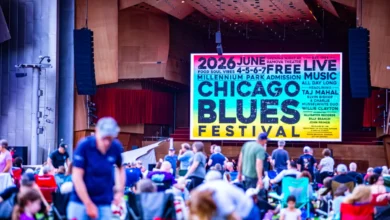
If Blue Note represents the professionalization of the jazz venue, the failure of the inaugural LA Jazz Festival serves as a sobering warning regarding public-event infrastructure. The festival, originally slated to run from August 7 through August 23, promised an ambitious 17-day program across multiple municipal locations, including parks and public spaces. With projected attendance figures exceeding 250,000, the festival was positioned to be a landmark event for the city.
The postponement to 2027, announced just as the festival was set to commence, was attributed to unanticipated municipal and public-safety costs. The fallout was immediate and widespread. Because the festival relied on a complex web of independent vendors and performers, the decision to postpone left many stakeholders with non-recoverable travel and production expenses.
The economic implications are severe. The failure of such a large-scale event forces a re-evaluation of how promoters manage risk. Industry observers have noted that many jazz festivals, often tied to civic or educational mandates, are frequently under-capitalized. The lack of adequate reserve capital for a first-year, multi-location event suggests that the sector needs a more rigorous "stress-test" standard for public events. Furthermore, the incident has reignited calls for stronger contract protections for independent contractors and small-scale vendors, who are currently the primary victims of last-minute cancellations.
Distributed Sponsorship and Economic Resilience
In contrast to the centralized, high-risk model of the LA event, the second edition of the NoMad Jazz Festival in New York offers a blueprint for fiscal stability. By adopting a distributed sponsorship model, the NoMad organizers avoided the pitfalls of reliance on a single title sponsor.
The festival’s revenue stream is a mosaic: a combination of community-level contributions, mid-tier local business support, and high-level corporate partnerships. By integrating diverse income streams—including merchandise, VIP access, and nonprofit grants—the festival created a buffer that allowed for free public programming. This "neighborhood-based" approach not only mitigates the risk of a single sponsor pulling out but also deepens the festival’s integration into the local economy. It suggests that future festivals might find more success by acting as a network of smaller events rather than a single, monolithic, high-cost production.
Data as the New Currency: The SoundCloud-Nina Acquisition
The evolution of the jazz economy is not confined to stages and concert halls. The recent acquisition of the decentralized music platform Nina Protocol by SoundCloud highlights a shift in how platforms value music communities. While Nina Protocol struggled to sustain a viable revenue model, its value lay in its editorial archives and its sophisticated genre-mapping of independent music scenes.
SoundCloud’s acquisition of this data signifies that platforms are increasingly buying "context." In an age of algorithmic saturation, the ability to document a scene, provide editorial authority, and foster a specific community of listeners has become a tradable asset. For jazz publications and independent media brands, this presents both an opportunity and an existential threat. Authority is now a commodity that major platforms wish to own. To survive, media entities must move toward diversified monetization, including membership models and licensing agreements, while aggressively protecting their editorial autonomy.
Implications for the Future
The state of jazz in 2026 is defined by a paradox: the music has never been more artistically diverse or globally integrated, yet the infrastructure required to present it remains brittle. The successful expansion of brands like Blue Note suggests that the future of the industry lies in hybrid business models that prioritize hospitality and multi-stream revenue. Conversely, the collapse of large-scale festivals in Los Angeles illustrates that ambition without sufficient capital reserves and rigorous municipal planning is a recipe for systemic failure.
As the industry matures, the "jazz audience" will continue to fragment into distinct, interest-based cohorts—those who follow the music through hip-hop, those who engage via classical crossovers, and those who prioritize composer-led contemporary work. The challenge for stakeholders is to build systems that support these disparate communities without flattening the artistic distinctions that define them.
The events of August 2026 suggest that the path forward for the jazz industry is not through larger, centralized events that require massive, unpredictable public investment. Rather, it lies in the creation of sustainable, distributed, and tech-integrated ecosystems that value the artist’s brand while providing the necessary financial security for the entire value chain. The industry is currently moving away from the "event-to-event" survival model and toward a more integrated, brand-centric, and data-driven approach, where long-term institutional stability is prioritized over the ephemeral glory of the singular, massive concert moment.