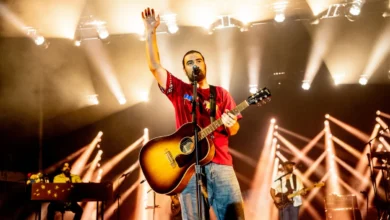
Macklemore removed from Ed Sheeran tour following controversy over pro-Palestine statements

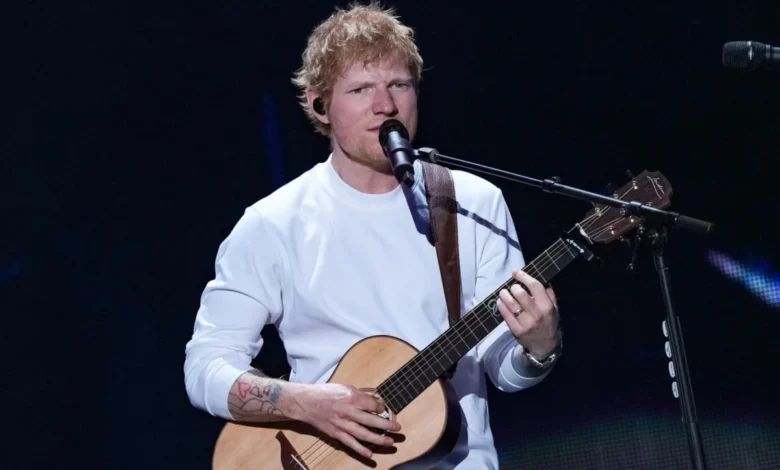
The landscape of live music and political discourse collided in a high-stakes standoff this week as Seattle rapper Macklemore was officially removed from his supporting slot on Ed Sheeran’s ongoing Loop Tour. The decision, which has sent shockwaves through the touring industry, follows a series of outspoken performances by the artist in which he criticized the Israeli government’s military campaign in Gaza and performed his viral protest anthem, "Hind’s Hall." The fallout has escalated rapidly, prompting a cascade of cancellations from other opening acts and raising critical questions regarding the intersection of venue ownership, artistic freedom, and contractual obligations in the modern concert era.
A Chronology of the Conflict
The tensions surrounding Macklemore’s participation in the tour began to crystallize in early September. On the weekend of September 7-8, Macklemore performed two high-profile shows at MetLife Stadium in New Jersey. During these sets, he utilized the platform to explicitly call for a "Free Palestine" and performed "Hind’s Hall," a track released in May 2024 that highlights the student protests and humanitarian crisis in Gaza.
By September 14, the situation reached a breaking point. According to a statement released by the artist on Instagram, Sheeran informed him that Robert Kraft, owner of the New England Patriots and Gillette Stadium, had intervened. Macklemore alleged that Kraft spearheaded a collective effort among stadium owners to present Sheeran with an ultimatum: either remove the rapper from the lineup, or face the cancellation of scheduled performances at their respective venues.
By September 15, Ed Sheeran addressed the public, clarifying that the decision to remove the rapper was made by the tour’s promoter, Messina Touring, and the venue owners, rather than himself. The promoter confirmed that they had been notified by multiple venues that they would not permit the concert to proceed if Macklemore remained on the bill, noting that such a boycott would have jeopardized the entire North American leg of the tour and negatively impacted hundreds of thousands of ticket holders.
The Stance of Venue Ownership
The involvement of Robert Kraft represents a rare and significant intervention by a venue proprietor in the creative programming of a touring act. In an official statement, Kraft’s representatives justified the move by citing Macklemore’s recent stage rhetoric, which they characterized as part of a "broader history of antisemitic rhetoric and imagery." The statement emphasized that the material shared during the MetLife Stadium performances was deemed "deeply offensive and hurtful to the Jewish community," leading to the determination that his appearance at Gillette Stadium would "cross the line."
This intervention marks a departure from standard industry practices, where venue owners typically serve as landlords and logistical partners rather than arbiters of an opening act’s political content. The leverage exerted by the stadium owners—threatening to block a global headliner like Ed Sheeran—underscores the massive financial and logistical stakes involved in stadium-level touring, where a single cancellation can result in millions of dollars in losses and significant operational disruption.
Solidarity and the Domino Effect
The removal of Macklemore triggered an immediate wave of solidarity among the tour’s other support acts. Within 48 hours of the announcement, artists FINNEAS, Lukas Graham, and Aaron Rowe, as well as the Irish folk group Beoga—who provide essential backing for Sheeran’s performances—announced their departure from the tour.
In their respective statements, the artists cited a fundamental disagreement with the decision to silence political expression. The collective withdrawal of these acts has left the tour’s future in a state of uncertainty. Industry observers note that replacing a full support lineup on short notice is a monumental logistical challenge. As of mid-September, it remains unclear whether Sheeran will proceed with a pared-down show or attempt to secure new support acts, though the current climate suggests that the controversy may complicate the booking process for any artist prioritizing neutrality.

Contractual Realities and Legal Precedent
The legal implications of this situation are complex and highlight the vulnerability of artists in the face of promoter and venue demands. Typically, tour contracts include "morality clauses" that allow for the termination of an agreement if an artist’s conduct is deemed detrimental to the reputation of the event or the headliner. However, the interpretation of what constitutes "detrimental conduct" is often subjective.
The ongoing litigation between M.I.A. and Kid Cudi provides a relevant precedent. After M.I.A. was removed from a tour due to her political commentary, she filed a lawsuit, arguing that the headliner was well aware of her political history and that her contract provided "sole and exclusive creative control" over her performance. The case highlights the potential for future disputes as artists increasingly use their platforms for social and political advocacy.
In the case of Macklemore, the specific terms of his agreement with Messina Touring will dictate whether he receives compensation for the cancelled dates. Supporting acts are often paid a flat guarantee; whether this is honored in the event of a promoter-led cancellation depends heavily on force-majeure provisions and specific language regarding artist conduct. Conversely, the acts that chose to leave the tour voluntarily are likely forfeiting their remaining fees.
Broader Implications for the Live Music Industry
The incident at the Loop Tour reflects a growing trend of political polarization affecting the concert industry. In 2024, artists such as Matisyahu faced show cancellations in Santa Fe and Tucson, though those instances were largely attributed to venue-cited security concerns rather than direct pressure from venue owners regarding the artist’s political views. Similarly, Kehlani’s removal from performances at Cornell and Central Park in 2023 was framed by organizers as a matter of "safety."
The Macklemore situation, however, is distinct in its scale. The coordination between stadium owners to blacklist an artist represents a new threshold of institutional response to artist activism. This raises broader questions about the power dynamics within the live music ecosystem. When venues, which are essential infrastructure for global tours, begin to act as gatekeepers of political speech, the scope of what is permissible on stage may become increasingly restricted.
Furthermore, the response of sponsors remains a critical area to watch. While major corporations have remained silent during the current Sheeran controversy, historical precedents—such as the withdrawal of sponsors from Kanye West’s planned festival appearances following his controversial remarks—demonstrate that financial backers often prioritize risk mitigation. Should the controversy continue to generate negative publicity, it is possible that sponsors may place pressure on promoters to demand more restrictive clauses in future touring contracts.
Looking Ahead: The Future of the Loop Tour
As of now, the tour is scheduled to continue, with the next major date in Philadelphia. The industry is currently watching to see if Sheeran will provide further commentary or if the venues will maintain their unified stance. For the fans, the situation has resulted in a fragmented experience, with the loss of the original lineup significantly altering the composition of the concert events.
The case serves as a stark reminder that in the era of high-visibility touring, the stage is not just a place for entertainment but a volatile intersection of commerce, contract, and conscience. As the music industry navigates these waters, the tension between the freedom of the artist to engage in political discourse and the desire of stakeholders to maintain a neutral commercial environment shows no signs of dissipating. Whether this incident establishes a new standard for touring protocols or remains an outlier remains to be seen, but it has undeniably set a precedent that will influence future negotiations between artists, promoters, and the powerful entities that own the world’s largest stages.