Ex-Employee of Eminem Pleads Guilty to Criminal Copyright Infringement After Stealing and Selling Unreleased Tracks for $50,000

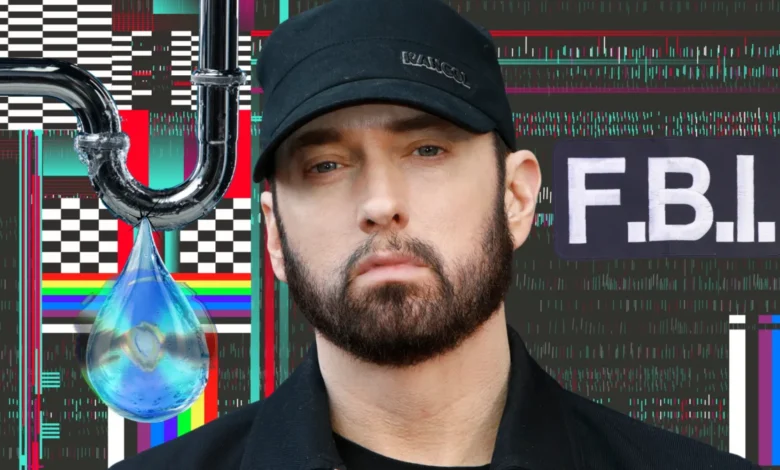
A former long-term employee of iconic American rapper Eminem has officially entered a guilty plea in a United States federal court for criminal copyright infringement. The defendant, identified as Joseph Strange, admitted to systematically stealing unreleased audio recordings from the multi-platinum-selling artist’s private digital archives. Over the course of his scheme, Strange illicitly sold these confidential music files to outside buyers for approximately $50,000. The breach ultimately resulted in more than 25 unreleased tracks leaking onto the internet, accumulating millions of digital streams and triggering a high-profile federal investigation.
Strange, who now faces a maximum statutory penalty of up to five years in federal prison, is scheduled to be sentenced in January. The case highlights the severe legal consequences surrounding the digital theft of intellectual property, particularly within the upper echelons of the commercial music industry, where unreleased master recordings represent millions of dollars in potential revenue and immense artistic value.
The Anatomy of an Inside Job: Access, Secrecy, and Betrayal
The illicit operation was made possible by Strange’s privileged access to Eminem’s secure infrastructure. Between 2007 and 2021, Strange was employed by the Grammy Award-winning artist, working closely behind the scenes. During his tenure, Strange helped set up, manage, and maintain the complex digital computer system utilized by Eminem and his production teams to store, edit, and archive works-in-progress at a dedicated recording studio located in Ferndale, Michigan.
While trusted with safeguarding the rapper’s creative output, Strange allegedly began quietly copying sensitive audio files for his own personal retention. Investigators later uncovered that Strange’s ambitions extended far beyond simple archiving; at one point, he boasted to a prospective buyer that his personal stash contained upwards of 300 unreleased tracks recorded by Eminem across various eras of his career.
By 2024, the internal breach transitioned into active commercial exploitation. Strange began offloading the stolen material to external buyers. According to federal court filings, one buyer ultimately paid Strange $50,000 in exchange for a package containing 25 unreleased tracks. Once these audio files entered the black market, containment failed, and the music quickly spilled over into public-facing digital platforms.
Chronology of the Investigation and Federal Intervention
The timeline of the federal case traces a clear path from digital leakage to law enforcement seizure:
- 2007 to 2021: Joseph Strange works for Eminem, assisting in the establishment and daily operations of a private digital storage and computer system at a studio in Ferndale, Michigan, giving him direct access to unreleased master recordings.
- 2024: Strange begins commercially distributing and selling stolen unreleased Eminem tracks to outside parties, successfully completing a $50,000 transaction for a bundle of 25 exclusive songs.
- January 2025: The leaked tracks begin surfacing publicly across various online forums and streaming networks, triggering alerts within Eminem’s management and legal teams, who promptly notify federal authorities.
- Early 2025: The Federal Bureau of Investigation’s (FBI) Detroit field office opens a formal probe, successfully identifying and interviewing the buyer who admitted to purchasing the tracks from Strange.
- 2025 (Subsequent Months): Armed with evidence from the buyer, federal agents execute a search warrant at Strange’s residence, seizing multiple hard drives containing pirated copies of Eminem’s unreleased musical catalog.
- November 2025: Forensic tracking reveals that the pirated audio files illegally distributed online have been accessed more than 8 million times globally.
- December 2025: Strange formally enters a guilty plea to charges of criminal copyright infringement in a U.S. federal court.
- January 2026 (Upcoming): Sentencing hearing scheduled before a federal district judge, where Strange faces up to five years behind bars.
Legal Distinction: Civil Litigation Versus Criminal Prosecution
In the broader landscape of intellectual property law, copyright infringement is most frequently handled through civil litigation. In a civil copyright lawsuit, the aggrieved copyright owner initiates legal action against the infringing party seeking monetary damages, statutory penalties, and injunctions to halt further distribution.
However, copyright infringement can cross the threshold into criminal territory under specific, aggravated circumstances. Criminal copyright charges are typically reserved for large-scale operations—often described as industrial-scale piracy—or actions clearly undertaken for direct commercial advantage or private financial gain. Under United States federal copyright law, the critical legal requirement for a criminal conviction is proof that the defendant infringed upon protected works purposefully for commercial advantage or private monetary enrichment.
Because Strange systematically abused an internal employment relationship to extract intellectual property and sold those files for direct financial compensation ($50,000), federal prosecutors determined that civil remedies were insufficient, necessitating a criminal indictment by the U.S. Department of Justice.
Government Response and Official Statements
The prosecution of Joseph Strange has drawn sharp commentary from high-ranking federal law enforcement officials, who emphasized the importance of protecting creative industries from insider threats.
Assistant Attorney General A. Tysen Duva addressed the media following the guilty plea, stating bluntly that the defendant chose to violate a profound obligation of confidentiality. "Joseph Strange abused a position of trust to unlawfully copy and sell unreleased music belonging to Eminem, profiting from works that were not yet authorised for public distribution," Duva said.
Duva further emphasized that Strange’s actions directly compromised Eminem’s foundational legal and artistic rights. Reaffirming the federal government’s hardline stance on digital piracy, Duva noted that the criminal division of the U.S. Department of Justice "remains committed to protecting intellectual property, holding accountable those who seek to profit from the theft of creative content, and working with our law enforcement partners to deter and disrupt these crimes."
Echoing these sentiments, FBI agent Jennifer Runyan of the Detroit field office highlighted the cultural and economic significance of the local music scene. "Detroit has always been a city where creativity thrives, and no one has the right to steal or profit from another artist’s work without their permission," Runyan remarked. "Today’s guilty plea reinforces a simple principle: accountability follows those who compromise the integrity of another person’s creative labour."
The Scale of the Leak and the Defense’s Perspective
While the financial transaction central to the indictment involved the sale of 25 tracks for $50,000, the digital footprint of the leak expanded exponentially after the music hit the internet. Prosecutors revealed in court documents that, as of November 2025, the infringing audio files had been accessed more than 8 million times across various digital ecosystems.
Furthermore, court disclosures shed light on the status of the stolen material. Prosecutors noted that while a formal commercial release date for the specific stolen tracks was neither "imminent nor even certain," work had actively been undertaken by the artist’s camp to prepare portions of the music for potential future commercial distribution. In several instances, this preparatory work included professional studio mastering—adding significant commercial value to files that were treated as trade secrets within the production environment.
In response to the federal proceedings, Strange’s defense attorney, Wade Fink, pushed back against the rhetoric used by prosecuting agencies. Fink publicly criticized the statements issued by the Department of Justice and the FBI, describing them as "hyperbolic" and "self-congratulatory."
Fink argued that the media narrative oversimplifies a complex reality. "This case is a far more complicated and nuanced matter than a man just unabashedly stealing," Fink stated, while adding a personal appeal regarding the human cost of the legal fallout: "Joe Strange is a good man whose children have suffered greatly in all of this."
Despite his critique of the government’s public posture, Fink confirmed that his client has chosen to accept responsibility for his actions. "Nevertheless, my client has taken accountability for what he has done, has tremendous remorse for what has happened to his family, and has great faith, as do I, in the judges of our district to see this case for what it is," Fink concluded.
Broader Implications for the Music Industry and Digital Security
The case of United States v. Joseph Strange serves as a cautionary tale for the modern entertainment industry, where the transition from physical master tapes to high-capacity digital servers has exponentially increased vulnerability to insider threats. Major recording artists, producers, and record labels routinely invest millions of dollars into secure digital asset management systems, yet human elements—such as trusted studio technicians, system administrators, and long-term employees—remain a primary point of exposure.
As unreleased recordings represent vital financial assets capable of driving future album rollouts, streaming revenue, and merchandise sales, record labels and independent artists alike are expected to tighten internal cybersecurity protocols, implement stricter multi-factor authentication for digital archives, and enforce zero-tolerance data-loss prevention policies.
With his guilty plea now officially on the record, Strange awaits his sentencing hearing in January, where the presiding federal judge will determine whether the severity of the intellectual property theft and the breach of professional trust warrants the maximum five-year prison term sought by prosecutors.