The Renaissance of Jazz Language: How Global Artists are Redefining Genre Boundaries on YouTube

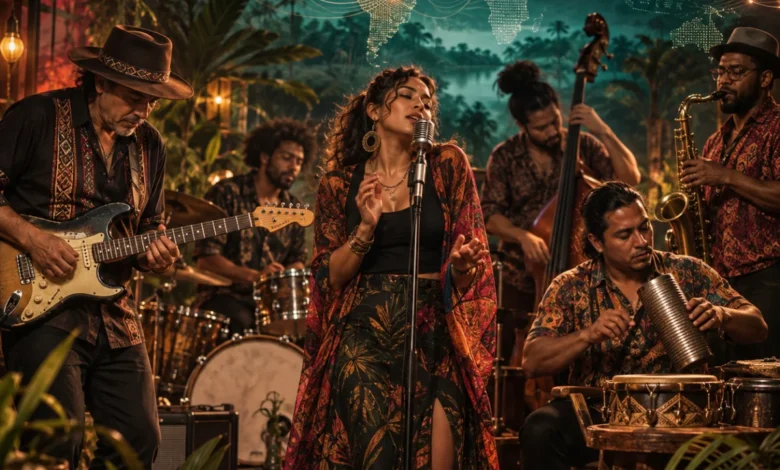
The contemporary musical landscape is undergoing a profound transformation as a diverse array of artists—from Peruvian cumbia pioneers to Canadian pop crooners—leverages the structural language of jazz to reach massive, non-traditional audiences on YouTube. This trend, particularly prominent during the week ending September 18, 2026, reveals a shift in how digital consumers engage with improvisation, complex arrangements, and harmonic sophistication. Rather than adhering to the rigid definitions of "jazz" as a genre, these performers are deploying jazz as a versatile, communicative tool that bridges the gap between internet-native pop culture, regional Latin traditions, and the global concert stage.
The Anatomy of a Digital Shift: A Chronology of Engagement
The week of September 15–18, 2026, served as a microcosm for this broader cultural realignment. The following timeline captures the rapid ascent of these performances on the platform:
- September 15: Mon Laferte releases her Tiny Desk Concert, blending cabaret, jazz-pop, and Latin alternative music. It surpasses two million views within 72 hours, signaling that high-concept theatricality remains a major draw for the platform’s core demographic.
- September 16: Kubla’s outdoor session, filmed in Toronto’s Music Garden, gains traction as an example of "informal jazz," prioritizing spontaneity and social atmosphere over the sterility of a studio environment.
- September 17: Los Mirlos makes their highly anticipated Tiny Desk debut. The performance, which fuses psychedelic Amazonian cumbia with live-band improvisation, reaches 735,000 views in under 24 hours.
- September 18: Analytics confirm that long-form content, specifically Cory Wong’s 41-minute set at Rock Werchter, is maintaining consistent viewership, proving that audiences are increasingly willing to dedicate significant time to complex, instrumental-led performances.
Los Mirlos and the Globalization of Cumbia Amazónica
The rapid rise of Los Mirlos on the global stage represents more than a nostalgic nod to Peruvian history. With over 735,000 views and an exceptional 8.1% like-to-view ratio—a metric that significantly outperforms the platform average for legacy acts—the ensemble has successfully translated their 50-year-old regional sound into a modern, dance-floor-ready format.
The performance at NPR’s Tiny Desk was a calculated masterclass in cultural preservation and adaptation. By retaining the reverb-heavy, psychedelic electric guitar tones that defined their origins in the Peruvian Amazon, Los Mirlos avoided the common pitfall of "watering down" their sound for Western consumption. Instead, they relied on the raw, infectious rhythmic drive of guiro, maracas, and percussion to transcend language barriers. This success suggests that modern listeners are increasingly seeking "culturally specific grooves" that offer an authentic alternative to the homogenized production found in mainstream global pop.
The Theatricality of Jazz: Mon Laferte’s Strategic Performance
Mon Laferte’s recent set exemplifies the use of jazz as an aesthetic framework rather than a static genre. By staging her Tiny Desk performance in corporate attire and utilizing arrangements that pivot between cabaret-inflected jazz and Latin alternative, Laferte utilized the NPR office space as a narrative device. Her ability to navigate between vocal fragility and commanding, theatrical precision allowed the music to function as a commentary on the tensions of artistic identity in a commercial world.
The data supports this artistic choice; with over two million views in three days, Laferte demonstrated that contemporary audiences respond to "jazz-adjacent" performances that prioritize emotional stakes and visual storytelling. The lack of extended, traditional solos in her set underscores a critical shift: jazz influence is now being felt through harmonic tension and ensemble responsiveness, proving that the genre’s legacy lies in its ability to adapt to high-drama, pop-focused environments.
Redefining the Source Material: Matt Dusk and the Gaming Generation
Perhaps the most significant development in digital music consumption is the creative re-contextualization of internet-native songs. Canadian vocalist Matt Dusk’s 1960s-style jazz interpretation of "My Ordinary Life," originally by The Living Tombstone, provides a blueprint for future engagement. By stripping away the electronic production of a song already beloved by gaming and meme-culture communities and replacing it with a brass-heavy, nightclub-style arrangement, Dusk successfully introduced jazz instrumentation to a demographic that might otherwise have bypassed the genre entirely.
This strategy effectively bypasses the "Great American Songbook" barrier, which often acts as a gatekeeping mechanism for younger listeners. By meeting the audience where they are—in the digital spaces of animation and gaming—Dusk transformed a familiar electronic anthem into an entry point for traditional jazz arrangement. The 5.4% engagement rate confirms that this is not merely a novelty; it is a sustainable strategy for expanding the genre’s reach.
Ezra Collective and the Communal Impulse
The Ezra Collective’s interpretation of Bad Bunny’s "NUEVAYoL" highlights the role of jazz as "social music." In the contemporary London jazz scene, the movement is defined by its refusal to silo itself from hip-hop, Afrobeats, and Latin pop. By incorporating Bad Bunny’s track into their repertoire, the group emphasizes that rhythm and improvisation are universal conduits for human connection.
This approach is inherently collaborative. Rather than approaching a global pop hit as a way to "capture" an audience, the Ezra Collective approaches it as a dialogue between different rhythmic traditions. This resonates with a growing segment of the YouTube audience that values authenticity and communal interaction over polished, singular-artist celebrity branding.
The Role of Curators and Long-Form Documentation
Beyond individual artists, the platform’s discovery mechanisms are increasingly driven by curators who act as modern-day radio hosts. Soulection’s 15th-anniversary set, featuring an eclectic mix of amapiano, house, and R&B, and Jazz Is Dead’s "Best of Acid Jazz" compilation both underscore the importance of the "background soundtrack" economy.
These channels provide a bridge between disparate musical worlds, allowing listeners to traverse from spiritual jazz to hip-hop within a single session. The fact that the Jazz Is Dead compilation garnered over 28,000 views in its first week demonstrates that there is a significant, high-intent audience looking for long-form, expert-curated content that offers both deep-listening value and functional utility for study or work.
Analysis: The Disconnect Between "Genre" and "Language"
The persistent success of these performances—including the 328% increase in viewership for Tori Kelly’s Tiny Desk set—suggests a growing disconnect between how music is tagged by metadata systems and how it is consumed by actual human beings.
The industry at large has historically categorized music based on rigid genre definitions, yet the audience is moving toward a model based on "musical language." When an artist uses jazz phrasing, harmonic tension, or improvisational structures, they are utilizing a language that carries its own inherent logic and appeal, regardless of whether it is officially marketed as "jazz."
This shift carries major implications for labels and content creators:
- Discovery is Platform-Agnostic: Listeners are not searching for "jazz" as much as they are searching for high-quality, rhythmically complex, and emotionally resonant performances.
- Longevity Favors Authenticity: As seen with Tori Kelly, high-quality, live-band performances see sustained growth long after the initial upload, suggesting that audiences are increasingly treating these videos as cultural artifacts to be revisited, rather than temporary trends.
- The "Live" Factor is Irreplaceable: Whether it is the informal nature of Kubla’s park performances or the precision of Cory Wong’s massive festival sets, the visual evidence of musicians interacting in real-time is the primary driver of engagement.
In conclusion, the momentum surrounding these diverse acts confirms that the audience for jazz-influenced music is significantly larger than the audience for jazz as a traditional category. By integrating jazz language into the cultural conversations of the present—whether through cumbia, electronic pop, or Latin alternative—these artists are not just surviving in the digital age; they are dictating its terms. The future of the genre, it seems, lies not in the museum of historical preservation, but in the laboratory of modern, cross-cultural collaboration.