EFG London Jazz Festival Returns in November with Coltrane Centennial, Robert Glasper, Melody Gardot and More – JAZZIZ Discovery

A Legacy in Motion: The 1926 Centennials
The 2026 festival is anchored by a thematic focus on the legacy of John Coltrane and Miles Davis, both born in 1926. Their influence, which effectively defined the mid-20th-century trajectory of jazz, serves as the philosophical bedrock for this year’s programming. Rather than merely engaging in nostalgia, the festival aims to deconstruct and reassemble the contributions of these icons through the lens of contemporary improvisation.
The opening night on November 13 at the Barbican features the sold-out production, "Coltrane 100: Both Directions at Once." This curated project features a powerhouse quintet, including saxophonists Joe Lovano and Melissa Aldana, pianist Nduduzo Makhathini, bassist Linda May Han Oh, and drummer Jeff "Tain" Watts. The ensemble’s approach—prioritizing the spirit of exploration over rote replication—signals the festival’s broader intent: to treat jazz not as a museum piece, but as a living, breathing language. This commitment to artistic evolution is further bolstered by the Barbican’s "Jazz on Screen" series, which provides critical historical context through screenings such as Spike Lee’s Mo’ Better Blues.
Miles Davis, whose work navigated the shifting tides of bebop, cool jazz, and fusion, receives a similarly forward-looking tribute. British multi-instrumentalist Emma-Jean Thackray will present Dear Miles — A Love Letter at EartH Theatre on opening night. This performance, coupled with specialized screenings at the Barbican, underscores the festival’s dedication to mapping the evolution of the jazz vocabulary from the mid-century to the present day.
Chronology of a Sonic Cityscape
The festival’s schedule is meticulously layered to bridge the gap between historic venues and the intimate, subterranean club culture that defines London’s jazz identity.
Opening Weekend Highlights (November 13–14):
The festival commences with the traditional "Jazz Voice" gala at the Royal Festival Hall, an event that has become a hallmark of the festival’s opening night. November 13 remains a high-traffic evening, featuring diverse acts ranging from the experimental sounds of Sarathy Korwar to the trip-hop infused textures of Morcheeba.
The momentum continues on November 14, which balances global perspectives with genre-defying orchestral ambition. Asha Puthli brings The Cosmic Voyager to the Barbican, while Goldie takes the stage at the Royal Festival Hall for Dare to Dream, an ambitious project that integrates live band performance with full orchestral arrangements. The evening also features a tribute to Duke Ellington, featuring hip-hop luminary Jeru the Damaja, illustrating the festival’s propensity for breaking down barriers between jazz, hip-hop, and orchestral traditions.
Mid-Festival Dynamics (November 15–19):
The second phase of the festival focuses on international cross-pollination. November 15 showcases the breadth of the program, with Tunisian oud virtuoso Anouar Brahem presenting After the Last Sky at the Barbican, while KOKO hosts the reunion of pianist Alfredo Rodriguez and percussionist Pedrito Martinez. The diversity of the lineup—which includes Lizz Wright, Mariza, and a project by Dave Okumu dedicated to the legacies of Nina Simone and Sly Stone—highlights the festival’s commitment to "Jazz Without Borders."
As the week progresses, the festival maintains its intensity. Melody Gardot graces the Royal Albert Hall on November 16, followed by a two-night residency at KOKO by the trio GoGo Penguin. The midweek programming serves as a platform for both established legends and emerging voices, with appearances from Fatoumata Diawara, Soweto Kinch, and the Norwegian ensemble Jaga Jazzist.
Institutional Integration: The Blue Note London Residency
A definitive feature of the 2026 festival is the extended residency of pianist Robert Glasper at Blue Note London. Spanning the entire duration of the festival (November 13–22), the residency is part of the "Celebrating the Jazz Clubs" initiative. This series is vital to the festival’s economic and cultural structure, as it ensures that the energy of the event is not confined to major concert halls like the Barbican or the Royal Festival Hall.
By integrating late-night club sets at iconic venues like Ronnie Scott’s with high-profile hall performances, the festival succeeds in creating an immersive experience for the city. This strategy acknowledges that the evolution of jazz in the 21st century is as much about the social interaction within intimate clubs as it is about the prestige of the stage.
Supporting Data and Structural Context
The EFG London Jazz Festival is produced by Serious, an organization that has transformed the event into one of the most expansive jazz gatherings globally. Data from previous editions suggests that the festival annually attracts over 100,000 attendees, with a significant portion of the audience traveling from outside the United Kingdom, thereby providing a substantial boost to London’s nighttime economy.
The 2026 programming is notable for its deliberate inclusion of interdisciplinary performances. The mix of film, live orchestra, electronic music, and traditional jazz reflects a broader shift in the music industry toward hybridity. By commissioning new works and fostering collaborations between disparate artists—such as the pairing of classical string ensembles with contemporary jazz improvisers—the festival acts as a laboratory for new musical ideas.
Analytical Perspective: The Future of the Genre
The festival’s decision to center the centennials of Coltrane and Davis serves as a strategic pivot point. Analysts note that while these figures represent the past, the festival’s curation—favoring improvisers like Ambrose Akinmusire and Nduduzo Makhathini—suggests a focus on how the "improvisational philosophy" of the 1920s-born masters remains relevant to contemporary social and political discourse.
The inclusion of artists from the African diaspora, the Middle East, and Europe, combined with the presence of hip-hop and electronic music, demonstrates a clear institutional stance: jazz is no longer a static, Western-centric genre. It is an evolving international language. The festival’s success in selling out shows months in advance indicates that there is a robust, diverse appetite for this complex and multi-layered approach to curation.
Official Statements and Industry Impact
While individual artist statements vary, the general sentiment from the creative teams involved—such as Joe Lovano’s assertion that the Coltrane project is about "creating in his spirit"—points to a shared industry desire to move past the "tribute concert" fatigue. By focusing on the process of jazz (improvisation) rather than the product (the recordings), the festival organizers are positioning themselves as leaders in the preservation of the art form through active development rather than passive commemoration.
Conclusion and Practical Information
The 2026 EFG London Jazz Festival serves as a testament to the resilience and adaptability of the jazz genre. By maintaining a balance between the historic prestige of the Barbican and the raw, collaborative atmosphere of the city’s jazz clubs, the festival ensures that it remains accessible to both purists and those who identify with the genre’s newer, more experimental frontiers.
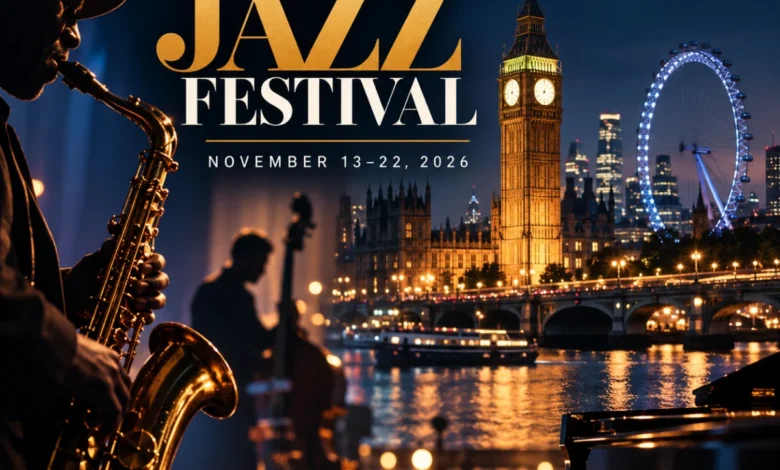
The festival runs from November 13 to November 22, 2026. Given the high demand for headline performances—many of which have already reached capacity—attendees are encouraged to review the full schedule and secure tickets through the official EFG London Jazz Festival website. As the city prepares to host a global cohort of musicians, the 2026 edition stands poised to reaffirm London’s status as a premier international hub for the exploration of music, history, and the future of the improvisational arts.
Related posts: