Okeechobee Music and Arts Festival Confirms Indefinite Hiatus After 2026, Capping Years of Uncertainty and Financial Pressures

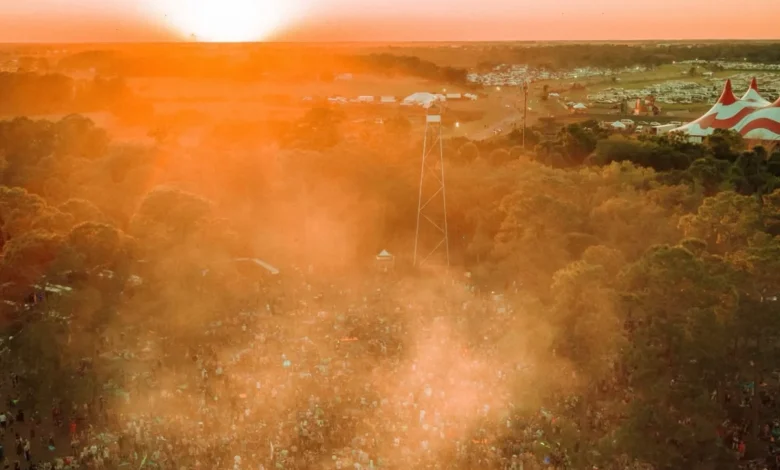
The future of one of Florida’s most prominent multi-genre music gatherings has been thrown into deep uncertainty following a quiet announcement distributed to past attendees. Organizers of the Okeechobee Music and Arts Festival have confirmed that the event will not return in 2027, opting instead to enter an indefinite hiatus following its upcoming 2026 edition. The decision marks another chapter of turbulence for a festival that has struggled with extended operational pauses, shifting corporate ownership structures, and a rapidly escalating financial crisis within the live entertainment industry.
The revelation was delivered through a digital newsletter primarily designed to market a retrospective 2026 Family Photo Album, a digital yearbook, and a commemorative poster created by renowned 1960s psychedelic poster artist Nigel Waymouth. Tucked away within the nostalgia-focused correspondence was the confirmation that the multi-day lakeside gathering would skip 2027 entirely, leaving fans without a concrete timeline for a potential comeback. The ambiguous nature of the announcement—which provided no specific target year for a future installment—has amplified concerns regarding the long-term viability of the independent operation.
Independent Return and Rising Industry Pressures
In their communication with the community, organizers disclosed that Okeechobee has reverted to independent status following a multi-year acquisition period under Insomniac Events, a massive conglomerate under the Live Nation umbrella. This corporate detachment, while restoring creative autonomy to the festival’s founders, has exposed the event to the unforgiving economic realities currently plaguing the independent festival market.
The contemporary live music sector is facing unprecedented financial strain driven by soaring artist booking fees, escalating production expenses, site logistics costs, and expensive insurance premiums. Without the deep capital reserves and corporate synergy of a major promoter like Insomniac, the festival’s independent operators reportedly found it economically unfeasible to finance the event in its traditional multi-genre, large-scale format.
Organizers stated that the upcoming pause will be utilized to "reimagine and rework" the festival from the ground up, vowing that the core spirit of the event will remain intact for its eventual, albeit unscheduled, next edition. However, industry analysts note that such open-ended restructuring periods frequently precede permanent closures or significant downsizings in a crowded marketplace.
A Decade of Turbulence: The Chronology of Okeechobee
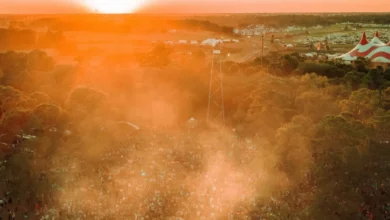
To understand the weight of the 2027 hiatus, it is necessary to examine the tumultuous trajectory of the festival over the past decade. Launched with high ambitions in 2016, the festival carved out a unique niche within the Southeast’s music landscape by bridging disparate subcultures. Spanning a sprawling lakeside campground in Sunshine Grove, Okeechobee became famous for seamlessly booking jam bands, premier hip-hop artists, chart-topping electronic dance music acts, and indie-rock icons across multiple stages.
The initial years established the event as a cultural anchor in central Florida. However, the festival’s momentum was severely disrupted by external and internal crises:
- March 2016: The inaugural Okeechobee Music and Arts Festival debuts to largely positive reviews, drawing tens of thousands of attendees to a custom-built site featuring a 24-hour beach stage and immersive art installations.
- 2017–2018: The festival solidifies its reputation as a premier spring-break destination for counterculture fans, hosting legendary sets from artists ranging from Kings of Leon and Bassnectar to Usher and the Roots.
- Fall 2018: Amid financial restructuring and operational changes under its original ownership group, Soundology, the festival announces it will skip its 2019 edition, sending shockwaves through the community.
- 2020: Insomniac Events acquires and revitalizes the festival, staging a successful return in March 2020. However, the triumph is short-lived; mere days after the festival concludes, the global COVID-19 pandemic shuts down the live entertainment sector worldwide.
- 2021–2022: The festival remains dormant through 2021 as pandemic-related restrictions and public safety concerns paralyze the large-scale events industry. Operations resume in March 2022 under Insomniac’s stewardship.
- 2023: Okeechobee returns for what would become its final consecutive run under corporate management, featuring headliners like Odesza, Baby Keem, and Goose.
- 2024–2025: The festival quietly skips two consecutive years, signaling deep internal restructuring and the transition away from corporate backing back to independent management.
- 2026: Organizers schedule a limited return, positioning it as a transitional moment for the brand before announcing the subsequent 2027 blackout.
A Crowded and Competitive Florida Market
Okeechobee’s struggles do not occur in a vacuum. The state of Florida has transformed into one of the most competitive and oversaturated live music markets in the United States, particularly during the late-winter and early-spring tourism window.
During the months of February, March, and April, promoters vie fiercely for disposable consumer income and limited artist availability. The region plays host to an array of heavyweight music festivals, including Ultra Music Festival in Miami, EDCO in Orlando (also produced by Insomniac), the Gasparilla Music Festival in Tampa, the Florida Groves Festival, and numerous localized jazz, blues, and electronic gatherings.
Furthermore, destination festivals across the Caribbean and the southern United States have drawn away affluent demographic cohorts who previously allocated their entertainment budgets to camping festivals like Okeechobee. The intense competition drives up artist bids, as multiple promoters chase the same pool of marketable headliners, squeezing profit margins for independent operators who lack economies of scale.
Implications for the Independent Festival Ecosystem
The indefinite pause of Okeechobee serves as a case study for the fragile state of independent music festivals in the post-pandemic era. While corporate-backed giants continue to consolidate market share, independent promoters face a widening gulf between operational overhead and consumer price sensitivity.
Ticket buyers, already burdened by inflation and the rising cost of living, have become increasingly selective about where they allocate discretionary funds. Festivals that rely on expensive multi-genre curation—requiring simultaneous investments in electronic production, massive jam-band sound systems, and high-tier hip-hop talent—find themselves caught in a financial trap. Raising ticket prices to cover costs risks alienating core fan bases, while absorbing the costs leads directly to insolvency.
The pivot by Okeechobee’s organizers to lean heavily on digital keepsakes—such as the 2026 Family Photo Album and the Nigel Waymouth collector’s poster—suggests a calculated effort to monetize the brand’s legacy while its physical operations are dark. For longtime patrons, these items symbolize the potential closure of a formative cultural chapter.
Looking Ahead: A Final Farewell or a Strategic Rebrand?
As the 2026 edition approaches, uncertainty remains the defining characteristic of the festival’s immediate horizon. Official communication channels, including the festival’s primary website and verified social media profiles, have remained largely silent regarding the 2027 cancellation, opting instead to communicate the news directly through targeted email marketing to registered mailing list subscribers. This quiet approach has fueled speculation among fan communities online, with many debating whether the hiatus is a genuine strategic reorganization or a soft-launch of a permanent shutdown.
Without concrete commitments, financial backing disclosures, or prospective dates from the organizing team, the future of Sunshine Grove as a premier festival destination hangs in the balance. For now, the focus shifts to the 2026 gathering, where attendees will gather not just for a weekend of music, but under the heavy realization that they may be witnessing the final moments of an iconic Florida institution.