Korg phase8 receives significant firmware update and new web-based companion application to expand acoustic synthesis capabilities

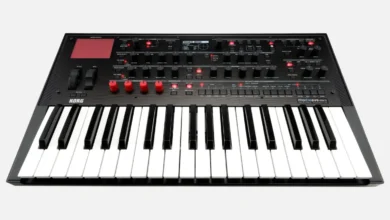
In an era increasingly dominated by virtual instruments and software-based production environments, the Korg phase8 remains a distinct anomaly. By focusing on acoustic resonance and physical sound manipulation, the instrument has carved out a niche for experimental musicians and sound designers. This week, Korg officially released a sophisticated companion application and a major firmware update for the phase8, effectively bridging the gap between its tactile, physical architecture and the precision of digital sequencing. The move follows months of anticipation after the project was first unveiled to the public at the Superbooth trade show in Berlin, where it generated substantial interest for its unique approach to electroacoustic synthesis.
The Evolution of the phase8 Platform
The phase8 represents a collaborative effort between Korg’s Berlin research laboratory and their primary engineering teams in Tokyo. Led by figures such as Iarla Scaife and Keisuke Nohara, the development of this instrument has been characterized by a commitment to "physical" sound design. Unlike traditional subtractive or wavetable synthesizers, the phase8 utilizes acoustic phenomena as the foundation for its tone generation.
Since its debut, the device has been positioned as a tool for those seeking to escape the "in-the-box" workflow. However, early users noted that while the hardware’s acoustic qualities were unparalleled, the limitations of its internal sequencing—originally capped at 16 steps—restricted its utility in complex compositions. The release of the new web-based companion app directly addresses these constraints, providing a bridge between the physical device and the modern studio environment.
Technical Breakdown: The Companion App
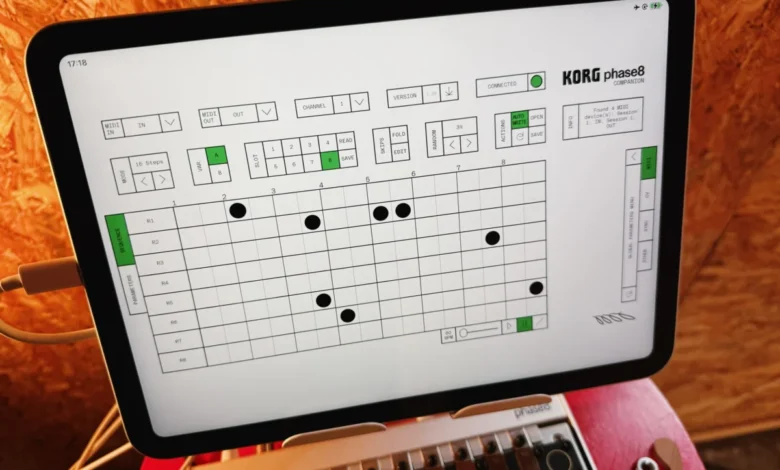
The newly launched companion application is a browser-based utility, compatible with any Chrome or Chromium-derived web browser. By utilizing the Web MIDI API, the application allows users to connect their phase8 via a standard USB-C cable, enabling direct communication between the browser and the hardware.
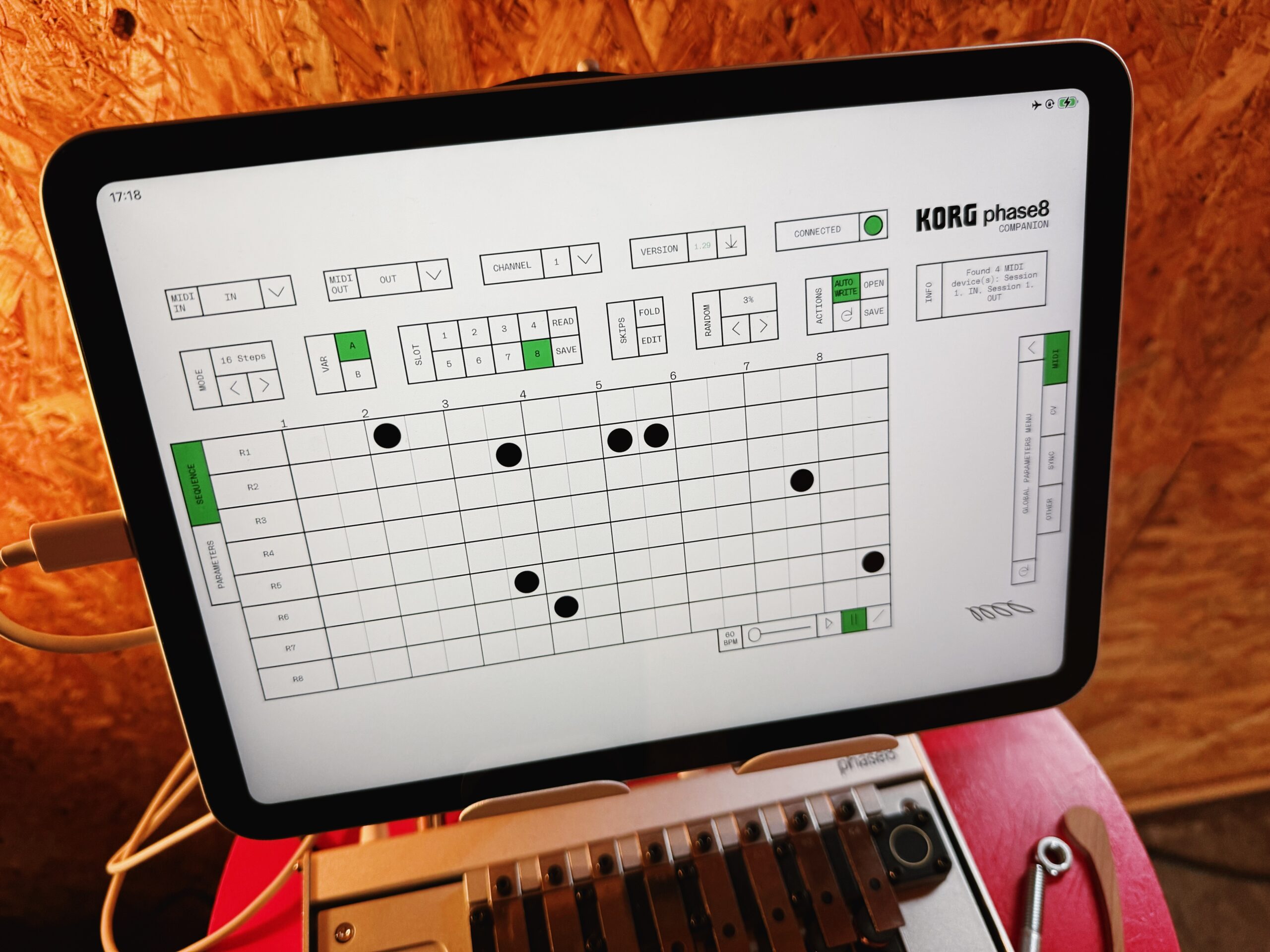
The most significant functional upgrade provided by the app is the extension of the internal step sequencer. Users can now program and store patterns up to 32 steps in length, effectively doubling the melodic and rhythmic complexity previously available on the device. Beyond the extended step count, the application serves as a comprehensive librarian and pattern editor. The visual interface provides a clear, high-resolution representation of the phase8’s internal state, allowing for the precise manipulation of parameters that might otherwise be cumbersome to adjust via the device’s physical controls.
This interface allows for:
- Visual Pattern Programming: A grid-based editor that simplifies the creation of intricate rhythmic sequences.
- Librarian Functionality: Users can now export, save, and archive their custom patches and sequences directly to their local computers, mitigating the risk of data loss.
- Firmware Management: The application includes an integrated system updater, ensuring that the device remains current with the latest optimizations and performance enhancements.
Firmware 1.3: Enhancing System Stability
Concurrent with the release of the companion app, Korg has rolled out firmware version 1.3. This update is categorized as critical for existing owners, as it addresses several functional idiosyncrasies that were observed following the initial product launch.
Among the most notable improvements is a recalibration of the instrument’s resonator behavior. Early reports from the field indicated that the resonator could exhibit erratic pitch tracking or unpredictable harmonic resonance in certain configurations. The 1.3 update stabilizes these acoustic feedback loops, providing a more predictable and musical response.
Additionally, the firmware update introduces:
- Improved MIDI Implementation: Enhanced synchronization accuracy when the phase8 is slaved to an external DAW or hardware master clock.
- App Integration Support: New protocols that allow the hardware to handshake seamlessly with the web-based editor.
- General Stability Patches: Refinements to the internal processing loop to minimize latency and improve overall system reliability during live performance scenarios.
Contextualizing the Superbooth Presence
The release of these tools serves as a reminder of the unique development path Korg has taken with the phase8. During the 2026 Superbooth event, the Korg booth became a focal point for attendees, not just for the phase8 itself, but for the experimental peripheral projects displayed alongside it.
The inclusion of custom bass resonators and 3D-printed "physical effects," designed by collaborators such as Hadrien Costrejean, highlighted a broader philosophy: that the future of synthesis may lie in the hybridization of acoustic physics and digital control. While there has been no official word from Korg regarding the commercialization of these specific prototypes, their presence at Superbooth suggests that the company is exploring a modular, ecosystem-based approach to acoustic synthesis.
Industry Implications and Future Outlook
The decision to utilize a web-based interface for the phase8 reflects a growing trend in the music technology sector. By bypassing the need for dedicated desktop drivers or standalone software installers, Korg has ensured that the phase8 remains accessible across multiple operating systems, including Windows, macOS, and Linux. This cross-platform compatibility is essential for maintaining a hardware device’s relevance over time, as it reduces the likelihood of the supporting software becoming "abandonware" due to OS-level updates.
From an analytical perspective, the phase8 project serves as a test case for how legacy hardware manufacturers can integrate modern connectivity into highly specialized, niche instruments. By outsourcing the "heavy lifting" of data management and sequencing to a web browser, Korg has kept the hardware itself focused on its core competency: generating high-fidelity acoustic sound.
For the end user, this update is more than a convenience; it is a validation of the investment made in a specialized instrument. By addressing the "wonky" behavior of the resonator and providing the tools to manage longer sequences, Korg has signaled that they intend for the phase8 to be a primary tool in a professional musician’s arsenal rather than a novelty item.
Moving Forward
As the music industry continues to balance the convenience of software with the organic qualities of hardware, the phase8 occupies a distinct middle ground. The ability to perform with an acoustic resonator and then return to a computer to arrange those sounds with a 32-step visual sequencer represents a workflow that appeals to both purists and modern producers.
Korg has advised all current phase8 owners to update their devices to firmware 1.3 before attempting to use the new companion application. The software is currently live and can be accessed directly through the official Korg web portal. As the community begins to explore the updated features, further demonstrations and user-generated content are expected to emerge, providing a clearer picture of how these tools will influence the sound of future experimental music.
For those interested in the ongoing development of the platform, the official documentation and the firmware updater are available through the Korg support website. With this update, Korg has solidified the phase8’s position as a serious instrument, one that successfully bridges the gap between the mechanical past and the digital future of sound production. The potential for future modules, such as the bass resonators or physical effects displayed at Superbooth, remains a subject of intense speculation, but for now, the current ecosystem provides a robust foundation for exploration and creativity.