New York Philharmonic and Simón Bolívar Symphony Orchestra to Headline Historic First FIFA World Cup Halftime Show Curated by Chris Martin

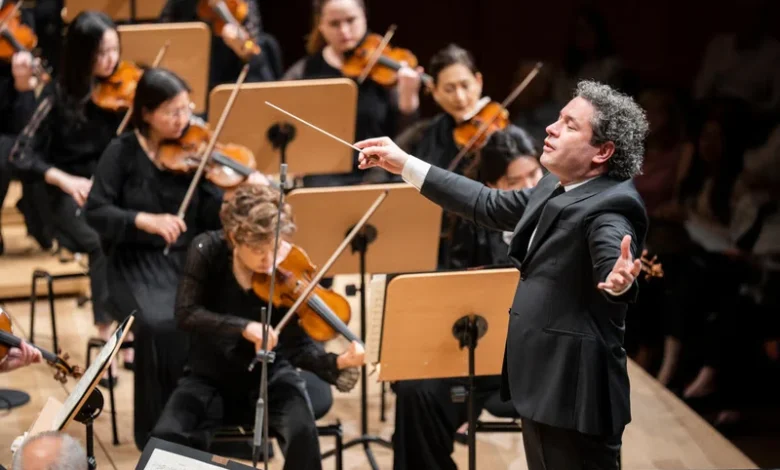
The world of international sports and global culture will converge in unprecedented fashion on July 19, 2026, as the FIFA World Cup Final introduces its first-ever halftime show at the New York New Jersey Stadium in East Rutherford, New Jersey. In a move that signals a transformative shift in how the world’s most-watched sporting event approaches entertainment, the musicians of the New York Philharmonic and Venezuela’s Simón Bolívar Symphony Orchestra will take the field to perform a collaborative set. This historic performance, curated by Coldplay frontman Chris Martin, marks the first time these two legendary institutions—both of which have been foundational to the artistic trajectory of conductor Gustavo Dudamel—will share a single stage.
The inclusion of high-caliber orchestral ensembles alongside a roster of global pop icons represents a departure from traditional sports entertainment. The halftime show is set to feature a diverse array of musical talent, including Justin Bieber, Shakira, Madonna, BTS, and Coldplay. By blending the precision of classical mastery with the mass appeal of contemporary pop, FIFA aims to create a spectacle that resonates across generational and geographical boundaries.
A Convergence of Orchestral Excellence and Global Pop
The collaboration between the New York Philharmonic and the Simón Bolívar Symphony Orchestra is more than a musical performance; it is a symbolic union of two different yet interconnected musical traditions. The New York Philharmonic, one of the "Big Five" American orchestras and the oldest symphony orchestra in the United States, represents the pinnacle of Western classical tradition. Its members, represented by the American Federation of Musicians (AFM) Local 802, are widely regarded as some of the most skilled instrumentalists in the world.
Conversely, the Simón Bolívar Symphony Orchestra of Venezuela serves as the flagship ensemble of El Sistema, the world-renowned social action program that uses music education as a vehicle for social development. The ensemble is known for its youthful energy and technical brilliance. The link between these two groups is Gustavo Dudamel, who rose to international fame as the product and leader of El Sistema before being named the Music and Artistic Director of the New York Philharmonic. While the performance on July 19 will be curated by Chris Martin, the presence of these two orchestras serves as a tribute to the "Dudamel era" of orchestral music, which emphasizes accessibility, diversity, and global connection.
Official Recognition and the Role of Professional Musicians
The announcement has been met with significant acclaim from labor representatives and the musical community. Dan Point, President of AFM Local 802, emphasized the importance of this platform for professional musicians who often work behind the scenes or in traditional concert hall settings.
"Our members spend their whole lives mastering this craft, and on Sunday the entire world is finally going to hear what that kind of mastery actually sounds like," Point stated. "These are working musicians who have given everything to their art, so to watch them earn a place on a stage this enormous, and to see them share it with colleagues who traveled all the way from Venezuela to be there, is about as proud as this union ever gets. When a stadium filled with tens of thousands of people and a television audience in the billions all feel the same thing at the same moment because of what these musicians do together, that is the entire reason live music still matters."
The logistical feat of bringing two full orchestras onto a football pitch for a timed halftime performance is substantial. Unlike the Super Bowl, where halftime shows are often heavily reliant on pre-recorded tracks and high-energy choreography, the 2026 World Cup Final show aims to preserve the integrity of live instrumentation. The technical requirements for miking a full orchestra in an open-air stadium, while ensuring the sound reaches billions of viewers with clarity, will require a record-breaking audio engineering effort.
The 2026 FIFA World Cup Context and Scale
The 2026 FIFA World Cup is already slated to be a tournament of "firsts." Co-hosted by the United States, Canada, and Mexico, it will be the first edition to feature 48 teams, an increase from the 32-team format used since 1998. With 104 matches scheduled across 16 host cities, the tournament is expected to reach an unprecedented global audience.
The selection of the New York New Jersey Stadium (commonly known as MetLife Stadium) for the final match underscores the region’s importance as a global hub. The stadium, which has a capacity of approximately 82,500, has previously hosted major events including Super Bowl XLVIII and the Copa América Centenario Final. However, the World Cup Final is widely considered the single most significant sporting event on the planet. According to FIFA data, the 2022 World Cup Final in Qatar reached nearly 1.5 billion viewers; with the expanded format and the North American market’s influence, the 2026 final is projected to exceed 2 billion viewers.
Curatorial Vision: The Chris Martin Influence
Chris Martin’s role as curator is a strategic choice by FIFA and its production partners. As the lead singer of Coldplay, Martin has a long history of blending anthemic pop-rock with philanthropic and globalist themes. Coldplay’s "Music of the Spheres" world tour, which emphasized sustainability and inclusivity, aligns with FIFA’s goals for the 2026 tournament.
The lineup selected by Martin—Bieber, Shakira, Madonna, BTS, and Coldplay—covers a vast demographic.
- Shakira is a veteran of World Cup performances, having provided the official song "Waka Waka (This Time for Africa)" in 2010.
- BTS represents the massive influence of K-pop and the Asian market.
- Madonna brings four decades of pop iconography and experience in large-scale stadium productions.
- Justin Bieber offers immense appeal to younger Western audiences.
By integrating the New York Philharmonic and the Simón Bolívar Symphony Orchestra into this lineup, Martin is attempting to elevate the "halftime show" from a mere pop concert to a sophisticated cultural ceremony. This move mirrors a growing trend in the music industry where classical arrangements are used to add emotional weight and cinematic scale to pop performances.
Timeline of the Road to the 2026 Final
The journey to the July 19, 2026, halftime show began years ago with the successful "United Bid" by the three North American nations.
- June 2018: The FIFA Congress in Moscow selects the United States, Canada, and Mexico as the hosts for the 2026 World Cup.
- June 2022: FIFA announces the 16 host cities, confirming East Rutherford (New York/New Jersey) as a primary venue.
- February 2024: FIFA officially designates the New York New Jersey Stadium as the host of the World Cup Final.
- Early 2025: Production meetings begin between FIFA’s entertainment division and Chris Martin’s creative team to conceptualize the first-ever halftime show.
- July 2026: The tournament kicks off, culminating in the July 19 final where the New York Philharmonic and Simón Bolívar Symphony Orchestra will make history.
Implications for the Future of Sports Entertainment
The introduction of a halftime show at the World Cup Final is a clear nod to the American "Super Bowl" model of sports marketing. Historically, soccer matches have utilized the 15-minute halftime interval for analysis, pitch maintenance, or modest local entertainment. By filling this gap with a high-budget, star-studded production, FIFA is looking to maximize commercial revenue and viewer retention.
However, the choice to lead with orchestral music suggests an effort to maintain a level of "prestige" that differentiates the World Cup from other sporting events. It acknowledges the cultural heritage of the host cities and the international nature of the competition. The presence of the Simón Bolívar Symphony Orchestra, in particular, highlights the socio-political power of music, celebrating a program that has provided opportunities to millions of disadvantaged children in South America.
Economic and Cultural Impact
The economic impact of the 2026 World Cup on the New York-New Jersey metropolitan area is expected to be in the billions of dollars. The halftime show adds a layer of "event tourism" to the match itself, potentially drawing viewers who may not be traditional soccer fans but are attracted to the musical spectacle.
Culturally, the event serves as a massive endorsement of live orchestral music. In an era dominated by digital streaming and AI-generated content, the sight of hundreds of musicians performing live on a global stage is a powerful statement. For the New York Philharmonic, it is an opportunity to reach an audience far beyond the walls of Lincoln Center. For the Simón Bolívar Symphony Orchestra, it is a moment of international validation during a period of ongoing challenges in their home country.
As the world prepares for July 19, 2026, the focus remains on the rare synergy between the world’s greatest athletes and its most accomplished musicians. When the whistle blows for halftime in East Rutherford, the ensuing performance will not just be a break in the action, but a historic milestone in the evolution of global entertainment.