Morphoice Unleashes EightyTen: A Free Beta Emulation of Iconic Roland Synthesizers, Offering a Fusion of JX-8P and SuperJX-10/MKS-70 Power

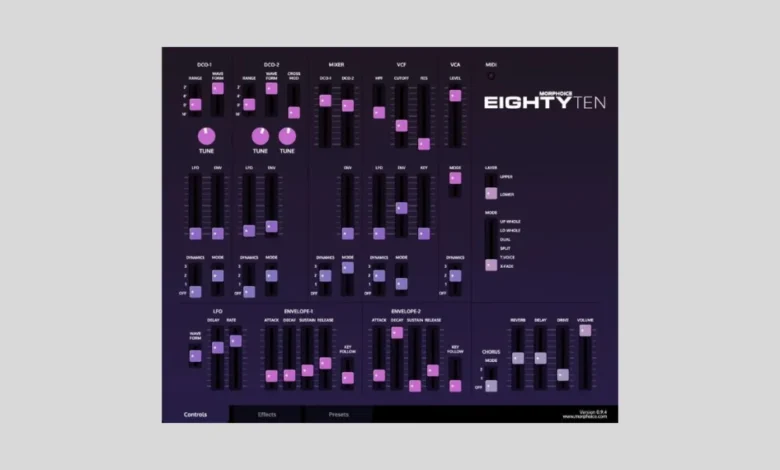
Developer Morphoice has officially released EightyTen, a compelling new virtual instrument that meticulously emulates the sonic characteristics of two legendary Roland synthesizers: the JX-8P and its more advanced sibling, the SuperJX-10 (and its rackmount counterpart, the MKS-70). Currently available as a free beta, EightyTen represents Morphoice’s latest foray into capturing the essence of vintage analog synthesizers, following their previous critically acclaimed efforts such as Unstable (Yamaha CS-80), EightySix (Roland Juno-6), and EightyEight (Roland Jupiter-8). This release continues Morphoice’s established practice of offering early access to their emulations, with the understanding that the beta may transition to a paid model in the future, while those contributing $10 or more receive a lifetime license.
The Genesis of EightyTen: A Synthesis of Roland’s Past
Morphoice has carved a niche for itself by diligently recreating sought-after vintage synthesizers, making their distinctive sounds accessible to a new generation of musicians and producers. The EightyTen plugin is no exception, aiming to encapsulate the rich sonic palette of Roland’s late 1980s JX series. The JX-8P, introduced in 1985, was a programmable polyphonic analog synthesizer renowned for its warm pads, expressive leads, and distinct character. It was later expanded upon with the SuperJX-10, launched in 1986, which essentially combined two JX-8P sound engines into a single unit. This dual-engine architecture significantly increased polyphony and offered the ability to layer sounds, creating expansive and complex timbres. The MKS-70 is the 19-inch rackmount version of the SuperJX-10, providing the same powerful sonic capabilities in a more studio-friendly format.
The appeal of these Roland instruments lies in their unique sound design capabilities. The JX-8P, while perhaps simpler in its direct interface compared to some contemporaries, offered a powerful synthesis engine that, when paired with the optional PG-800 programmer, allowed for deep sound sculpting. The SuperJX-10 and MKS-70 took this further, offering twelve-note polyphony and the ability to split or layer two six-voice patches. This layering capability was particularly groundbreaking, enabling users to craft incredibly rich and thick sounds by combining distinct patches, a feature that remains highly desirable for modern sound designers seeking vintage warmth and depth. EightyTen aims to bring this dual-engine power and sonic flexibility to a digital environment, allowing producers to explore the full potential of these iconic machines without the need for expensive hardware.
EightyTen’s Core Features: Emulating and Enhancing Vintage Sound
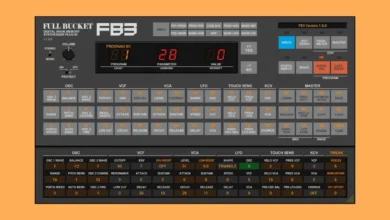
At its heart, EightyTen is built upon the sonic foundations of the JX-8P and the SuperJX-10/MKS-70. This means users can expect access to the characteristic Roland analog sound, including the distinctive JX filter section and the acclaimed Roland chorus. The plugin meticulously recreates key synthesis parameters, offering a deep dive into the architecture that defined these instruments.
One of the standout features inherited from the JX-8P and SuperJX-10 is Cross Modulation. This powerful synthesis technique allows one DCO (Digitally Controlled Oscillator) to modulate the pitch of the other. This opens up a world of complex, evolving timbres, including FM-like (Frequency Modulation) sounds that were popularized by synthesizers like the Yamaha DX7. This feature is particularly notable for its ability to create sounds that evoke classic 80s pop and funk, such as the iconic bassline from Chaka Khan’s "I Feel For You." EightyTen’s implementation of Cross Modulation allows producers to achieve these sought-after tones within their digital workflow, eliminating the need for separate hardware.
The filter section in EightyTen is also a critical component of its sonic fidelity. It features a robust 24 dB/octave low-pass filter, responsible for shaping the fundamental tone and adding warmth and body to sounds. Complementing this is a non-resonant high-pass filter, which is crucial for cleaning up low-end frequencies and adding clarity and brightness. Together, these filters provide a versatile toolkit for sculpting the spectral content of sounds.
Furthermore, EightyTen replicates the detailed envelope shaping capabilities of its hardware predecessors. Each voice is equipped with two ADSR (Attack, Decay, Sustain, Release) envelope generators. These envelopes are essential for controlling the dynamic evolution of a sound over time, from the initial transient to the decay and sustain phases, and finally to the release. The flexibility of dual ADSRs allows for intricate modulation of amplitude, filter cutoff, and other parameters, enabling the creation of everything from percussive stabs to long, evolving pads.
No emulation of Roland’s JX series would be complete without its signature stereo chorus effect. EightyTen faithfully recreates this beloved effect, known for its ability to add width, depth, and a lush, shimmering character to sounds. The plugin offers both fast and slow settings for the chorus, providing different flavors of modulation and sonic enhancement. This chorus is a hallmark of the Roland sound and is instrumental in achieving those classic JX-era textures.
The plugin also aims to provide the expressive control found in the original hardware. With support for velocity and aftertouch response, EightyTen allows musicians to impart nuance and articulation into their performances, mirroring the playing experience of a physical JX synthesizer. The interface is designed to be intuitive, drawing inspiration from the user-friendly PG-800 programmer, which was an optional but highly recommended accessory for the JX-8P and SuperJX-10, offering tactile control over the synths’ extensive parameters.
Beyond Emulation: Modern Additions and Creative Tools
Morphoice has a track record of augmenting their emulations with modern features that enhance their usability and creative potential. EightyTen continues this tradition by incorporating several contemporary effects that were not present in the original hardware.
One notable addition is the DarkStar Reverb, inspired by the acclaimed Strymon BigSky reverb pedal. This high-quality reverb algorithm offers a range of spacious and atmospheric textures, from subtle room ambiences to vast, ethereal soundscapes. Its inclusion significantly broadens the sonic possibilities of EightyTen, allowing users to place their synthesized sounds in a variety of acoustic environments.
Another modern enhancement is a lo-fi tape delay. This effect emulates the character and imperfections of vintage tape echo units, adding warmth, saturation, and a touch of analog grit to delays. This can be particularly useful for creating vintage-sounding rhythmic patterns or adding a sense of organic imperfection to modern productions.
Finally, EightyTen includes the HeatBurn drive and distortion effect. This effect adds warmth, saturation, and aggressive distortion capabilities, allowing users to push the synths’ analog character to new extremes. Whether seeking subtle harmonic enhancement or outright sonic mayhem, HeatBurn provides a flexible tool for adding edge and power to EightyTen’s sounds.
These modern additions demonstrate Morphoice’s commitment to creating virtual instruments that are not only faithful emulations but also practical and inspiring tools for contemporary music production. They bridge the gap between the classic sound of the JX series and the demands of modern sonic exploration.
Accessibility and Availability: A Free Beta with a Path to Permanence
EightyTen is currently available as a free beta, a strategy that Morphoice has employed with its previous releases. This approach allows users to experience the plugin firsthand, provide valuable feedback to the developers, and integrate it into their workflows before a potential commercial launch. The beta is accessible across major operating systems, with formats including AU, VST, and VST3 available for macOS, Windows, and Linux.
Morphoice operates on a model that encourages community support. While EightyTen can be downloaded and used for free during its beta phase, users are invited to contribute financially. Donations of $10 or more entitle users to a lifetime license for the plugin. This model fosters a collaborative relationship between the developer and its user base, ensuring the continued development and refinement of their software.
The timeline of Morphoice’s releases indicates a consistent dedication to expanding their library of vintage synth emulations. The initial release of Unstable (CS-80) was followed by EightySix (Juno-6) and EightyEight (Jupiter-8), showcasing a progression through some of Roland’s most iconic instruments. EightyTen’s arrival marks the continuation of this trend, focusing on the powerful JX series. The beta period for EightyTen is expected to be a crucial phase for gathering user input, identifying any bugs, and fine-tuning the plugin’s performance and features.
Broader Implications for Music Production
The release of EightyTen, particularly in its free beta form, has several significant implications for the music production community. Firstly, it democratizes access to the sounds of the JX-8P and SuperJX-10/MKS-70. These vintage synthesizers, when available on the used market, can command high prices and require specialized knowledge for maintenance and operation. EightyTen makes their characteristic warmth, flexibility, and unique sonic textures accessible to producers of all levels, regardless of budget or technical expertise with hardware.
Secondly, the inclusion of modern effects like DarkStar Reverb and HeatBurn distortion expands the creative potential of these classic synths. Producers can now achieve vintage-inspired sounds with contemporary polish and edge, seamlessly integrating them into modern electronic music, pop, hip-hop, and film scores. This fusion of old and new sonic palettes is a hallmark of contemporary music production trends.
The beta release strategy also fosters a sense of community and co-creation. By providing early access and encouraging donations for lifetime licenses, Morphoice builds loyalty and gathers invaluable real-world testing. This collaborative approach can lead to more refined and user-centric final products.
From a market perspective, Morphoice’s consistent output of high-quality emulations puts pressure on other developers to maintain similar standards of accuracy and sonic fidelity. It also signals a continued demand for vintage synthesizer sounds within the digital audio workstation (DAW) ecosystem. As technology advances, the ability to accurately capture and reproduce the nuances of analog circuitry becomes increasingly sophisticated, and EightyTen appears to be a strong contender in this evolving landscape.
The availability of EightyTen on multiple platforms (macOS, Windows, Linux) and in common plugin formats (AU, VST, VST3) ensures broad compatibility with most modern DAWs, further enhancing its accessibility and utility for a global user base.
Conclusion: A Valuable Addition to the Virtual Synthesizer Arsenal
Morphoice’s EightyTen represents a significant contribution to the realm of virtual instrument emulations. By meticulously recreating the JX-8P and SuperJX-10/MKS-70, the plugin offers a powerful and versatile sonic palette for producers. The combination of faithful analog sound emulation, enhanced creative features, and an accessible free beta model makes EightyTen an enticing prospect for anyone seeking to inject vintage Roland character into their music. As the beta phase progresses, it will be fascinating to see how EightyTen evolves and solidifies its place among the essential virtual instruments for modern music creators. The opportunity to acquire a lifetime license through a modest donation further underscores Morphoice’s commitment to making high-quality sonic tools available to the widest possible audience.