The Evolution of Jazz Language as a Catalyst for Global Audience Expansion in the Digital Age

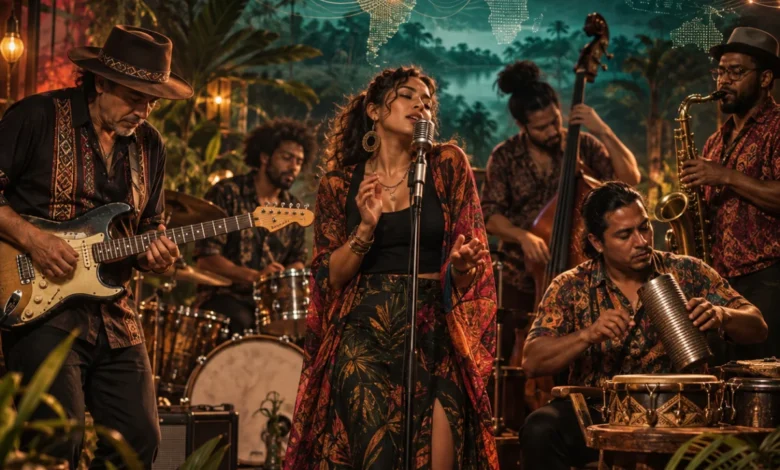
The contemporary music landscape on YouTube is undergoing a fundamental shift, moving away from traditional genre-based silos toward a more fluid, interconnected ecosystem. Artists as diverse as the Peruvian cumbia legends Los Mirlos, Chilean-Mexican songstress Mon Laferte, Canadian crooner Matt Dusk, and London’s Ezra Collective are effectively leveraging the "jazz language"—improvisation, complex harmonic arrangements, and a specific performance ethic—to bridge gaps between disparate fanbases. For the week ending September 18, data revealed that these artists are not merely capturing niche interest; they are generating massive, sustained engagement by presenting sophisticated musicianship within the contexts of Latin alternative, internet-native pop, and electronic gaming culture.
This movement suggests that the modern listener’s threshold for musical complexity is higher than traditional industry metrics previously suggested. By embedding jazz-informed arrangements into familiar cultural touchstones, these performers are bypassing the "gatekeeping" often associated with the jazz label, instead positioning the music as a vibrant, living language that adapts to any setting.
The Rise of Cultural Crossover and Performance Ethics
The most significant development of the week was the rapid ascent of Los Mirlos, the pioneering Peruvian ensemble that has spent over half a century defining the "cumbia amazónica" sound. Their appearance on NPR’s Tiny Desk, uploaded on September 17, served as a catalyst for a global re-evaluation of Latin psychedelic music. Accumulating over 735,000 views and nearly 60,000 likes within the first 24 hours, the performance demonstrated an exceptional 8.1% like-to-view ratio.
The success of Los Mirlos lies in their refusal to dilute their identity for a Western audience. The ensemble’s signature reverb-heavy, surf-rock-inflected guitar lines, anchored by traditional guiro and percussion, provided an authentic, raw energy that resonated with viewers far beyond their regional fanbase. Industry analysts suggest that this surge in interest is part of a larger North American awakening to South American rhythmic traditions, which have historically been under-represented in the global mainstream. By presenting these sounds in a minimalist, intimate setting, Los Mirlos stripped away the need for cultural preamble, letting the rhythmic force of their performance speak for itself.
Theatricality and Harmonic Sophistication in Modern Performance
Parallel to the raw, rhythmic energy of Los Mirlos, Mon Laferte offered a masterclass in the integration of jazz and cabaret. Her Tiny Desk set, released on September 15, achieved over two million views in just three days, signaling her status as a powerhouse in the Latin alternative scene. Laferte’s performance was defined by a calculated theatricality; she utilized a professional, corporate-themed aesthetic to frame complex jazz arrangements, effectively turning a standard office space into a stage for a high-concept commentary on the music industry.
Laferte’s vocal performance—at once fragile and commanding—highlighted the versatility of jazz phrasing when applied to emotive, lyric-driven compositions. Rather than relying on traditional extended solos, the "jazz" element in her set was found in the harmonic tension and the reactive nature of her backing ensemble. This approach resonates with a modern audience that values emotional vulnerability paired with technical precision. It serves as a reminder that the influence of jazz in the 21st century is increasingly found in the architecture of a song rather than in explicit, genre-specific markers.
Digital Strategy and the Reinterpretation of Meme Culture
While established stars are finding new ways to utilize jazz, performers like Matt Dusk are bridging the gap between traditional crooning and the "internet generation." Dusk’s 1960s-style jazz cover of The Living Tombstone’s "My Ordinary Life"—a song deeply embedded in gaming and animation subcultures—garnered over 425,000 views in four days. This move was not a mere novelty; it was a strategic use of familiar source material to introduce traditional jazz arrangements to a demographic that might otherwise avoid the Great American Songbook.
Dusk’s ability to pivot between electronic, meme-centric pop and mid-century jazz club sensibilities highlights a new digital strategy: the cover song as a tool for genre translation. By selecting music that carries high recognition among younger audiences, artists can bypass the skepticism associated with "traditional" genres. The success of this strategy demonstrates that the barrier to entry for jazz is not the music itself, but rather the cultural context in which it is presented.
Jazz as a Communal and Rhythmic Force
The Ezra Collective’s interpretation of Bad Bunny’s "NUEVAYoL" for BBC Radio 1 further reinforces the idea of jazz as a social, rhythmic language. By tackling one of the most recognizable figures in modern reggaeton, the London-based ensemble avoided the trap of "pop-washing" and instead leaned into the rhythmic shared DNA between jazz and Caribbean music.
This collaboration reflects a broader trend among contemporary jazz artists who view their work as inseparable from the cultural milieu of their respective cities. Whether it is London’s jazz-fusion scene or the improvisational park performances seen in Toronto with emerging artists like Kubla, the trend is clear: jazz is moving out of the concert hall and into the public square. Kubla’s success in transforming public spaces into impromptu stages for jazz-soul arrangements of Daniel Caesar and the Bee Gees illustrates that audiences are increasingly seeking "live" experiences that feel spontaneous, shareable, and authentic.
The New Curators: Redefining Discovery
The mechanism of discovery has also shifted. Platforms like Soulection and the Jazz Is Dead project have effectively replaced the traditional radio DJ or record store clerk. These entities act as "super-curators," building trust with audiences by consistently blending diverse sounds—Afrobeats, amapiano, spiritual jazz, and soul—into a cohesive, recognizable sensibility.
The 15th Anniversary Set from Soulection, which drew over 14,000 views in two days, demonstrates that the audience is now loyal to the "curator" rather than a specific genre. Similarly, the long-form compilations produced by Jazz Is Dead serve as deep-listening tools, providing a bridge for casual listeners to explore the legacies of legends like Tony Allen and Azymuth. These long-form videos serve multiple purposes: they function as background sound for study or work, but also act as gateways to deeper musical research.
Long-term Growth and Market Implications
The performance data for Tori Kelly’s Tiny Desk appearance provides further evidence that this engagement is not merely "fan traffic" or a momentary spike. After an initial strong opening, the video’s viewership increased by over 328% in seven days, reaching over 2.2 million views by September 18. This sustained growth suggests that high-quality, live-band performances are generating "sticky" engagement, where viewers return to the content for the sake of the musicianship itself.
The implications for the broader music industry are significant. The data suggests that the potential audience for "jazz language" is vastly larger than the audience currently searching for "jazz" as a keyword. When artists meet listeners within their preferred genres—be it reggaeton, cumbia, or electronic gaming music—and infuse those spaces with the improvisational freedom and harmonic depth of jazz, they create a pathway for long-term musical discovery.
As the industry moves forward, the success of these performances suggests a transition away from rigid categorization. Labels, producers, and artists who understand that the modern listener prioritizes the emotional and rhythmic "feel" of a performance over historical genre definitions will likely lead the next wave of music consumption. Jazz, in its most contemporary form, is not a static relic of the past, but a flexible, expansive, and highly effective tool for global communication, proving that the most traditional of musical languages remains one of the most effective ways to reach the digital future.