Gabriel Zucker and The Delegation Deliver a Masterclass in Avant-Garde Modern Jazz with a Boundary-Pushing Debut Album

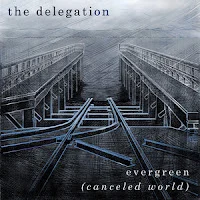
The contemporary jazz landscape is constantly evolving, driven by artists who refuse to remain confined within traditional genre boundaries. Among the most ambitious of these modern practitioners is composer, pianist, and vocalist Gabriel Zucker, whose debut album with his large-scale ensemble, The Delegation, represents a significant milestone in progressive American music. Released to critical intrigue, the project serves as a sprawling exploration of sonic juxtaposition, seamlessly integrating elements of modern big band orchestration, chamber music, contemporary pop sensibilities, avant-garde vocal techniques, and electronic soundscapes.
For decades, the intersection of jazz and large-ensemble composition has been defined by a strict adherence to swing traditions, modal explorations, or highly structured third-stream academic arrangements. However, The Delegation approaches composition through a lens of intentional fragmentation. The music is characterized by cascading sonic textures born from seemingly disparate musical ideas, unified solely by the rigorous thoughtfulness of the ensemble’s execution. This release not only cements Zucker’s reputation as a formidable voice in contemporary composition but also challenges listeners to rethink the very nature of musical cohesion, narrative structure, and stylistic purity in the twenty-first century.
Main Facts of the Release and Compositional Architecture
At its core, The Delegation is an ensemble designed to test the limits of what a large musical group can achieve. Led by Gabriel Zucker from the piano and microphone, the group functions as a hybrid organism, bridging the improvisational freedom of a jazz combo with the meticulous precision of a chamber orchestra. The core of the album’s brilliance lies in its resistance to predictable song forms. Instead of standard head-solos-head arrangements, the music unfolds through a series of modern musical outbursts, punctuated by fleeting melodic fragments that echo and refract earlier passages throughout the record.
The instrumentation utilizes traditional big band forces—brass, reeds, and a dynamic rhythm section—alongside contemporary acoustic string textures and subtle electronic processing. This combination allows the ensemble to shift instantly from dense, harmonically complex wall-of-sound climaxes to sparse, fragile moments of absolute tranquility. Zucker’s composition style refuses to privilege one genre over another; rather, pop hooks dissolve into avant-garde vocal excursions, while intricate chamber jazz harmonies are disrupted by sudden surges of electronic noise and distortion.
Chronology and Background Context
The genesis of The Delegation traces back to Zucker’s formative years in the vibrant New York City creative music scene, where boundaries between jazz, contemporary classical music, and indie rock are routinely porous. As a composer, Zucker spent several years developing the conceptual framework for the ensemble, drawing inspiration not only from jazz icons like Charles Mingus and Andrew Hill, but also from minimalist classical composers, contemporary electronic producers, and modern conceptual artists.
The preparation for this debut recording involved extensive workshops, live performances in underground jazz venues, and meticulous score refinement. In an era where large jazz ensembles often struggle to secure recording contracts due to high production costs and logistical hurdles, Zucker assembled a coalition of top-tier young improvisers and classical musicians committed to realizing his ambitious vision.
The recording sessions captured the ensemble at the peak of its collaborative synergy. Rather than relying on traditional tracking methods where individual sections are recorded separately, Zucker prioritized live-room interplay, capturing the spontaneous energy and friction between musicians. This methodological choice is palpable in the final mix, where the tension between chaos and order feels genuinely lived-in rather than artificially constructed.
Supporting Data and Musical Mechanics
Analyzing the structural mechanics of the album reveals a sophisticated approach to harmonic layering and timbral blending. Musicological data from the project indicates a heavy reliance on polychords, microtonal inflections, and extended harmony that continuously blurs the tonal center. The use of electronic effects—ranging from subtle tape delays to abrasive granular synthesis—interacts directly with the acoustic brass and woodwinds, creating a psychoacoustic space where source attribution becomes difficult to trace.
Rhythmically, the ensemble moves away from static swing feels toward complex metric modulations and polyrhythmic frameworks. Yet, beneath this labyrinth of time signatures and harmonic shifts lies an underlying accessibility. This duality is central to the album’s impact: it demands intense intellectual engagement from the listener while simultaneously offering visceral, emotional payoffs through sudden melodic resolutions and powerful crescendos.
Thematic Journey and the Climax of Meaning
Throughout the listening experience, the pervasive sense of unpredictability often forces the audience to confront a fundamental question: Is traditional musical cohesion even necessary, or is it more rewarding to surrender to the immediate experience of the present moment? For much of the album, the journey is defined by its transitory states—moments where harmonic colors circle upon themselves, erasing the boundaries between distinct musical phrases.
This thematic trajectory reaches its definitive resolution in the album’s ambitious closing suite, “Yellow Paint (Summaries II) / End Of Time (Canceled II).” Within this final masterwork, the disparate threads of the preceding tracks converge. The amalgamated message of the entire project becomes transparent, illustrating that the true beauty of the work lies within its embrace of chaos, and that its ultimate expression is revealed not through uniformity, but through a higher-order unity. The track acts as an architectural keystone, retroactively validating the structural risks taken throughout the record.
Broader Impact and Implications for Modern Composition
The release of Gabriel Zucker’s The Delegation arrives at a crucial juncture for contemporary improvised music. As streaming platforms and algorithmic curation push artists toward shorter, easily digestible tracks with immediate hook-driven structures, ambitious multi-movement works and large-ensemble avant-garde projects stand as a vital counterweight.
Industry analysts and critics have noted that projects of this scale demonstrate the viability of cross-genre experimentation in maintaining the cultural relevance of jazz. By appealing simultaneously to classical chamber music enthusiasts, avant-garde electronic fans, and traditional jazz purists, Zucker has crafted a blueprint for modern compositional inclusivity.
Furthermore, the critical reception of the album highlights a growing appetite for art that refuses to sanitize its edges. In a sociopolitical climate marked by volatility and rapid transformation, music that mirrors this complexity through organized chaos resonates deeply with contemporary audiences. The Delegation does not offer simple comforts or neatly resolved narratives; instead, it provides a mirror to the multifaceted nature of modern life.
As Gabriel Zucker and The Delegation look toward future performances and subsequent recording projects, this debut stands as a definitive statement of artistic intent. It proves that large-scale jazz orchestration remains a fertile ground for radical innovation, capable of absorbing the shocks of contemporary sound and transforming them into enduring works of art.