An In-Depth Conversation With Kiran Leonard Backstage at the End of the Road Festival Anniversary

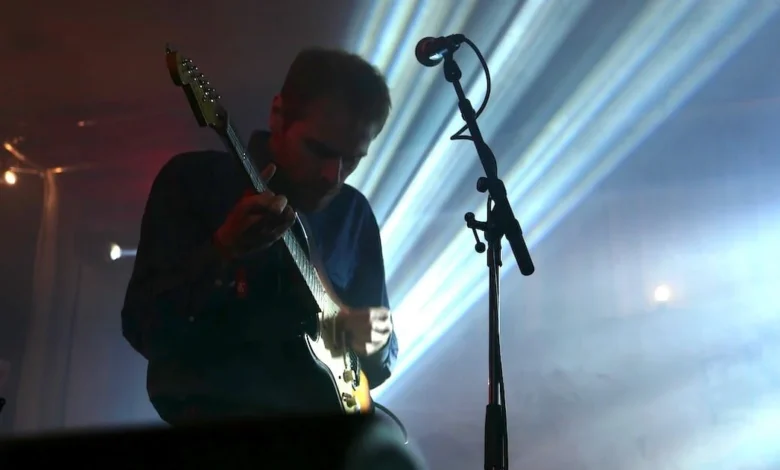
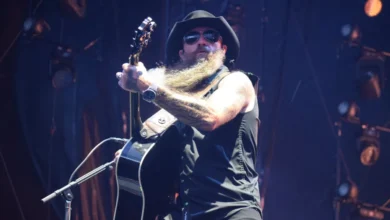
Backstage at the picturesque Larmer Tree Gardens in Dorset, amidst the quiet hum of preparation hours before his Saturday evening performance on the Folly stage, musician Kiran Leonard cuts a figure of serene composure. While interviewers typically busy themselves double-checking equipment and safeguarding against technical failures—such as backing up digital voice recorders—Leonard initiates the dialogue himself. Turning the conversation toward Ben Lerner’s recent novel Transcription, he reflects on a central theme of the book: how the mechanical recording of conversations fundamentally alters human memory. This philosophical opening sets the tone for an expansive interview exploring his fifteen-year musical trajectory, the evolution of his songwriting, and his enduring relationship with one of the United Kingdom’s most idiosyncratic independent music gatherings.
A Retrospective on the End of the Road Festival
Marking its milestone twentieth anniversary, the End of the Road Festival holds a deeply personal significance for Leonard. Having first performed at the event in 2014 as a teenager just shy of his nineteenth birthday—playing a clandestine secret set on the very stage he was preparing to grace once more—his connection to the festival spans a transformative era of his professional life.
Over the past decade and a half, Leonard’s career has seen shifting industry contexts, moving through periods supported by heavy infrastructure, major booking agents, and formal label backing, as well as phases of entirely independent operation. Throughout these fluctuations, festival organizers, led by co-founder Simon Topley, have maintained an open door. Leonard notes that this consistency is a rarity in the modern festival circuit, where commercial pressures often dictate booking policies based strictly on current chart metrics rather than long-term artistic fidelity.
Curatorial Vision and Festival Scale
Examining the mechanics of contemporary music festivals both as a spectator and a performer, Leonard emphasizes the importance of scale. Citing the festival’s capped capacity of approximately 15,000 attendees, he argues that this deliberate limitation preserves a community atmosphere missing from mega-festivals.
The true strength of End of the Road, according to Leonard, lies in its ambitious yet coherent musical programming. He highlights the intellectual stimulation derived from witnessing vastly different sonic methodologies occupying the same temporal and physical space. Pointing to the juxtaposition of veteran experimentalist The Space Lady and contemporary R&B innovator KeiyaA during the weekend’s lineup, Leonard observes how placing disparate artists within a consistently curated environment allows audiences to draw natural connections between diverse approaches to songcraft and sonic exploration.
Balancing Accessibility and Artistic Integrity
Addressing his relationship with festival audiences, Leonard expresses appreciation for crowds that offer attentive listening balanced with immediate, vocal appreciation. While his music frequently challenges conventional structural boundaries, he acknowledges a pragmatic awareness of the live environment. Rather than forcing obtuse material upon an afternoon festival crowd, Leonard leans toward his most propulsive, high-energy compositions—a self-described populist impulse aimed at forging an immediate, exciting connection with festival-goers.
Evolution of Songwriting and Compositional Techniques
The conversation inevitably shifts toward the vast chasm separating Leonard’s early work—typified by his critically acclaimed 2013 debut material like Bowler Hat Soup—and his contemporary output. Rather than striving for deliberate obscurity or attempting to be willfully uncategorisable, Leonard describes his artistic trajectory as an exploration of broad categories centered firmly around the concept of the song.
His work, he explains, is increasingly driven by structural techniques borrowed from classical composition, integrated into standard song formats to evoke profound physical responses through volume, density, and spaciousness. This methodology often relies on fully notated and scored arrangements for his backing ensembles. Because Leonard and his collaborators maintain external primary professions—including his own day job teaching secondary school music—rehearsal time is strictly limited. Scoring the music is framed not as an authoritarian measure, but as a respectful acknowledgment of his colleagues’ limited time, providing a rigorous foundation that still leaves room for select moments of live improvisation.
Reflecting on Adolescence and Maximalist Production
Looking back at his teenage recordings, Leonard maintains a healthy distance from the material while expressing pride in its unbridled earnestness. Describing records like Bowler Hat Soup and its successor Grapefruit as fiercely adolescent, maximalist, and additive, he characterizes them as expressions of a time when every musical impulse felt urgent and necessary.
Now in his early thirties, Leonard admits that the psychological state required to generate that specific brand of hysterical, high-pitched intensity is permanently inaccessible to him. Consequently, his creative imperative remains firmly fixed on moving forward with new material rather than attempting to resurrect past artistic personas.
The Mechanics of Instrumentation and Pedagogy
As a multi-instrumentalist who splits his compositional duties between the guitar and the piano, Leonard offers distinct insights into the pedagogical aspects of music-making. Drawing from his experience teaching teenagers the fundamentals of songwriting, he contrasts two primary approaches: traditional harmonic music theory versus the tactile, shape-based methodology common in modern guitar music.
The guitar, he notes, offers a distinct physical stimulation that encourages harmonic dissonance and advancement even among musicians without formal academic training. Meanwhile, the piano remains his primary tool for broader arrangements due to its comprehensive and egalitarian layout, serving as a visual map for orchestrating across multiple instruments.
Confronting Labels: Versatility and the Progressive Rock Tag
The conversation concludes by confronting two recurring labels attached to Leonard’s career: that of the ultimate "musician’s musician" whose versatility borders on a professional curse, and the enduring classification of his music as progressive rock.
While acknowledging that versatility can complicate public perception, Leonard views his stylistic pivots not as disparate experiments, but as a continuous effort to expand a singular, cohesive musical language. Regarding the "prog rock" descriptor, he accepts it with good humor, noting that his adolescent affection for acts like The Mars Volta and his enduring appreciation for the rigorous, theatrical structures of Henry Cow align naturally with elements of his own maximalist tendencies. Far from ponderous, Leonard values the theatricality and strict compositional rigor found within the genre’s finest moments, cementing his place as one of the UK’s most fiercely singular contemporary artists.
Related posts: