Grammy-Winning Rapper Lil Durk Acquitted on All Counts in Federal Murder-for-Hire Trial Following Los Angeles Jury Deliberations

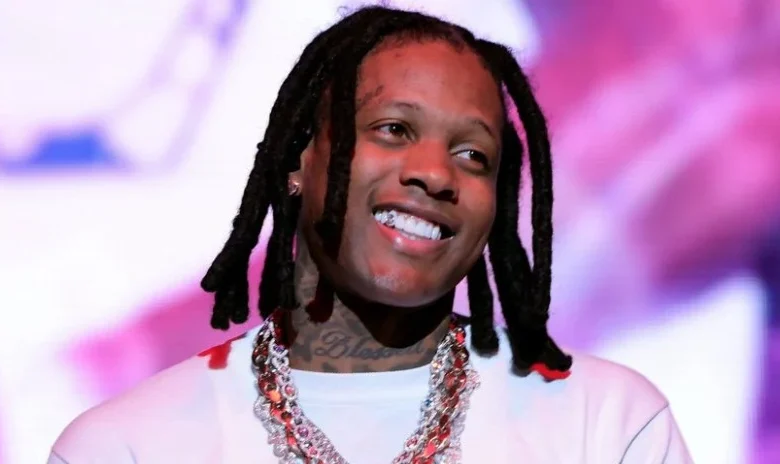
LOS ANGELES — In a stunning legal victory that brings a dramatic conclusion to one of the most high-profile criminal cases in recent hip-hop history, Grammy-winning Chicago rapper Lil Durk walked out of a federal courtroom a free man after a Los Angeles jury found him not guilty on all federal counts.
Durk Banks, professionally known as Lil Durk, faced the grim prospect of a life sentence following charges tied to a deadly 2022 shooting near the Beverly Center in Los Angeles. The trial, which commanded national media attention and drew high-profile celebrity supporters to downtown Los Angeles, culminated on Friday, September 11, after three days of tense jury deliberations. The federal jury ultimately rejected the prosecution’s core argument that the 33-year-old artist orchestrated and financed a murder-for-hire plot intended to avenge the death of his close friend and frequent collaborator, Dayvon "King Von" Bennett.
The verdict brings immediate relief to the multiplatinum artist, his legal team, and his massive global fanbase. However, the courtroom drama was not a complete victory for everyone seated at the defense table. Co-defendants David "Browneyez" Lindsey and Deandre "OTF Dede" Wilson were convicted on lesser charges of stalking and conspiracy, though they joined Banks in beating the primary murder-for-hire allegations.
The trial’s conclusion marks the end of a multiyear federal investigation that scrutinized the inner workings of Only The Family (OTF), the Chicago-based record label and collective founded by Banks. As the legal dust settles, the music industry, federal prosecutors, and urban communities are left to analyze the far-reaching implications of the verdict, the defense strategy that dismantled the government’s case, and the complex web of retaliation that continues to plague modern hip-hop culture.
The Genesis of the Case: The 2022 Beverly Center Shooting
The federal indictment against Lil Durk and his associates stemmed from a bloody afternoon on August 19, 2022, near the high-end Beverly Center shopping district in Los Angeles. According to federal prosecutors, the daylight shooting was a calculated act of retaliation directed at rival rapper Lul Quik, born Tyquian Terrel Bowman, professionally known as Quando Rondo.
The roots of the conflict, according to court documents and public record, stretched back nearly two years to an Atlanta nightclub altercation in November 2020. During that incident, King Von—a rising star signed to OTF and a close personal and professional ally of Lil Durk—was shot and killed during a physical altercation involving associates of Quando Rondo. The tragic loss of King Von sent shockwaves through the drill rap community, intensifying an already bitter feud between Chicago and Savannah, Georgia rap factions.
On the afternoon of August 19, 2022, Quando Rondo and members of his entourage were traveling in Los Angeles when their vehicle was ambushed by armed assailants. Gunfire erupted in heavy traffic, terrorizing motorists and pedestrians alike. While Quando Rondo managed to survive the attack physically unharmed, the gunfire struck his vehicle’s passenger. Saviay’a Robinson, a 24-year-old woman who was Quando Rondo’s cousin, suffered fatal wounds during the crossfire.
For months, the case remained an active homicide investigation handled by local law enforcement before federal authorities stepped in, leveraging the Racketeer Influenced and Corrupt Organizations (RICO) statutes and interstate commerce laws to build a sweeping federal indictment. Prosecutors alleged that the shooting was not a random act of street violence, but a coordinated conspiracy orchestrated across state lines with the financial backing of a major music executive.
The Prosecution’s Case: Finance, Influence, and OTF
Throughout the federal trial, the United States Department of Justice sought to prove that Lil Durk used his immense financial resources, celebrity status, and leadership role within Only The Family to facilitate the murder-for-hire plot. Prosecutors argued that Banks served as the chief architect of the operation, utilizing his wealth to fund travel, logistics, and surveillance to track Quando Rondo down in Southern California.
Government attorneys presented a mountain of circumstantial evidence, including flight records, cell tower data, financial transactions, and communications between members of the OTF collective. The prosecution framed these digital footprints as a clear roadmap of a conspiracy, asserting that Banks placed a bounty on Quando Rondo’s life as retribution for King Von’s murder.
A critical turning point in the government’s presentation of evidence came through the testimony of former associate and assistant Kavon Grant. Grant, who had previously faced the same heavy federal charges, entered into a plea agreement with federal prosecutors in exchange for a reduced sentence. Taking the stand as a cooperating witness, Grant testified about the inner workings of the organization and alleged that resources provided by Banks were directly funneled into the logistics of the 2022 Los Angeles ambush.
Prosecutors urged the jury to follow the money and connect the digital dots, arguing that an artist of Banks’ stature could not insulate himself from accountability by delegating violent acts to subordinates. They painted a picture of a corporate-style criminal enterprise operating under the guise of an independent record label, where loyalty was enforced and slights were met with lethal retaliation.
The Defense Strategy: Dismantling the Connection and Targeting the Informant
Facing the potential of spending the remainder of his life behind bars, Lil Durk’s defense team mounted a vigorous and multifaceted counter-offensive designed to sever any direct link between the Grammy-winning rapper and the bloodshed at the Beverly Center.
Lead defense attorneys aggressively attacked the foundation of the government’s narrative, arguing that federal prosecutors had conflated the music mogul’s legitimate business operations and philanthropic efforts with criminal activity. The defense maintained that Banks had no prior knowledge of, nor any active involvement in, the August 2022 shooting.
The cornerstone of the defense strategy involved discrediting the prosecution’s star witness, Kavon Grant. Attorneys picked apart Grant’s credibility, portraying him as a compromised, desperate individual who manufactured a narrative to appease federal prosecutors and secure a plea deal. The defense argued that Grant acted independently, misusing association and access to the rapper’s resources while attempting to shift the blame away from himself onto a more prominent target.
Furthermore, the defense successfully argued that the government relied heavily on speculative interpretations of everyday text messages, social media posts, and standard music industry financial transactions. By emphasizing the lack of a direct, unambiguous "smoking gun" connecting Banks to the planning or execution of the ambush, the defense planted reasonable doubt in the minds of the jurors.
After three days of intense deliberation, the jury agreed with the defense’s assessment, finding that the government failed to prove beyond a reasonable doubt that Lil Durk orchestrated the murder-for-hire conspiracy.
A Courthouse Spectacle and Celebrity Presence
Outside the federal courthouse in downtown Los Angeles, the trial transformed into a cultural and media spectacle. For the duration of the proceedings, the plaza outside the courthouse was crowded with passionate fans, industry peers, and supporters sporting custom apparel bearing the slogan "Free Durk."
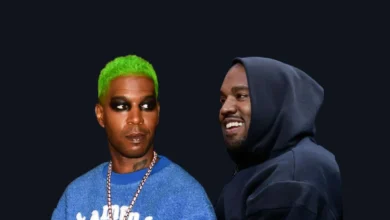
The high-stakes trial also attracted major figures from the entertainment world. Global superstar Ye (formerly Kanye West) and multi-platinum rocker Machine Gun Kelly made notable appearances at the courthouse in a show of solidarity with Banks. Their presence underscored the profound impact Lil Durk has had across musical genres, transitioning from the gritty Chicago drill rap underground to mainstream commercial superstardom, collaborating with artists ranging from Drake to J. Cole.
The media circus surrounding the courtroom reflected the broader cultural obsession with the intersections of hip-hop culture, criminal justice, and urban violence. Every day of the trial was dissected by digital media outlets, legal commentators, and social media influencers, transforming the legal proceedings into a public referendum on the state of modern rap music and the federal government’s increasing use of music lyrics and industry associations in criminal prosecutions.
Broader Implications and Industry Impact
The acquittal of Lil Durk carries significant implications for the music industry, federal prosecutorial strategy, and the ongoing national debate regarding the criminalization of hip-hop culture.
In recent years, federal and state prosecutors have increasingly utilized RICO statutes, conspiracy charges, and social media evidence to target rap artists and their associated labels, most notably seen in high-profile cases involving Young Thug and YSL in Georgia. Prosecutors argue these actions are necessary to dismantle violent street gangs operating under the corporate shields of record labels. Critics and civil liberties organizations, however, contend that these aggressive tactics often infringe upon artistic freedom, rely on racial bias, and unfairly conflate the personas depicted in entertainment with actual criminal behavior.
While Lil Durk successfully defeated the most serious charges against him—avoiding a life sentence and securing his freedom—the trial laid bare the high human and operational costs associated with the lifestyle and conflicts often intertwined with the drill rap genre. The conviction of co-defendants David Lindsey and Deandre Wilson on stalking and conspiracy charges serves as a reminder that the legal jeopardy surrounding the August 2022 incident has not entirely vanished for everyone involved.
For Lil Durk, the verdict represents a clean slate and a second chance at a career that has reached unprecedented heights. As he steps away from the federal courthouse doors as a free man, the music world watches closely to see how the Chicago native will navigate his return to the studio, the stage, and the spotlight, leaving behind a chapter that nearly cost him everything.