Houston Texans Linebacker Azeez Al-Shaair Defies NFL Fine Policy Again to Honor Palestinian Child Wafaa Akila

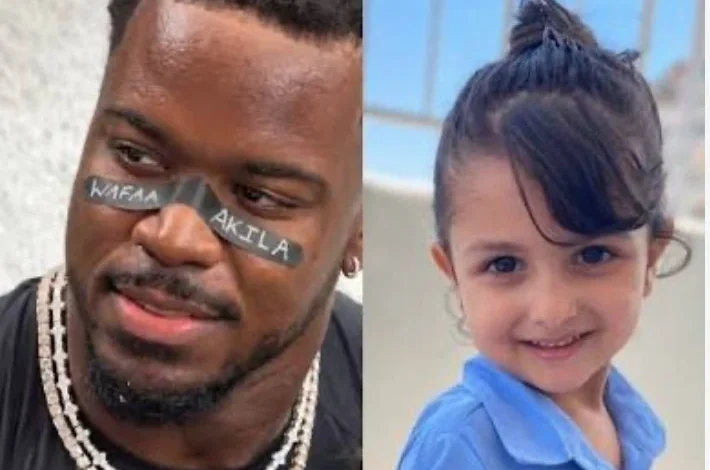
The National Football League is once again facing scrutiny over the intersection of professional sports, athlete expression, and geopolitical conflict following recent actions by Houston Texans linebacker Azeez Al-Shaair. Stepping onto the field for a nationally televised matchup against the Cincinnati Bengals, the Texans’ defensive captain prominently displayed the name “Wafaa Akila” written beneath his eyes using traditional athletic eye black. This silent, high-visibility gesture was not merely a personal tribute; it served as a stark reminder of the devastating human toll of the ongoing conflict in Gaza, drawing intense public focus to the death of an eight-year-old Palestinian girl who was killed alongside her father just weeks prior.
Al-Shaair’s decision to honor Wafaa Akila came in direct defiance of NFL uniform and equipment regulations, which strictly prohibit the unauthorized display of personal messages, political statements, or commercial endorsements on game-day attire. Having already incurred financial penalties from the league for previous acts of solidarity, the veteran linebacker chose to accept the consequences of his actions to ensure that the stories of young civilian casualties in Gaza remain visible on mainstream American television platforms.
The Tragedy of Wafaa Akila
The background of the tribute traces back to September 6, a date that should have marked a milestone in the young life of Wafaa Yousef Akila. That morning, Wafaa posed proudly for photographs dressed in her crisp, blue school uniform, eager to begin a new academic year. Following her classes, she and her father, Youssef, ventured out into western Gaza City to purchase essential school supplies, including notebooks, pens, and other educational materials.
Their routine errand was abruptly cut short when an Israeli military strike impacted their vehicle. Both Wafaa and her father were killed instantly in the explosion. Graphic imagery and video footage from the immediate aftermath of the attack depicted harrowing scenes, notably schoolbooks and newly purchased stationery scattered among the charred wreckage of the car.
In the days following the incident, the Israel Defense Forces (IDF) issued statements indicating that the strike had been intended to target a designated Hamas militant operating in the area, and that military authorities were actively assessing the operational results and collateral impact. However, the explanation offered little solace to grieving family members or international observers. Wafaa was eight years old, and the educational tools she had gathered to build her future never made it back to her home.
A Pattern of Activism and League Sanctions
Al-Shaair’s tribute to Wafaa Akila was the latest installment in a consistent campaign by the professional athlete to utilize his platform as a high-profile sports figure to spotlight Palestinian civilians impacted by the war. Just one week prior to the game against Cincinnati, during a high-profile matchup between the Houston Texans and the Buffalo Bills, Al-Shaair had inscribed the name “Hind Rajab” on his eye black.
That particular gesture prompted swift disciplinary action from the league office. The NFL subsequently fined Al-Shaair $11,941 for violating policy codes concerning visible personal messaging. Furthermore, this followed an earlier fine levied against the linebacker during a playoff game in January, when he wore tape bearing the message “Stop the Genocide” on his game-day equipment.
Despite knowing the regulatory framework and the certainty of facing additional financial penalties, Al-Shaair returned to the field the following week bearing Wafaa’s name. League rules mandate that any visible slogans, initials, or commemorative text must receive prior league approval—a process that athletes and advocacy groups argue severely limits meaningful human expression regarding humanitarian crises.
The Chronology and Context of Hind Rajab’s Death
To fully understand the resonance of Al-Shaair’s activism, sports analysts and journalists have frequently pointed to the case of Hind Rajab, whose death in January 2024 sparked international outrage and legal scrutiny. Five-year-old Hind was attempting to flee violence in Gaza City with several relatives when their automobile came under direct Israeli fire.
As the vehicle was targeted, Hind’s cousin, Layan Hamada, managed to contact emergency dispatchers at the Palestine Red Crescent Society (PRCS) by telephone. During the harrowing phone call, the line was suddenly interrupted by the sound of heavy gunfire, and Layan was killed. Hind remained trapped inside the vehicle for hours, surrounded by active military operations, and pleaded desperately for help. Audio recordings released by humanitarian organizations captured the young girl’s final moments, in which she told emergency operators, “I’m so scared… please come. Come take me.”
In an effort to rescue the trapped child, the PRCS dispatched two paramedics, Ahmed Al-Madhoun and Youssef Zeino. Tragically, the ambulance carrying the rescue workers was also struck and destroyed, resulting in the deaths of both paramedics. Due to ongoing military maneuvers and intense combat conditions in the sector, emergency rescue crews were unable to safely access the location for twelve days, eventually recovering the decomposing bodies from the wreckage.
For over two years, the circumstances surrounding the deaths of Hind Rajab and her family remained a point of intense contention. However, in August 2026, the Israeli military formally acknowledged that its frontline troops had fired upon the family’s vehicle, announcing the initiation of a criminal investigation into the tactical decisions made during the engagement. Despite this admission, Hind’s mother and various human rights organizations have continued to demand an independent, international investigation to ensure comprehensive accountability.
Humanitarian Engagement Beyond the Gridiron
Al-Shaair’s commitment to these families extends far beyond brief, symbolic gestures on the football field. Away from the pressures of the NFL season, the linebacker has quietly dedicated personal time and financial resources to humanitarian causes related to the conflict. He maintains an active support role with the Palestine Children’s Relief Fund (PCRF) and has frequently spent his personal time visiting with displaced families and children from Gaza who have been brought to Houston, Texas, for specialized medical treatment.
These off-field endeavors have earned him significant praise from civil rights and advocacy organizations. Following the Cincinnati Bengals game, the Texas chapter of the Council on American-Islamic Relations (CAIR-Texas) issued public statements commending Al-Shaair for his unwavering dedication to keeping the memories of civilian victims alive in the public consciousness, despite professional repercussions.
Broader Implications for Athlete Activism
The ongoing standoff between Azeez Al-Shaair and the National Football League highlights a broader, perennial debate regarding the boundaries of free speech within professional sports organizations. Major sports leagues have historically maintained strict neutral stances, aiming to preserve unified entertainment environments and avoid alienating diverse fan bases or corporate sponsors. Policies restricting uniform alterations are designed to maintain visual consistency and enforce strict corporate governance over the broadcast product.
Conversely, athlete advocates argue that professional athletes, particularly those who have achieved financial security and public renown, possess a moral imperative to speak out against human rights abuses, war crimes, and humanitarian catastrophes. By utilizing eye black—a traditional, highly visible surface for personal expression within contact sports—Al-Shaair found a loophole that, while costly in terms of league fines, successfully bypassed standard media filters to spark global conversations.
As the NFL season progresses, industry observers will monitor whether the league escalates its disciplinary measures against the Texans captain, or if mounting public pressure will prompt a re-evaluation of how sports organizations handle humanitarian messaging from their employees. For Azeez Al-Shaair, the financial cost of his activism has long been established; his continued willingness to absorb those penalties ensures that millions of football viewers are compelled to confront the realities faced by children like Wafaa Akila and Hind Rajab.